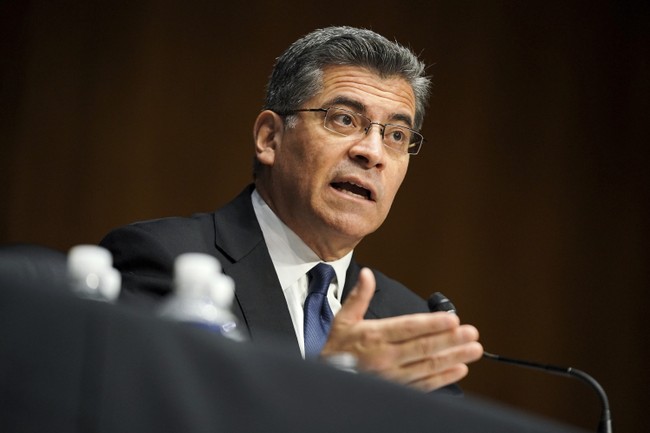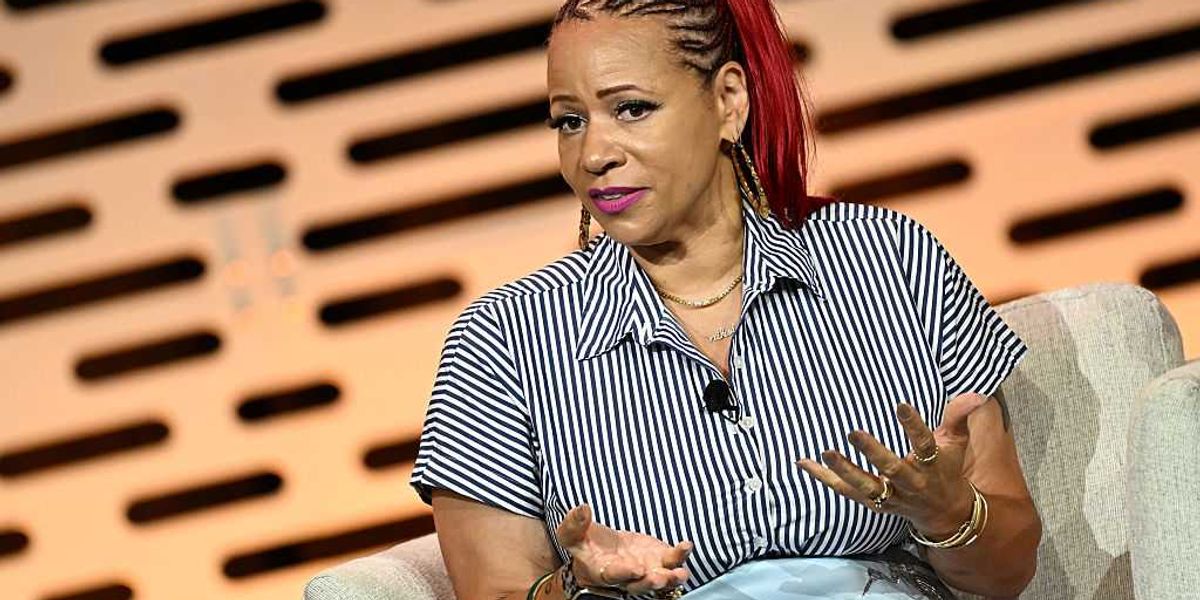

When it comes to educating your children, never go full woke.
Nikole Hannah-Jones, the New York Times writer best known for “The 1619 Project” and her work on school segregation, apparently learned that lesson the expensive way. In a lengthy New York Times Magazine essay, she recounts how she deliberately enrolled her daughter, Najya, in struggling Brooklyn public schools because she believed families like hers should live their integrationist principles instead of seeking out better schools.
Hannah-Jones deserves some credit for publishing an unusually candid account of what happened to her daughter. But that candor should lead somewhere.
The experiment did not go well for Najya. Hannah-Jones describes weak instruction, assignments that went ungraded, little homework, disorderly classrooms, and large gaps in basic math. Her parents paid for tutoring and repeatedly intervened on her behalf, but the academic deficiencies accumulated.
By eighth grade, Najya insisted on choosing her own high school. She selected a rigorous screened school, mostly white and Asian, and initially struggled because she had not received the same preparation as many of her classmates. With tutoring and help from her new teachers, she caught up.
Her verdict on the experience was brutal: “Sometimes I wish instead of always thinking about other kids, you would have thought about me. I never really got the education I wanted.” Hannah-Jones apologized. “I feel like you got cheated,” she told her daughter. She also wrote that, in the end, “I had not chosen her.”
So Hannah-Jones does recognize that she failed her daughter. What she does not abandon is the larger diagnosis that led her there.
Her essay still treats segregation, school choice, and the sorting of affluent and high-performing students as central explanations for why schools like Najya’s struggle. She closes by arguing that there is “no absolution” as long as families rescue their own children from failing schools while poor black children remain behind.
But her own story points toward a more basic problem: Schools do not become good because more high-performing children are assigned to them. High-performing families are attracted to schools that teach well, maintain order, set clear standards, and hold adults and students accountable.
Money does not explain away what happened, either. New York City Public Schools reports a $45 billion budget and $34,717 in per-student spending for fiscal 2026 — and that per-student figure excludes debt service, transportation, and food. Whatever else New York City schools lack, they are not operating on starvation rations.
The harder question is competence.
In my experience teaching high school English, failing schools are often terribly run. Principals avoid disciplining disruptive students, teachers lower expectations to keep everyone moving, grades cease to mean much, and administrators explain away poor results instead of correcting them. The result is a campus where good teachers burn out, serious students learn to keep their heads down, and everyone gets passed along.
RELATED: Portland schools turned one mom into a culture-war enemy
Lindsey Nicholson/Education Images/Universal Images Group/Getty Images
Hannah-Jones’ reporting describes many of those symptoms, yet she can’t seem to connect the dots. Najya said students received little homework, grades did not reflect mastery, and classrooms could be loud and chaotic. When Hannah-Jones played those complaints for Unison Principal Emily Paige, Paige cried and blamed the larger system: “This is the reality of a segregated system, and it’s not just segregation by race and class; it’s by ability. This is the reality of school-choice systems.”
That answer is revealing. If a school needs an influx of stronger students to make the classrooms function, then sorting may explain who attends the school, but it does not explain why the adults failed to teach the students already there.
To Paige’s credit, she also told Hannah-Jones something far more important: “It is important to not, in our pursuit of being antiracist, lower expectations. Because this is what happens, right? It’s racism under the guise of antiracism.”
That is much closer to the lesson Hannah-Jones’ story actually teaches.
Freddie deBoer, writing from the left, takes the argument in almost the opposite direction. In a response to the Hannah-Jones essay, he argues that schools and teachers have relatively little influence over a student’s long-term academic outcome and that prior performance and innate academic ability matter far more.
Yet Hannah-Jones’ own account makes that hard to dismiss as irrelevant. Najya entered high school with serious gaps in algebra and basic math. Intensive tutoring and direct help from teachers followed. By the end of the semester, she was earning mostly A’s and B’s and later passed the state algebra exam. Whatever one thinks about the size of school effects in the aggregate, instruction and intervention plainly mattered to this particular student.
RELATED: How to fix the woke teacher problem
 H. Rick Bamman/Pioneer Press/Chicago Tribune/Tribune News Service/Getty Images
Mississippi offers another useful comparison. Since the state enacted its Literacy-Based Promotion Act in 2013, its fourth-grade reading score on the National Assessment of Educational Progress rose from 209 to 219, while the share of fourth-graders scoring proficient or advanced rose from 21% to 32%. In 2024, Mississippi ranked ninth nationally in fourth-grade reading.
Those gains did not come from simply throwing more money at schools or rearranging their racial composition. Mississippi combined early screening, teacher training and coaching, evidence-based reading instruction, intensive intervention, clear promotion standards, and retention for third-graders who could not meet the reading threshold, with exemptions for specified cases. The state now touts the nation’s largest fourth-grade reading gains since 2013.
The lesson is not mysterious. Schools that insist on order, competent instruction, meaningful grades, and high expectations give students a better chance to learn. Schools that make excuses for disorder and disguise failure with inflated grades do not.
Hannah-Jones deserves some credit for publishing an unusually candid account of what happened to her daughter. But that candor should lead somewhere.
If a child can earn honors grades without learning algebra, if parents must hire tutors to repair years of missing instruction, and if a principal’s first explanation is that the school lacked enough high-performing students, the problem is not that too many families exercised choice.
The problem is that the school was failing the children who were already there.
Read the full article here




![Wall Street Faces a Fierce New Rival as Financial Giants Expand Their Footprints [WATCH]](https://www.lifezette.com/wp-content/uploads/2026/10/2026.10.05-11.22-lifezette-6ac38858918ea.jpg "Wall Street Faces a Fierce New Rival as Financial Giants Expand Their Footprints [WATCH]")