



The Pentagon is developing new options for fighting a limited nuclear war through an unusually private review that could reshape U.S. strategy without the public report issued after each of the past three formal Nuclear Posture Reviews.
The ongoing nuclear strategy review is expected to recommend additional options for limited nuclear use intended for regional conflicts rather than relying primarily on weapons and plans designed for a large-scale nuclear exchange.
Undersecretary of Defense for Policy Elbridge Colby has described the goal as developing “rationally employable, limited options” that could manage escalation without producing an uncontrollable exchange.
U.S. Strategic Command chief Adm. Richard Correll has said the effort remains focused on deterrence.
A Nuclear Review Without a Public Report
The process differs from the formal Nuclear Posture Reviews released in 2010, 2018 and 2022. Those documents publicly explained each administration’s nuclear doctrine, force structure, modernization plans and conditions for potential nuclear use.
The 2010 review was the first released publicly, establishing a transparency practice continued during President Donald Trump’s first term and the Biden administration.
The current administration is instead conducting a narrower nuclear strategy review. Colby told the Senate Armed Services Committee in March that the Pentagon did not plan to conduct a formal Nuclear Posture Review because he considered the declaratory policy in the 2018 document sufficient.
The narrower review now underway is not expected to be released publicly.
Keeping a nuclear review classified is not unprecedented. The 1994 and 2001 reviews were largely classified, although the Pentagon publicly summarized the 2001 findings before portions leaked.
The current approach nevertheless breaks with a transparency precedent established in 2010 and continued in 2018 and 2022, when three successive administrations published substantial unclassified reviews that allowed Congress, allies and the public to examine the reasoning behind changes in nuclear policy.
The Options Under Consideration
The review reportedly places greater emphasis on options for limited nuclear use in regional conflicts, often described as theater or nonstrategic nuclear options.
“Limited” does not mean the effects would remain confined to the specific battlefield. Any nuclear detonation could transform a conflict and trigger retaliation beyond the original target.
One potential change would reduce the emphasis on “damage limitation,” which seeks to reduce the damage from an adversary’s nuclear attack, including by destroying its nuclear forces or intercepting incoming weapons.

That shift could reflect greater acceptance of mutual nuclear vulnerability with China. The review would simultaneously seek more credible options for limited nuclear use in a regional war involving China or Russia.
Congress is considering weapons that could support that strategy. The Senate Armed Services Committee’s Fiscal Year 2027 defense policy proposal recommended new surface-launched and air-launched nuclear weapons, even though the Pentagon and Energy Department had not requested funding for them.
The Navy also is acquiring a nuclear-armed sea-launched cruise missile, or SLCM-N. Congress requires a limited number to be available for combatant command requirements by September 2032 and initial operational capability by 2034.
The Pentagon and National Nuclear Security Administration expect to spend $14.4 billion on the program over the five years, as covered by the 2027 budget request.
A Return to the 2018 Approach
The emerging strategy builds on Trump’s 2018 Nuclear Posture Review, which called for the lower-yield W76-2 submarine -launched ballistic missile warhead and a new SLCM-N.
The Navy reportedly first deployed the W76-2 in late 2019, and the Pentagon publicly confirmed its deployment in February 2020 to counter the perceived belief among potential adversaries—including Russia—that limited use of lower-yield nuclear weapons could give them an advantage over the United States and its allies.
The 2022 review retained W76-2 but proposed canceling SLCM-N, citing existing capabilities and its estimated cost.
It identified deterring nuclear attack as the “fundamental role” of U.S. nuclear weapons, rejected a no-first-use policy, and said nuclear use would be considered only in “extreme circumstances” to defend the vital interests of the United States or its allies and partners.
Deterrence Versus Escalation
Supporters considered W76-2 necessary to close a deterrence gap.
They have long argued that more limited nuclear response options could deter an adversary that doubts Washington would answer a lower-yield attack with a much larger strike.
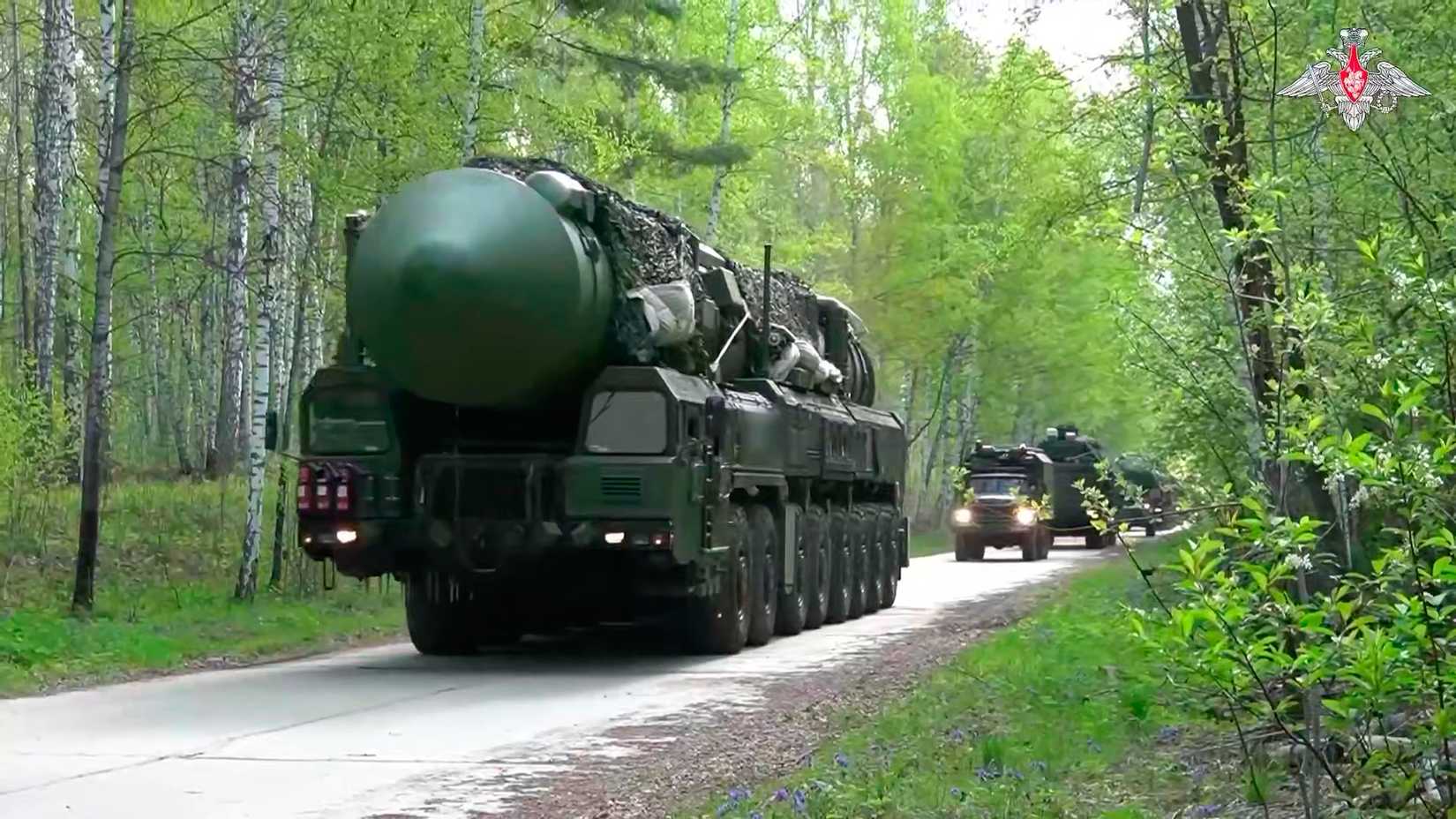
In this image made from video provided by Russian Defense Ministry Press Service on Thursday, May 21, 2026, A Yars intercontinental ballistic missile is seen during drills of Russia’s nuclear forces in Belarus. (Russian Defense Ministry Press Service via AP)
Critics argue that the same credibility makes the weapons appear more usable. An adversary detecting a submarine-launched missile may not know whether it carries a lower-yield warhead or a more powerful strategic weapon. Leaders working with minutes of warning could assume the worst and retaliate before impact.
Those risks are rising as arms control restraints weaken. New START expired Feb. 5, leaving the United States and Russia without legally binding limits on deployed strategic arsenals for the first time in more than half a century.
Congress Will Receive More Than the Public
The idea of controlled nuclear warfare dates at least to President Richard Nixon’s 1974 National Security Decision Memorandum 242, which directed the military to prepare limited options intended to control escalation without immediately launching a massive attack.
Federal law still requires some disclosure, but it’s not necessarily to the public. Under 10 U.S.C. Section 491, the president must give Congress a report at least 60 days before implementing any changes into the nuclear employment strategy.
It must describe the changes and assess their effects, but the statute requires neither congressional approval nor public release.
The president retains sole authority to authorize nuclear use, and any order must comply with the law of armed conflict. The Pentagon treats nuclear weapons as lawful weapons, but their use remains governed by distinction, military necessity and proportionality.
A public report comparable to the last three formal reviews is not expected, even as the Pentagon considers weapons and plans intended to make limited nuclear operations more credible.




![Jack Smith’s Secret Dragnet Tracked Trump Lawyers Through Chief of Staff’s Phone [WATCH]](https://www.rvmnews.com/wp-content/uploads/2026/10/2026.10.05-15.54-rvmnews-6ac3c836852a7.jpg "Jack Smith’s Secret Dragnet Tracked Trump Lawyers Through Chief of Staff’s Phone [WATCH]")