
In the summer of 1974, in the middle of the Pacific Ocean, an enormous and bizarre ship called the Hughes Glomar Explorer lowered miles of pipe toward the seabed. To the public, the ship’s activity revolved around eccentric billionaire Howard Hughes’ attempt to pioneer deep-ocean mining, ostensibly to harvest valuable manganese nodules from the abyssal plain. But this was just a cover story—a convincing one, given how secretive, wealthy, and ambitious Hughes was. No one would have been particularly surprised by another strange Hughes venture. Yet Hughes wasn’t mining anything.
The Glomar Explorer had been secretly designed for the CIA for the purpose of picking up a sunken Soviet submarine from the ocean floor.
Finding K-129 Russian Submarine Armed with Nuclear Warheads
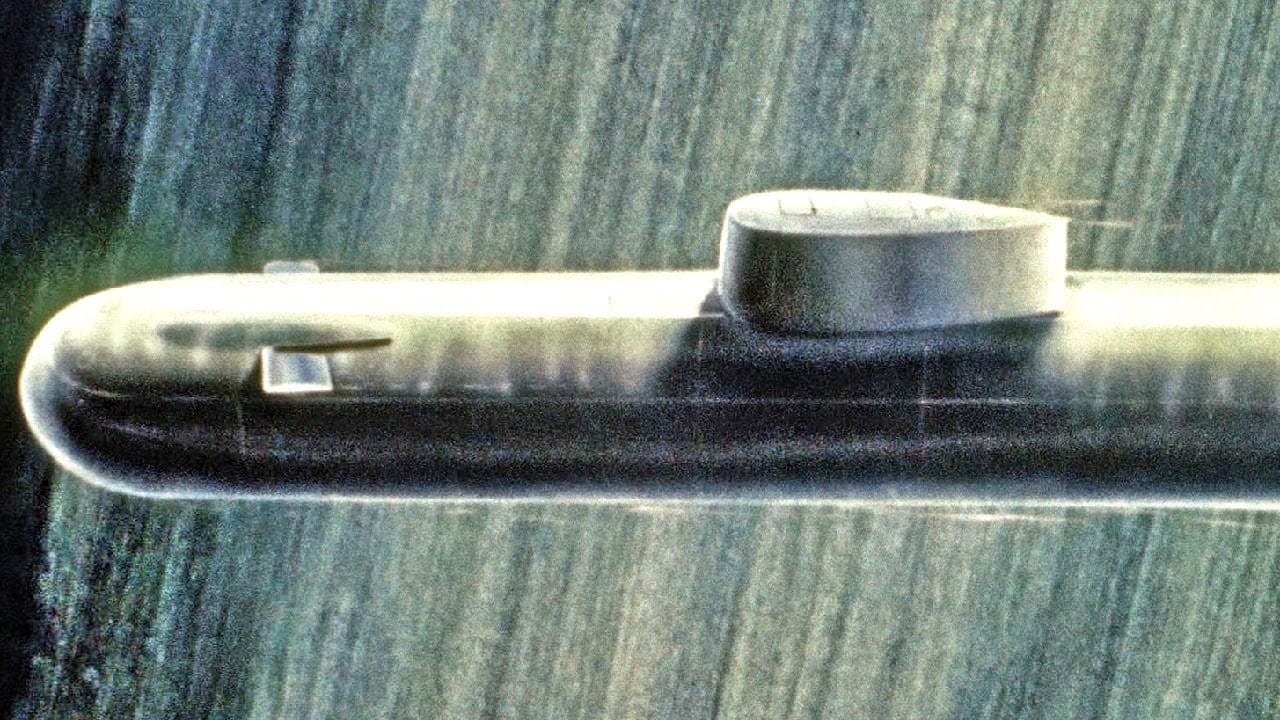
K-129 was a Soviet Project 629A/Golf II-class diesel-electric ballistic-missile submarine.
Operated by the Soviet Pacific Fleet, K-129 was armed with R-21/SS-N-5 Serb ballistic missiles, nuclear warheads, and torpedoes.
Mysteriously, K-129 disappeared in March 1968 while patrolling the North Pacific.
Ninety-eight Soviet sailors were killed, and the cause of the sinking remains disputed and uncertain.
The Soviet Navy launched an enormous search but couldn’t locate the wreck.
The Americans had an advantage, however, thanks to US underwater acoustic surveillance that detected an event associated with the submarine’s loss.
The US Navy eventually dispatched the specially equipped USS Halibut to search for the missing submarine.
The Halibut succeeded, photographing the wreck about 1,500 miles northwest of Hawaii.
An aerial starboard bow view of a Soviet Golf II class ballistic missile submarine underway. Date Shot: 1 Oct 1985
The Americans kept the discovery from the Soviets.
Why Bother Recovering?
K-129 represented an extraordinary intelligence opportunity.
Potential prizes aboard K-129 included Soviet ballistic missiles, nuclear warheads, torpedoes, communications equipment, cryptographic material and codebooks, and technical information about Soviet submarine construction.
So the incentive to recover the submarine was real.
But no one had ever attempted to salvage something from a depth even remotely comparable. Compounding issues: K-129 weighed roughly 2,000 tons.
Buried beneath roughly three miles of ocean, where the pressure was about 480 bar, the Navy couldn’t send divers or simply attach ordinary cables.
The logistics of the salvage operation were daunting.
The wreck needed to be located precisely, then a capture system lowered three miles, maneuvered around the submarine, attached, and lifted thousands of tons—all while keeping the entire operation hidden from the Soviet Union.
Enter Howard Hughes
The CIA recruited the Hughes organization as a cover story.
Publicly, Hughes was interested in harvesting manganese nodules from the deep ocean.
So this story conveniently explained why the ship needed extraordinary deep-water station keeping, miles of lifting pipe, huge internal machinery, and enormous underwater capture equipment.
The ship built for these purposes was the Glomar Explorer, measuring roughly 618 feet and displacing around 60,000 tons.
The project cost around $350 million in 1970s dollars—well over $2 billion today—making it one of the most expensive intelligence operations ever attempted.
Purpose Built
Because the Glomar Explorer couldn’t simply haul the submarine onto the open deck, where Soviet ships and satellites could see what was happening, it needed to bring the K-129 inside the ship.
Therefore, the ship incorporated an enormous internal moon pool.
This meant a large opening through the center-bottom of the hull, through which recovery equipment could descend.
The captured submarine section could then be lifted inside the hull and concealed from outside observation.
Alfa-Class Submarine. Image Credit: Creative Commons.
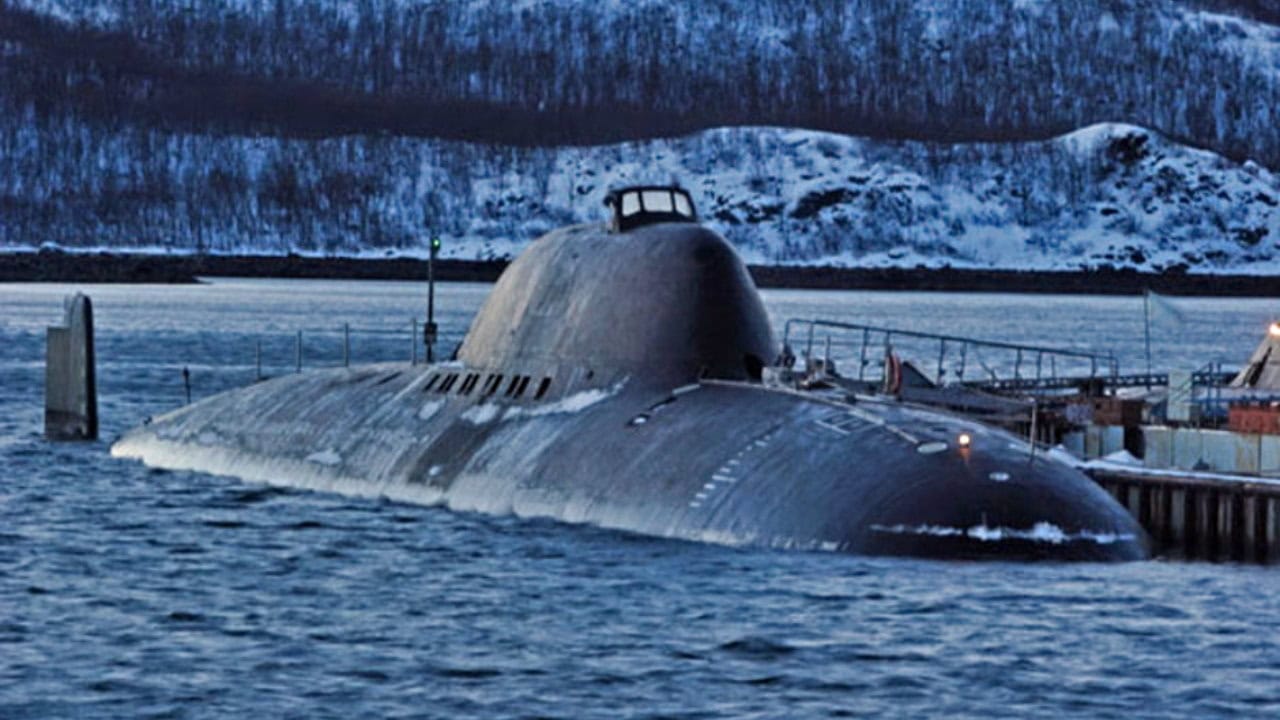
Alfa-Class Russian Navy. Image Credit: Creative Commons.
To capture the submarine, the CIA built a massive vehicle commonly known as Clementine, a huge mechanical structure with articulated claws and fingers.
Lowered beneath the Glomar Explorer using sections of steel pipe assembled one after another, the concept here was to descend roughly three miles, position over the K-129, close the claws around the submarine’s hull, lift the wreck, and pull it into the moon pool.
Nothing of this scale had ever been attempted before at such depth. It was an absolutely audacious undertaking.
Partial Success
Remarkably, the mission was a partial success. Clementine reached the bottom, and the capture vehicle successfully engaged the submarine.
At first, everything appeared to be working as planned; the project seemed to be executing the impossible.
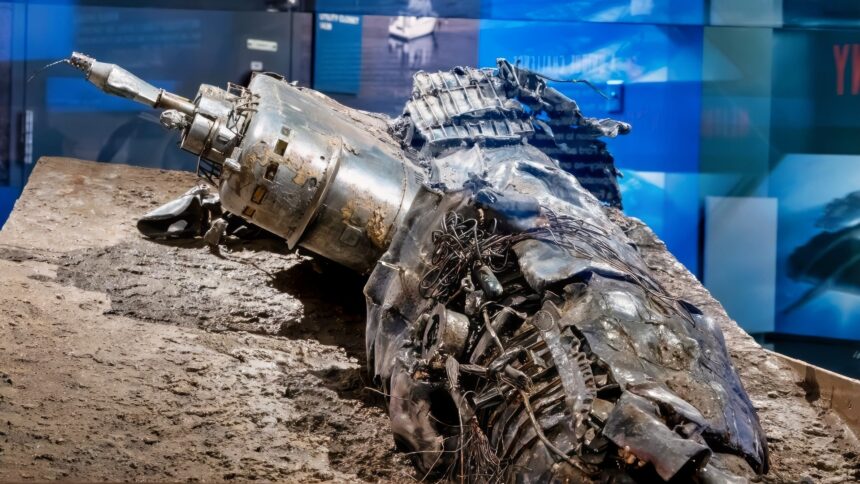
But during ascent, portions of the capture mechanism failed, and much of K-129 broke free. A large section plunged back to the seabed. However, a portion of the submarine reached the Glomar Explorer. What was recovered?
The CIA still hasn’t offered much information.
All that is known is that the mission was outrageously ambitious and partially successful—an obscure yet seminal chapter of Cold War espionage history.
About the Author: Harrison Kass
Harrison Kass is a writer and attorney focused on national security, technology, and political culture. His work has appeared in Tablet, City Journal, The Hill, The Spectator, and The Cipher Brief. He holds a JD from the University of Oregon and a master’s in Global & Joint Program Studies from NYU. More at harrisonkass.com.