
Switzerland will spend an additional CHF 394 million (approximately 481.08 million U.S. dollars) on its F-35 fighter jets, but it is now unlikely to receive the 36 jets it believed it was purchasing.
The country has been formally neutral since the conclusion of the Napoleonic Wars in 1815. Switzerland is not a member of the U.S.-led North Atlantic Treaty Organization (NATO), but it has long cooperated with the alliance.
Budget Was Previously Approved
On Tuesday, the Swiss House of Representatives approved the further funding as part of a CHF3.4 billion military package, following earlier approval by the Senate.
The vote came just a week after its parliamentary watchdog concluded that the “fixed price” Swiss officials had repeatedly said locked in the deal had never been secured.
Under the original plans, Switzerland had selected Lockheed Martin’s F-35A and was set to acquire 36 of the jets within the approximately CHF6 billion budget greenlit by voters.
Switzerland’s Federal Council said that purchasing all 36 would require a much bigger budget, so the target was scrapped.
Instead, it requested CHF394 million to absorb inflation, higher raw-material prices, and other additional costs while purchasing the “maximum possible” number of fighter jets.
Parliamentary committees subsequently put that at 30 jets, minimum.
AFP reported in March that Defense Minister Martin Pfister estimated another CHF1.1 billion would have been needed to obtain all 36.
This month, the National Council’s Management Committee concluded that it had not agreed to a “no flat-rate fixed price” with the United States. More pointedly, it said the supposed price was “not only” unenforceable but had never been agreed to in a contract.
Under the U.S. Foreign Military Sales system, the committee explained, the final price is determined only when the U.S. government concludes a contract with the manufacturer.
It therefore could not already have been definitively locked into Switzerland’s government-to-government agreement.
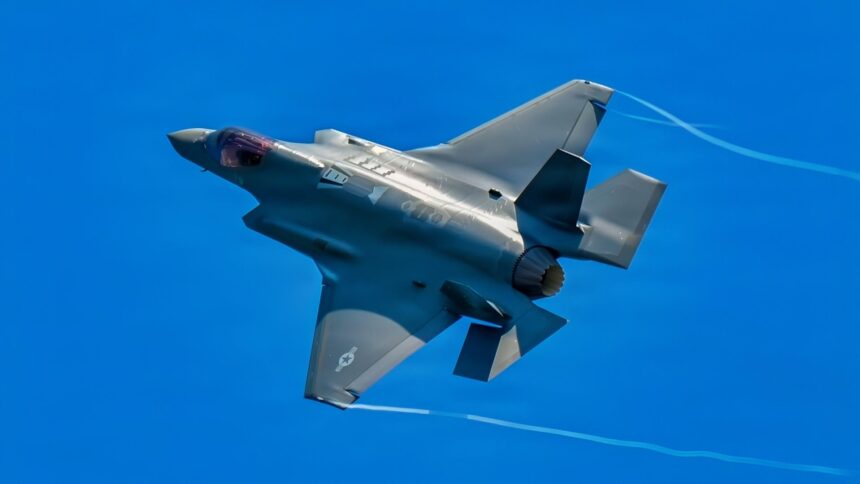
A U.S. Air Force F-35 Lighting II from the 62nd Fighter Squadron at Luke AFB, AZ, performs during the Fairchild SkyFest 2024 airshow and open house at Fairchild Air Force Base, Washington, June 22, 2024. Team Fairchild hosted the Fairchild SkyFest 2024 airshow June 22 and 23 to thank the local community for their support and partnerships. The airshow included the A-10 Thunderbolt II Demonstration team, Wings of Blue parachute team, UH-1N Huey and several other aerial acts and static displays. (U.S. Air Force photo by Airman 1st Class Stephanie Orta Carranza)
Contract Not Widely Read By Officials
Another striking finding was that “only a few” of the people handling the procurement had read the contract in its entirety.
The committee said it could not understand why the Defense Department had represented the fixed price “so absolutely” to Parliament.
Earlier doubts raised by the Swiss Federal Audit Office should, it said, have prompted both a critical review and new negotiations.
According to the committee, armasuisse received its first indications of possible additional costs in August 2024, and then-Defense Minister Viola Amherd was informed.
The full Federal Council was not informed until March 2025, after Washington confirmed in writing the extent of the additional costs.
The committee slammed that delay as inappropriate and criticized the department’s oversight of the negotiations.
It also found that some relevant documents had not been properly archived.
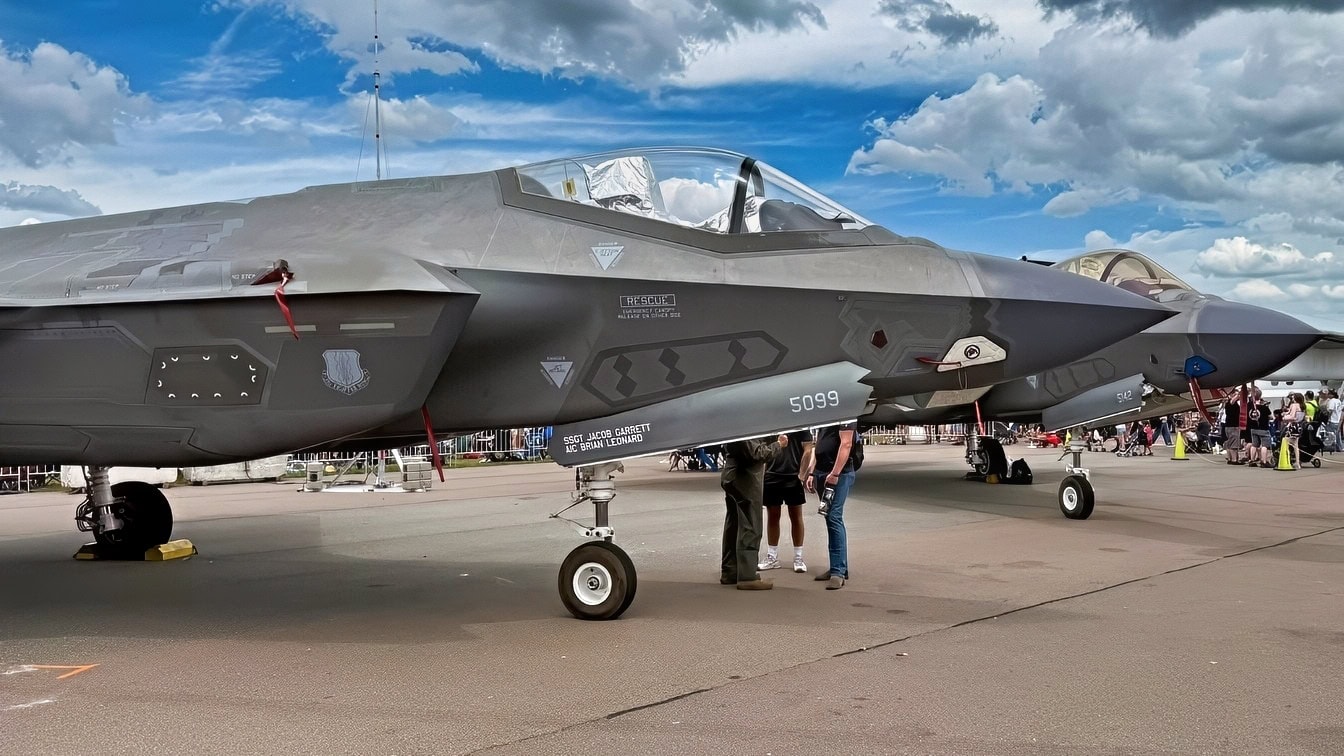
F-35C Lakeland Airshow 19FortyFive.com Image
Swiss Politicians Slam Deal
SVP lawmaker Thomas Burgherr told Tamedia, according to Blue News: “Any master carpenter would have known better.
No one today offers a kitchen at a fixed price that won’t be delivered for another five years.”
Social Democrat Priska Seiler Graf described former procurement official Darko Savic as the presumed “creative mastermind behind the fixed-price narrative.” Neither Savic nor Amherd commented to Tamedia on the latest allegations.
On May 28, Lockheed Martin said Switzerland’s first F-35A had entered major assembly in Marietta, Georgia. The company says the Swiss aircraft will get TR-3 hardware and Block 4 software.
Pfister, meanwhile, defended continuing the acquisition during Tuesday’s parliamentary debate. According to Swissinfo and Keystone-SDA, he called the watchdog report “nuanced, objective and interesting” and promised a government response “very soon, and not just in December.”
He acknowledged that the findings placed a “heavy strain” on efforts to build trust in the Defense Department, but argued that Switzerland’s security required acquiring many fighters, if possible.
Full Parliamentary Inquiry Looms
On Monday, the country’s Social Democrats confirmed that they would seek a parliamentary commission of inquiry to probe potential misconduct or institutional failure, and to determine whether rival bidders were treated unfairly.
The Greens are expected to support an inquiry, although the center-right majority makes its creation far from certain.
Green lawmaker Clarence Chollet put the political problem more plainly: “In our democratic state, it is a disgrace that a procurement worth over CHF6 billion, grudgingly accepted by the public, has been so badly managed.”
About the Author: Georgia Gilholy
Georgia Gilholy is a journalist based in the United Kingdom who has been published in Newsweek, The Times of Israel, and the Spectator. Gilholy writes about international politics, culture, and education.


![Hayden Panettiere’s Incriminating Drug Dealer Texts Take Center Stage in DEA’s Death Investigation [WATCH]](https://www.boredtrashpanda.com/wp-content/uploads/2026/09/2026.09.15-15.22-boredtrashpanda-6aa962ce408cc-e1789497992877.jpg "Hayden Panettiere’s Incriminating Drug Dealer Texts Take Center Stage in DEA’s Death Investigation [WATCH]")