




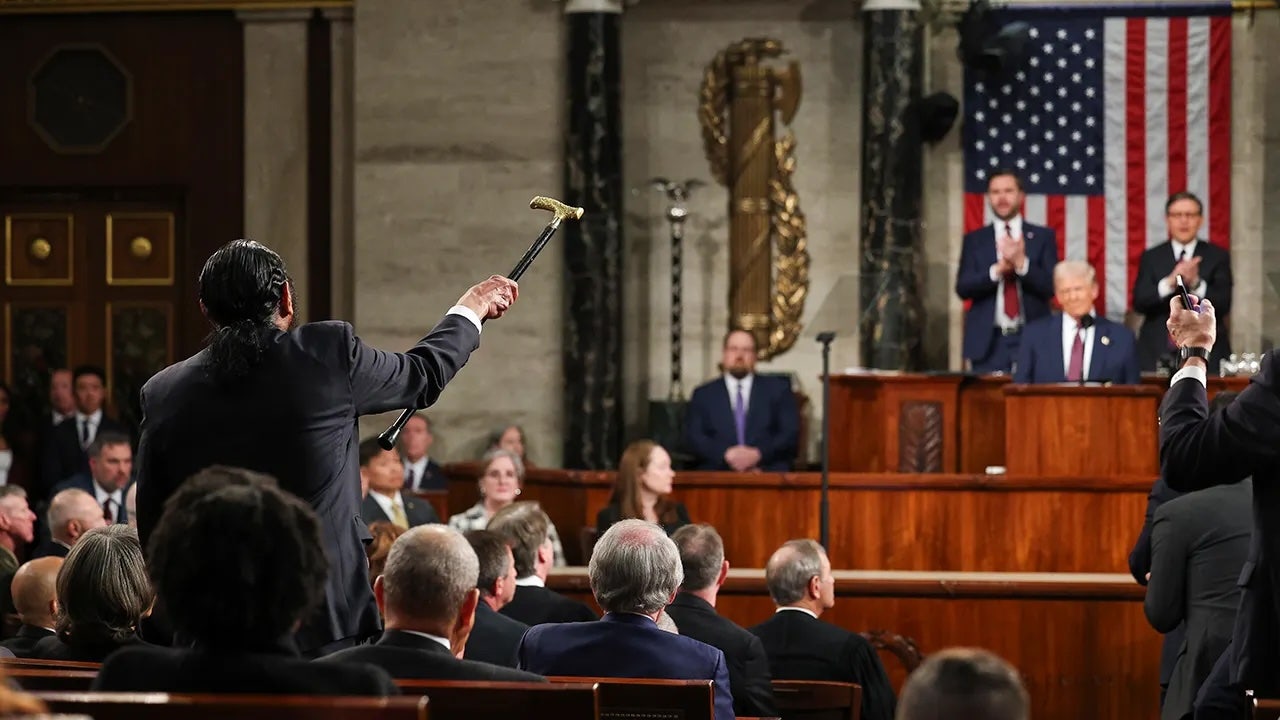
As President Donald Trump delivers Tuesday’s State of the Union, lawmakers will applaud calls for economic strength, innovation, and American competitiveness. Many of those same politicians, however, attack the very policies that make those goals possible. Their favorite target: so-called “tax loopholes,” routinely described as corruption or favoritism.
That label distorts how tax policy works.
What critics dismiss as ‘loopholes’ often serve as the incentives that help ordinary Americans — not just the rich — build, grow, and prosper.
Politicians denounce “loopholes” as if businesses are exploiting accidental gaps in laws Congress never meant to create. The implication follows: close the loopholes, collect more revenue, spend more money, and the country improves.
That framing misses the point. Most so-called loopholes are not accidents. Congress created them on purpose to encourage behavior that strengthens the economy.
Tax credits and deductions are not tricks. They are policy tools. In many cases, they work better than direct spending programs because they rely on private-sector decision-making instead of bureaucratic discretion.
That distinction matters during a period of rapid technological change. Consider artificial intelligence.
The One Big Beautiful Bill Act passed last year built on the Tax Cuts and Jobs Act by making full and immediate capital expensing — commonly called bonus depreciation — a permanent feature of the tax code. That provision allows businesses to deduct the full cost of qualifying capital investments in the year they make them, rather than stretching deductions over many years.
Critics call that a “giveaway.” It is better understood as a growth policy.
In practical terms, full expensing matters whenever a company makes a large upfront investment — servers, advanced manufacturing equipment, or specialized hardware needed to build AI systems. Under traditional depreciation rules, a business recovers those costs slowly. That delays the tax benefit and discourages large productive investments.
Full expensing removes that penalty. It aligns the tax code with economic reality by letting businesses recover costs when they take the risk. It also works automatically, without bureaucrats deciding which firms or industries deserve support.
That design is intentional. If Congress wants more of a productive activity, it can tax it less.
The AI boom illustrates the point. The United States is competing to lead the world in private AI investment. Data centers are going up at record speed. Venture capital is funding startups that did not exist a few years ago. Large firms are racing to expand computing infrastructure for next-generation models. That kind of investment grows where policy rewards risk-taking.
By making bonus depreciation permanent, lawmakers reduced uncertainty and signaled that America intends to remain the best place to invest capital.
RELATED: At Trump’s State of the Union, remember the free-market miracle in your pocket
Shutthiphong Chandaeng via iStock/Getty Images
This provision does not benefit only trillion-dollar corporations with armies of accountants. Any business making qualifying investments can use it: a mid-sized manufacturer installing robotics, a regional logistics company upgrading its fleet, or a startup buying high-performance computing equipment. The tax treatment is the same.
In fact, the largest long-term effect may land far from Silicon Valley. Small and medium-sized businesses make up roughly half the U.S. economy. For those firms, cash flow often determines whether they can hire, expand, or modernize. Immediate expensing can make the difference.
This is not a “loophole.” It is deliberate economic policy.
Critics often argue that provisions like full expensing “cost” the government money. That view ignores the broader effect. When businesses invest more, they produce more. More production supports hiring, wages, and taxable income across the economy.
I work directly with small and medium-sized businesses navigating a tax code that is often caricatured in political debate. I have seen how these so-called loopholes function in real life. They are not exclusive perks for the wealthy or giant corporations. Their benefits extend to workers, customers, and communities through jobs, innovation, and competition.
What critics dismiss as “loopholes” often serve as the incentives that help ordinary Americans — not just the rich — build, grow, and prosper.
Uncle Sam does not always get tax policy right. But when Congress uses the tax code to encourage productive behavior instead of punishing it, the results can be transformative.
The next time a politician thunders about “tax loopholes,” ask a simple question: Is it really a mistake — or a policy designed to make the American economy stronger?
Read the full article here



![Abdulrahman Mohamed El-Sayed’s Own Words Expose the Radical Agenda [WATCH]](https://www.lifezette.com/wp-content/uploads/2026/08/2026.08.10-07.50-lifezette-6a7982cf1376a.jpg "Abdulrahman Mohamed El-Sayed’s Own Words Expose the Radical Agenda [WATCH]")
![AOC Admits the Radical Left Went Off the Deep End [WATCH]](https://www.lifezette.com/wp-content/uploads/2025/08/2025.08.10-05.50-lifezette-6898dbf4d6680.jpg "AOC Admits the Radical Left Went Off the Deep End [WATCH]")


![El Sayed Refuses to Ditch Hate Streamer Hasan Piker, Eyes Huge Middle Class Tax Hike [WATCH]](https://www.lifezette.com/wp-content/uploads/2026/08/2026.08.09-19.36-lifezette-6a78d6a8e95e4.jpg "El Sayed Refuses to Ditch Hate Streamer Hasan Piker, Eyes Huge Middle Class Tax Hike [WATCH]")