
The Pentagon has pushed a narrative for years about the superiority of its fifth-generation stealth warplanes.
For many years, the United States was the only real show in town when it came to stealth bombers and warplanes.
But a new contender for stealth technological supremacy has emerged.
That’s the world’s largest manufacturing power, the People’s Republic of China (PRC).
And the Americans and their allies can only ride on the memory of their previous (lost) technological supremacy for so long.
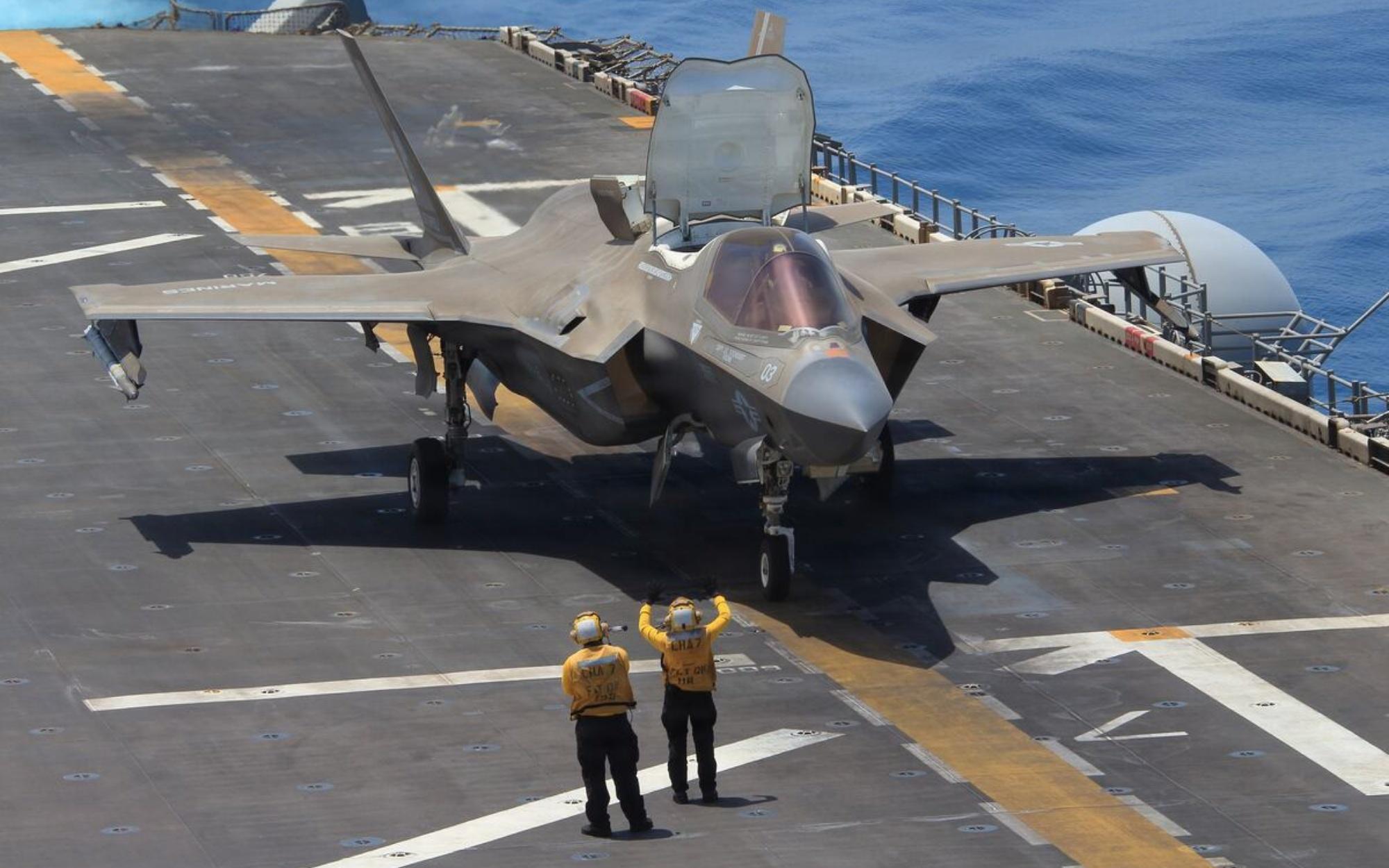
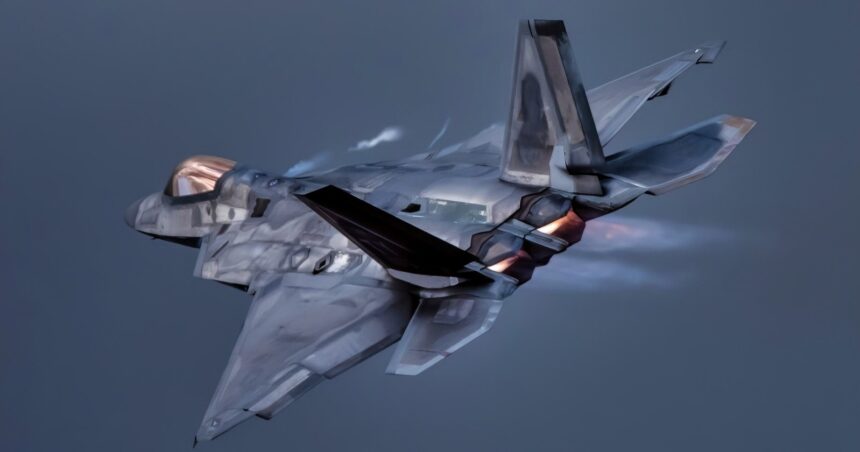
America operates the Lockheed F-22 Raptor fifth-generation air superiority warplane and the F-35 Lightning II multirole stealth fighter.
These two systems have been the linchpin of America’s air-dominance platforms for 20 years.
Washington is now touting the F-35’s increased readiness rates, attributed to the Iran War, as evidence of the country’s supremacy in building and deploying the world’s best stealth warplanes into combat.
On the other side of that equation is China’s fifth-generation force, comprising the Chengdu J-20 “Mighty Dragon” air superiority warplane and the Shenyang J-35 multirole fighter.
In Washington, if these planes are mentioned at all, they usually draw derisive commentary about them being mere knockoffs of the superior F-22 and F-35.
But that narrative is becoming less convincing, especially as China graduates more PhDs in Science, Technology, Engineering, and Math (STEM) fields.
It rises to dominant positions in key high-technology industrial domains (which necessarily feed into its defense industry).
First, let’s look at the four birds.
The J-20 “Mighty Dragon”
Chengdu Aircraft Industry Group developed this plane, a single-seat, twin-engine stealth air superiority fighter. Its maximum takeoff weight is 81,600 pounds, and its maximum speed is Mach 2.0+.
It has a service ceiling of 66,000 feet and a combat range of up to 1,200 miles.
Two indigenously made WS-15 advanced jet engines power this plane.
These newer WS-15 engines give the J-20 important thrust-vectoring maneuverability in dogfights, like the F-22.
In terms of weapons capacity, the plane has a large main internal bay (to reduce visibility on enemy radar) and additional side bays for missiles (to both maintain stealth while increasing firepower).
This system carries missiles into battle range, including the PL-10 (short-range), PL-12 (medium-range), PL-15 (long-range), and PL-21 (very long-range).
An Active Electronically Scanned Array (AESA) radar and electro-optical targeting system give the plane advanced eyes and ears.
The F-22 Raptor
On the other side of the spectrum is Lockheed’s F-22 Raptor.
Like the Mighty Dragon, this air-superiority stealth plane can reach Mach 2.25.
It has twin Pratt & Whitney F119-PW-100 jet engines and thrust-vectoring capabilities for greater maneuverability.
Unfortunately, the F-22 Raptor has a smaller combat radius than does the J-20.
The J-20 has a combat radius of 1,200 miles, while the F-22 has only 530 miles.
That’s because the J-20 is larger than the F-22 and has larger internal fuel tanks.
Plus, the F-22 was designed for short-duration air battles over Europe (it was designed at the end of the Cold War, before the USSR fell).
In contrast, the J-20 is tailor-made for dominating the airspace over the vast maritime expanses of the Indo-Pacific.
As for armaments, the F-22 has a built-in 20mm Gatling gun for close-range combat (the J-20 has no internal cannon).
For long-range engagements, the F-22 carries the standard AIM-120D. While impressive, the F-22 is outranged by the J-20’s PL-15 missile.
The J-35
This is China’s response to the F-35.
It is a twin-engine multirole stealth warplane designed for both naval carrier and land-based operations.
It is a single-seat system with a maximum takeoff weight of 66,138 pounds.
The plane can achieve Mach 2.2 and enjoys a combat radius of 839 miles.
Two Guizhou WS-19 afterburning turbofan engines power this plane.
Internal bays enhance stealth and carry PL-10 and PL-15 air-to-air missiles. But the plane can carry regional anti-ship and anti-radiation variants, like the YJ-83K and KD-88.
A Shenyang J-35 can carry the LS-6 family of precision-guided glide bombs, as well as deep-penetration munitions.
The F-35
Although the J-35 is meant to serve both the Chinese Navy and its air force, the F-35 is a joint strike plane that serves the United States Navy, Air Force, and Marine Corps, as well as the militaries of multiple American allies.
Whereas the J-35 uses twin engines for redundancy, the F-35s use a single Pratt & Whitney F135, widely considered the most powerful fighter engine in the world (while also prioritizing fuel efficiency and lower maintenance burdens).
Unlike the J-35, which is still being developed, the F-35 has reached maturity.
These birds can reach Mach 1.6. The Air Force variant, the F-35A, has a range of around 669 nautical miles; the F-35B has around 450 nautical miles; and the F-35C has around 670 nautical miles.
These planes generally have a service ceiling of 50,000 feet.
They come equipped with a 25mm GAU-22/A 4-barrel rotary cannon with 182 rounds.
These birds have internal bays for stealth, but they can also enter what’s known as “beast mode” and employ external hardpoints for greater firepower (but with reduced stealth).
These birds can carry AIM-120 AMRAAM, AIM-9X Sidewinder, Joint Strike Missile (JSM), GBU-31/32/38 JDAM, GBU-39 Small Diameter Bombs, and AGM-154 JSOW missiles.
The Problem for Uncle Sam
While over 800 F-35s are in service today, the United States Department of Defense intends to procure 2,470 F-35s over the program’s lifetime.
As for the F-22 Raptor, 183 units are available today. Meanwhile, China has around 500 J-20s, with an estimated 120 J-20s produced per year.
China has up to about 60 J-35 airframes today.
China intends to reach a production quota of more than 1,000 airframes per year by the 2030s.
And that’s the issue here.
Rather than getting bogged down in which fifth-generation stealth warplanes are technologically superior (they are very close, as you can see above), the issue is that China has consistently shown it can mass-produce increasingly advanced platforms, whereas the Americans simply cannot.
Yes, there are more F-35s today than J-35s. But that will soon change–and there is no guarantee that the Pentagon will achieve its quota by the 2030s.
As for the F-22, there are only 183 units in existence while China can–and will–mass-produce its J-20 with wanton abandon (all while making modifications with each iteration).
That’s the real problem.
It isn’t whose system is superior.
That doesn’t matter in a major war.
If it did, the Germans would have vanquished the Allies in the Second World War (German aerospace technology was very advanced, especially at the outset of WWII).
What matters is having sufficiently advanced systems to counter the other side, while also having the mass-production capacity to outproduce it.
About the author: Brandon J. Weichert
Brandon J. Weichert is the Senior National Security Editor at 19FortyFive.com. He also manages The Weichert Brief on Substack. Weichert also hosts “National Security Talk” on Rumble. He is the author of four bestselling national security books, most recently A Disaster of Our Own Making: How the West Lost Ukraine (Encounter Books). Follow him via Twitter/X @WeTheBrandon.