


‘We almost made a massive error.’ That’s what a former US Navy submarine captain said to me a few weeks ago when I asked him about the Cold War idea of America building titanium-based nuclear attack submarines. During that time, the Soviet Union built something the United States never did: nuclear submarines with pressure hulls forged from titanium. The metal let Soviet boats reach depths no American submarine could match and, in one case, sprint underwater at a speed that still holds the world record. The US Navy watched all of it closely, studied the titanium construction, and decided against building a single titanium hull of its own.
The reason was not that American engineers failed to grasp the appeal. It was arithmetic. Titanium promised a real edge in speed and depth, but capturing that edge meant standing up an entire industry from scratch, a cost the Soviets paid in full for a fleet that never returned a matching payoff.
Four decades on, that call has held up.
Titanium Bought the Soviets Speed and Depth
Titanium is a genuinely superior material for a submarine hull on paper.
It weighs considerably less at a strength close to steel, resists saltwater corrosion, and is far less magnetic, which complicates one of the ways an enemy locates a submerged boat.
A lighter hull driven by a powerful reactor can go faster, and a stronger hull can go deeper.
The Soviets chased both advantages hard.
The Project 661 boat, known to NATO as the Papa class and numbered K-222, became the first titanium-hulled submarine and reached 44.7 knots submerged in a 1970 trial that remains the world submarine speed record, at a cost of some two billion rubles, roughly one percent of the entire Soviet economy in 1968, which earned the boat its nickname, the “Golden Fish”.
Papa-class Submarine.
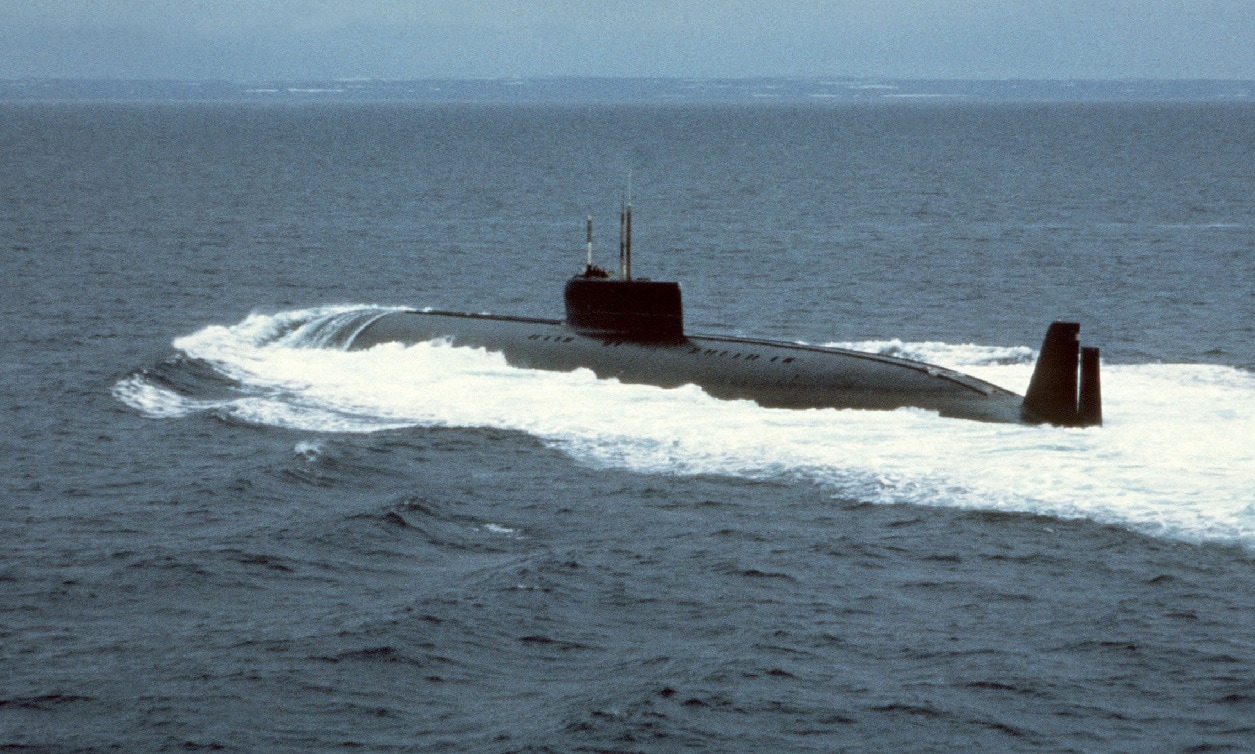
A port quarter view of a Soviet Papa class nuclear-powered cruise missile submarine (SSGN) underway.
The Project 705 Lira, which the West called the Alfa class, paired a titanium hull with a compact lead-bismuth reactor to exceed 40 knots and dive past 400 meters with a crew of just 31, though that reactor had to be kept molten at all times.
The deep-diving record went to the one-off Project 685 Komsomolets, whose titanium hull made her the deepest-diving military submarine ever built, reaching 1,020 meters, about 3,350 feet, in 1984.
The Metal That Fights the Welder
The trouble with titanium starts the moment a welder strikes an arc.
The metal reacts violently with oxygen and nitrogen when heated, so a titanium hull cannot be welded in the open air of an ordinary shipyard as a steel one can.
To join large titanium panels at submarine scale, Soviet engineers built enormous hermetically sealed halls, flooded them with inert argon gas, and sent welders inside wearing cosmonaut-style suits fed with their own oxygen, working a metal that is rare and costly and hard to shape to begin with.
The work was slow and unforgiving. A single flawed weld could embrittle the metal and leave a hull that might fail under the crushing pressure of a deep dive, and some of the early Lira hulls did crack.
The Golden Fish and the Industry It Demanded
Titanium was just the start of the problems. It was the industrial base a titanium submarine required, and the K-222 shows the scale of it.
Building the one boat pulled in over 400 organizations and forced the Soviet shipbuilding industry to invent new methods for fabricating and welding titanium, along with specialized tooling, controlled work areas, and welders trained in practices that did not exist at the required scale.
The Soviet Union, in effect, had to build a national industry to produce a single submarine, and the nickname captured the result.
Only one Papa-class boat was ever completed.
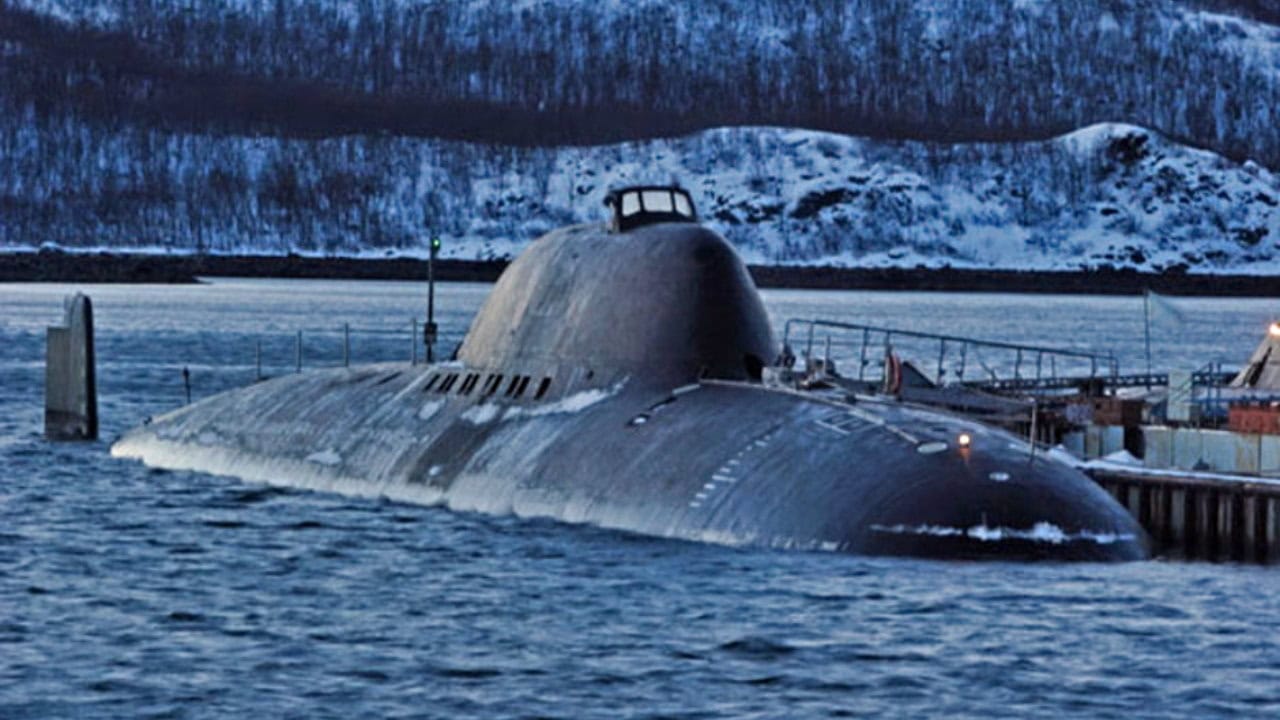
Alfa-Class Russian Navy. Image Credit: Creative Commons.
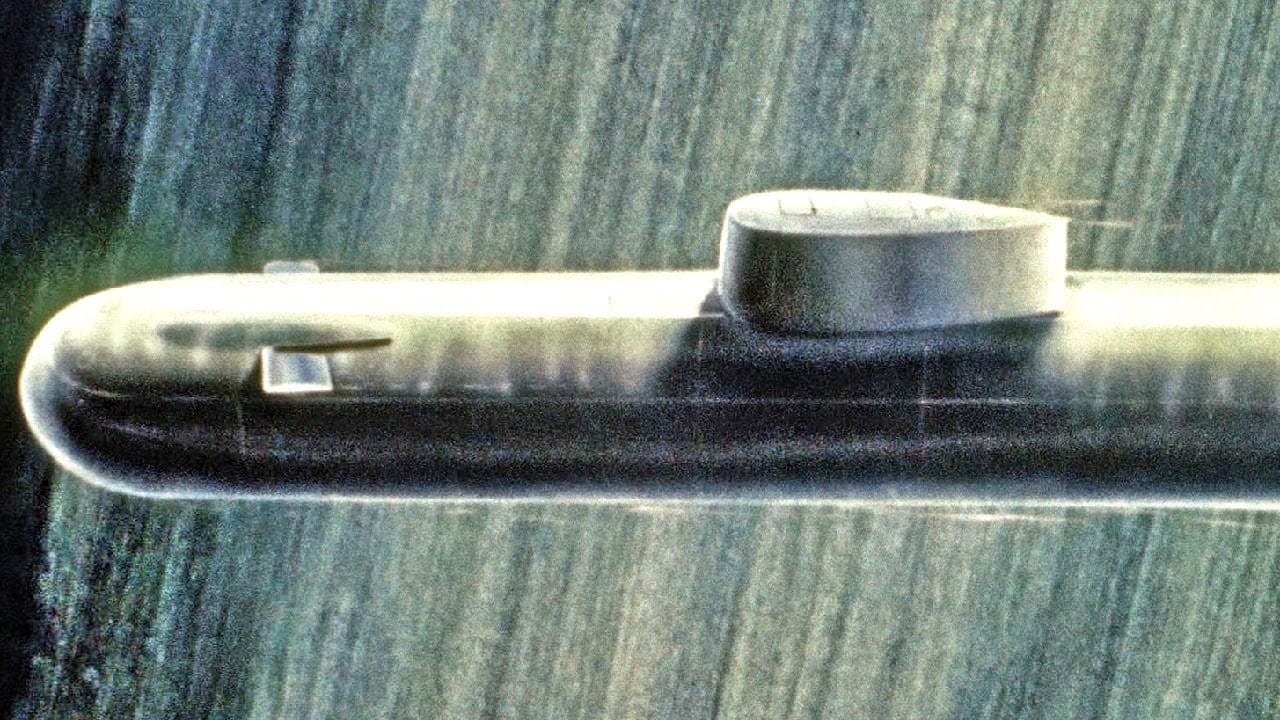
Alfa-Class Submarine. Image Credit: Creative Commons.
The lesson repeated with every titanium class that followed: the exotic hull drove cost and complexity up and unit numbers down.
No other navy followed the Soviets down that path, and the Soviet Union remained the only country ever to build submarine pressure hulls out of titanium.
Why the US Navy Ran the Numbers and Said No
American designers looked hard at the titanium boats and reached a blunt conclusion.
Steel had long been the most widely used material for submarine pressure hulls, backed by deep design and manufacturing knowledge and a proven record in the ocean, and the Navy weighed titanium’s cost and complexity and decided the metal was not worth building a hull from.
The steel did most of what the mission actually required.
The HY-80 and HY-100 alloys used in American submarines support crush depths in the range of 1,800 to 2,250 feet, and while a titanium Alfa could go deeper, the steel boats reached depths that covered nearly every situation a captain would face.
As one materials reference puts it, HY-80 remains the cost-effective choice for most submarine hulls, with titanium reserved for depth-critical applications. American submarines gave up perhaps a third of the theoretical depth for a fraction of the cost, an established supply chain, and a workforce that already knew how to weld the material.
Steel carried a second advantage the Soviets never enjoyed. A steel-hulled boat can be repaired in any major shipyard, in the open air, without an argon-flooded hall and a crew in breathing suits.
A titanium boat that needed structural repair could only be treated in the same specialized, sealed environment that built it. The titanium fleet therefore needed dedicated facilities to build and to fix, infrastructure the United States would have had to fund and sustain for a small number of boats.
The Bet on Silence Instead of Speed
The money the Navy did not spend on titanium went into a different edge: making its submarines quiet.
Through the 1970s and 1980s, American designers poured investment into rafted machinery, skewed propellers, pump-jet propulsors, and hull coatings that absorb sound, and the payoff was the ability to hear an opponent first.
Speed and depth mattered little to a boat that was found and targeted before it knew an enemy was near.
The titanium boats made that problem worse for the Soviets, because the high speeds came with a roar of noise that made a fast titanium boat easy for American sonar to detect and track.
In the specific case of a Soviet boat trying to outrun a torpedo, the Navy built the Mark 48 heavyweight torpedo, a weapon fast enough to catch the titanium Alfa and Sierra classes.
What the Titanium Fleet Actually Bought the Soviets
Set against the enormous industrial bill, the operational return on titanium was thin.
Across four classes, the Soviet Union completed only about 13 titanium boats: one Papa, seven Alfa, four Sierra, and the single Mike.
The Sierra class, the most refined of them, was enormously costly and complicated to manufacture, and only four were completed of five planned.
The boats were formidable in the water, able to dive beyond 550 meters, well past the roughly 450-meter working limit of the Los Angeles class, even as a senior American engineer quoted on the program called the titanium brutally expensive and not compatible with scalable submarine production.
The Soviets could never afford the boats in numbers, and only two Sierra hulls remain in Russian service today, both well over 35 years old.
The record-setters met hard ends. The Papa-class K-222 served as a single expensive experiment and was retired in the 1980s. The deep-diving Komsomolets caught fire and sank in the Norwegian Sea in April 1989, killing 42 of her 69 crew. The Alfa boats were withdrawn from service by the mid-1990s.
The United States carried its steel-and-silence formula forward into the Los Angeles, Seawolf, and Virginia classes, which remain the core of the American submarine force today.
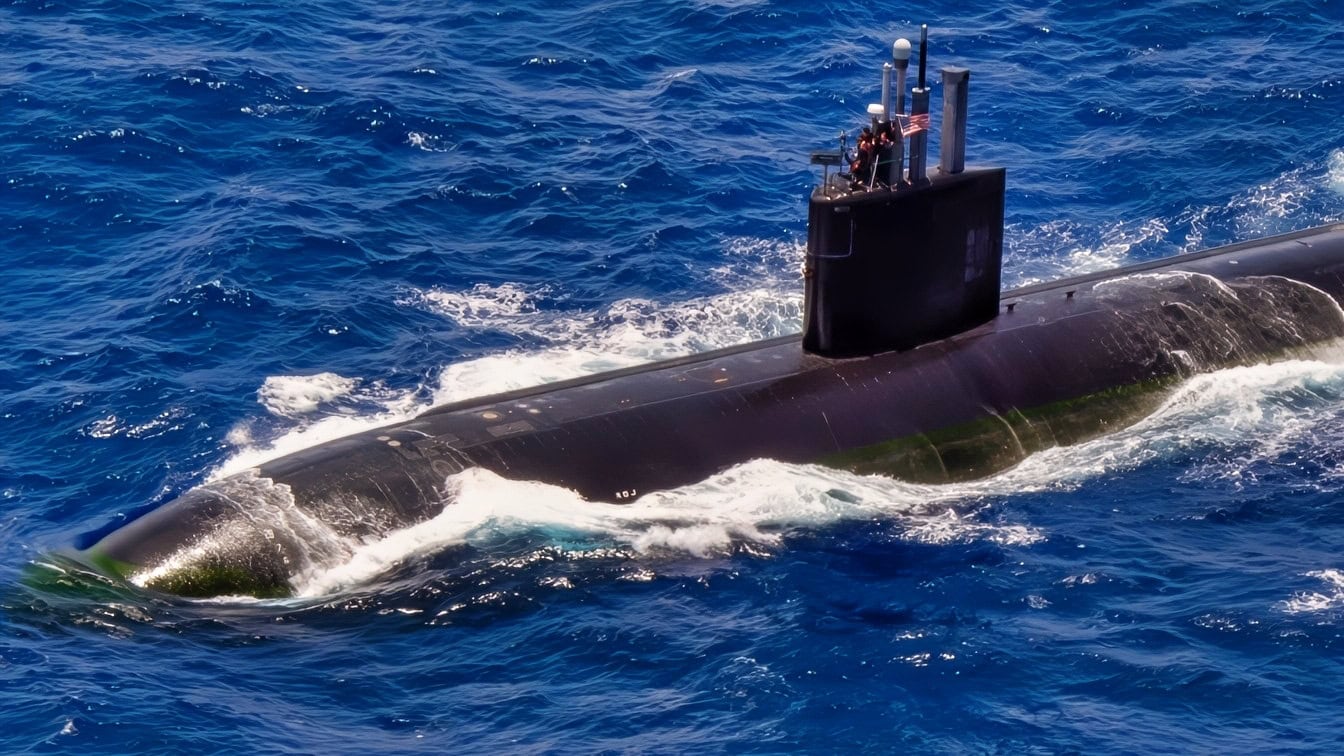
Virginia-class submarine USS North Carolina (SSN-777) sails during the at-sea phase of Exercise Rim of the Pacific (RIMPAC) 2024. Twenty-nine nations, 40 surface ships, three submarines, 14 national land forces, more than 150 aircraft and 25,000 personnel are participating in RIMPAC in and around the Hawaiian Islands, June 27 to Aug. 1. The world’s largest international maritime exercise, RIMPAC provides a unique training opportunity while fostering and sustaining cooperative relationships among participants critical to ensuring the safety of sea lanes and security on the world’s oceans. RIMPAC 2024 is the 29th exercise in the series that began in 1971. (U.S. Navy photo by Mass Communication Specialist 2nd Class Terrin Hartman)
About the Author: Harry J. Kazianis
Harry J. Kazianis (@Grecianformula) was the former Senior Director of National Security Affairs at the Center for the National Interest (CFTNI), a foreign policy think tank founded by Richard Nixon based in Washington, DC. Harry has over a decade of experience in think tanks and national security publishing. His ideas have been published in the NY Times, The Washington Post, The Wall Street Journal, CNN, and many other outlets worldwide. He has held positions at CSIS, the Heritage Foundation, the University of Nottingham, and several other institutions related to national security research and studies. He is the former Executive Editor of the National Interest and the Diplomat. He holds a Master’s degree focusing on international affairs from Harvard University.

![Five Men, Possibly in S-Vests, Arrested in Car Bomb Plot at Base Where Iran Strikes Were Launched [WATCH]](https://www.lifezette.com/wp-content/uploads/2026/09/2026.09.27-14.26-lifezette-6ab9278786625.jpg "Five Men, Possibly in S-Vests, Arrested in Car Bomb Plot at Base Where Iran Strikes Were Launched [WATCH]")