
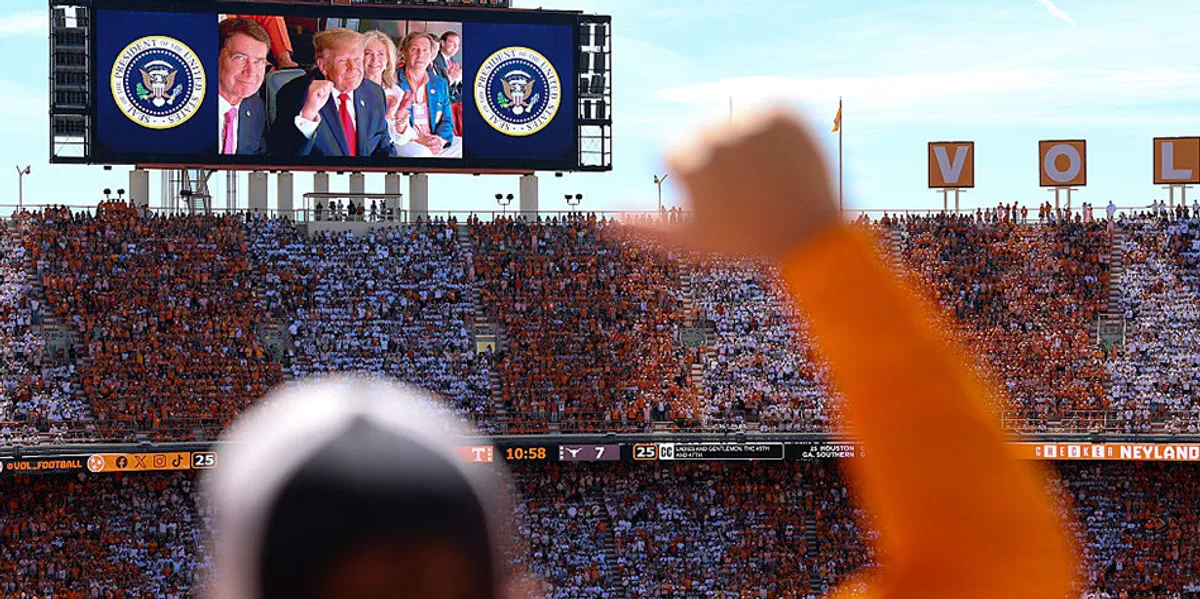

The NCAA got one step closer to achieving its President Trump-aligned rule changes this week.
For months, the president has been pushing sweeping adjustments to college athletics that would limit transfers, payments, and eligibility for athletes.
‘It will not only save college sports, it will save the colleges themselves.’
On Monday, the Senate passed the Protect College Sports Act of 2026 in a 77-22 vote, with the bill sponsored by Sen. Ted Cruz (R-Texas).
The vote came months after Trump’s executive order that urged national action on the issue in April and received support from legendary college coaches.
While the legislation does favor the historic college institutions in some regards, it also benefits student-athletes.
The bill prohibits schools, conferences, and the like from restricting student-athletes from entering into name, image, and likeness agreements; students must report any NIL compensation to their school that is greater than $600.
Other big changes come in the form of limiting player and personnel movement. Student-athletes are allowed only one transfer during their eligibility, or they otherwise face having to sit out for a year.
The five-year eligibility window would also change, effectively upending the redshirt system and replacing it with a fixed eligibility window. Under the bill, five calendar years of eligibility would be initiated at the start of the academic year after the athlete has turned 19 or the day the athlete first enrolls full-time in college, whichever comes first.
For coaches, football personnel cannot become the head football coach at a different institution during the same season.
The bill still faces a battle in the House in order to become law and will likely have to wait until after the midterm elections. However, the president still called the Senate vote “a really big deal.”
“It will not only save college sports, it will save the colleges themselves,” Trump wrote on Truth Social. “Congratulations to Randy Levine, President of the New York Yankees, and all of those who worked with him, on a job well done!”
RELATED: ESPN’s Pat McAfee gets death threats over Trump comments. There’s just one problem — he didn’t say them.
Other changes in the bill would prohibit Division 1 conferences from “reducing the number of varsity or Olympic sports teams that a member institution must sponsor,” with schools that make $80 million in athletics revenue prevented from reducing the number of roster spots for sports that they provided in 2024-2025.
Student-athletes also get a 10-year window after eligibility to come back and finish their degree, and schools must provide the same grant-in-aid amount as when they were student-athletes.
As well, agent endorsement contract fees are capped at 5% under the bill, and school spending on athletes is capped at $50 million annually.
RELATED: NY Giants quarterback labeled ‘insane’ over pregame comments — almost no one knew he was quoting the Bible
Johnnie Izquierdo/Getty Images
The NCAA has boasted about the Protect College Sports Act on its website, insisting it will “level the playing field” nationwide.
The NCAA says it supports “sustainable, fair revenue sharing,” protecting women’s and Olympic sports, and “reasonable” transfer limitations.
The Big Ten Conference also issued a statement Monday: “We look forward to the next steps to passage as we continue to support the act as passed by the Senate.”
The Hill reported the bill as granting the NCAA sweeping federal antitrust protection that would shield it from lawsuits, with Sen. Chris Murphy (D-Conn.) claiming it will only perpetuate exploitation.
“What this bill does, at its core, is protect a system of exploitation,” Murphy said, per CNN. “This bill protects the billions of dollars that coaches and executives are making by suppressing compensation for some of the most highly valued athletes in the world.”
Sen. Cory Booker (D-N.J.) said the bill seeks to serve “the large, wealthy interests that have been controlling college sports for a long time.”
Like Blaze News? Bypass the censors, sign up for our newsletters, and get stories like this direct to your inbox. Sign up here!
Read the full article here

![Rob Lowe Reveals His Greatest On-Screen Kiss [WATCH]](https://www.boredtrashpanda.com/wp-content/uploads/2026/09/2026.09.29-09.54-boredtrashpanda-6abb8acd94c5c.jpg "Rob Lowe Reveals His Greatest On-Screen Kiss [WATCH]")
![From Steel Mills to AI, the U.S. Economy’s Upside Is Hard to Ignore [WATCH]](https://www.rvmnews.com/wp-content/uploads/2026/07/2026.07.07-12.43-rvmnews-6a4cf46ac9008.jpg "From Steel Mills to AI, the U.S. Economy’s Upside Is Hard to Ignore [WATCH]")