
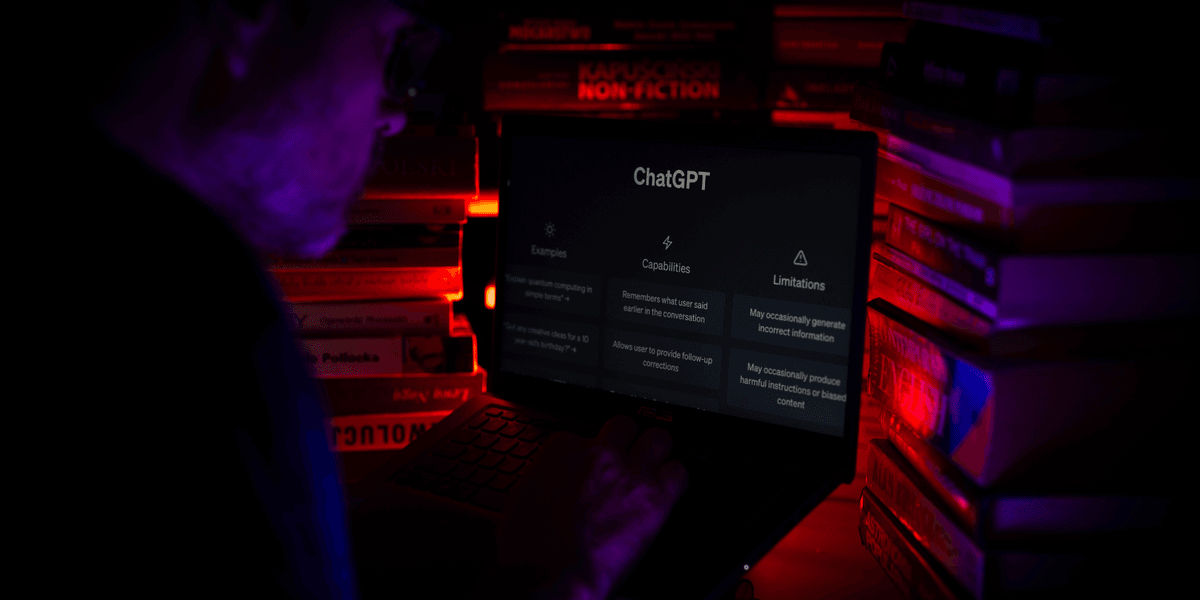

An AI chatbot is many things — a digital assistant, a web crawler, an agent to complete tasks on your behalf. One thing it isn’t, however, is a legally protected confidant. According to a report by the Washington Post, conversations with AI chatbots are increasingly used as evidence in court cases, outlining why you shouldn’t just tell your favorite bot anything that’s on your mind. Here’s what you can do to keep yourself safe.
The report details how chatbot conversations with ChatGPT and Claude were cited in 12 different court cases, many of which led to convictions. The cases ranged in severity from a young man caught up in the social media addiction trial to more violent cases where a Brazilian father (unsuccessfully) asked ChatGPT for tips to hire a hit man to murder himself and his son.
You’re not talking to a bot in your phone. You’re exchanging ideas with an entire data center.
In each of these cases, public chat logs were brought into court through the discovery process or by reviewing defendants’ phones, where the chat history was still saved to their devices.
If you think this could never be you, think again. Even if you are not suspected of a crime or are not a “person of interest”, your chat logs could still be subpoenaed and drawn into a related court case to use as evidence, with or without your knowledge. Nothing you write is private.
Your AI conversations say a lot about you
The thing that makes AI chatbot conversations so revealing is that their back-and-forth nature gives the AI bot insight into a person’s thought patterns. Instead of asking a simple question and receiving a simple answer, like we did in the days of Google, chatbots invite conversation where thoughts take shape and reveal the intentions of the person behind the keyboard.
In cases where a crime is committed, these intentions are often enough to secure a conviction.
Furthermore, conversations with chatbots do not have the same protections that people receive with a doctor, lawyer, or psychiatrist. Everything is publicly visible, accessible within the chatbots’ servers, and subject to scrutiny. Many AI companies, like OpenAI, even have automated filters that flag dangerous conversations for human review, where these can then be reported to authorities if a crime or serious harm is imminent.
Tips to keep your AI chat history out of court
For the best chance to keep your chat history out of a court case, you have a few options at your disposal.
- Don’t use AI: This one is easy, but if you don’t want your chat logs brought into a court case, simply don’t make your conversations available at all. Avoid saying anything to a chatbot, and you will keep your privacy and personal thoughts intact. That said, it’s growing harder to avoid AI, with companies adding bots to their websites and apps at every turn.
- Use a private AI service: Private AI platforms have started to pop up recently. The popular private web browser DuckDuckGo has a solution called duck.ai that lets you use several mainstream AI models — including ChatGPT and Gemma, Google’s lightweight alternative to Gemini — with a privacy layer built in between to protect your identity. Proton also has a “zero-access encrypted AI assistant” called Lumo. Then there’s Leo, a private alternative by the makers of the Brave browser.
- Use a local LLM: As frontier models push past the boundaries of possibility, local open-source versions have gotten quite good in recent months. The best part is that these run entirely on your device with no need to interact with a third-party cloud or server. Your conversations are truly private. The only downside is that you need a powerful phone or laptop with plenty of RAM (even more than you think you need); otherwise your options are limited.
RELATED: Thousands of lawyers caught using AI — and it’s only getting worse
DAVID MAIALETTI/POOL/AFP/Getty Images
That’s not a chatbot. You’re talking to a supercomputer.
If you’ve ever held a conversation with a chatbot, you’ll know instantly that it’s nothing like an old-fashioned Google search on the web. You write something, and the bot writes back almost like a helpful friend or family member waiting for you to dish your deepest thoughts. It’s easy to feel lulled into a sense of privacy and safety — after all, it’s just you and the chatbot in your device. Nobody else is privy to the conversation, but that’s not the reality of the situation.
You’re not talking to a bot in your phone. You’re exchanging ideas with an entire AI data center that is owned and operated by a large company, and that company wants as much of your data as possible. So while it may feel like your conversation is private, an entire supercomputer is using it to map your thoughts, train future models, and — if things go bad — even drag you into court with your own words used against you as evidence.
It’s better not to use AI than to get caught up in an unsavory situation. Or just choose a more private option.
Like Blaze News? Bypass the censors, sign up for our newsletters, and get stories like this direct to your inbox. Sign up here!
Read the full article here