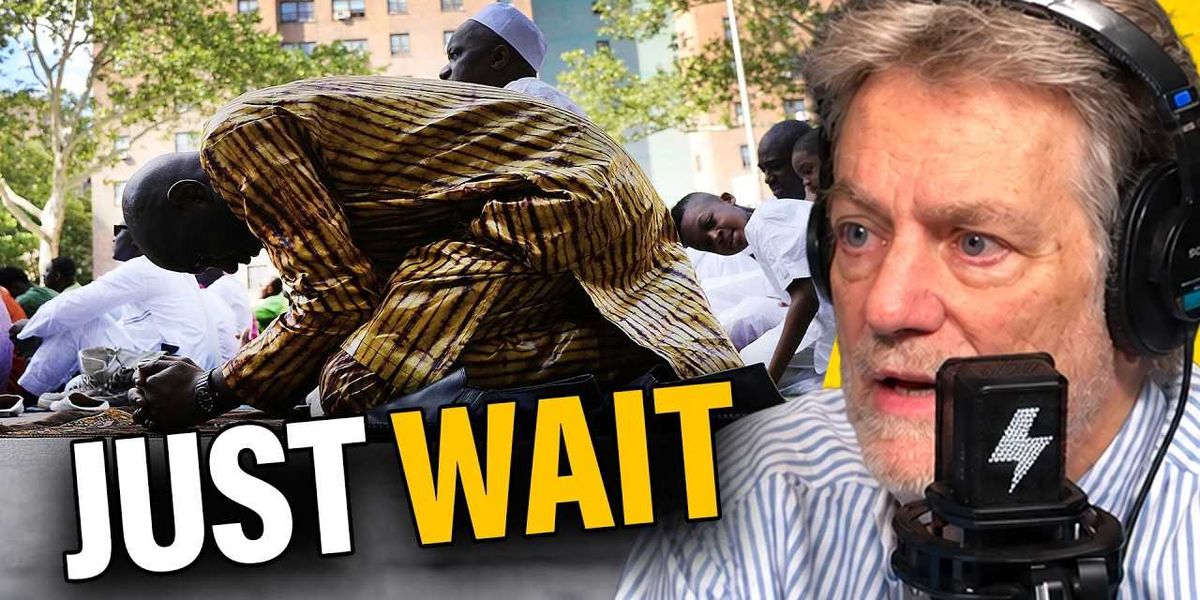
New York City’s recent release of a map highlighting immigrant communities has ignited fierce controversy.
The map, endorsed under Mayor Mamdani, notably omitted Little Italy while prominently featuring Little Pakistan, Little Yemen, multiple Chinatowns, and Little Bangladesh.
Jewish American enclaves in Brooklyn were also absent.
The exclusion of one of America’s most storied immigrant neighborhoods sparked immediate backlash, exposing what many see as a selective rewriting of the nation’s immigrant narrative.
Here’s What They’re Not Telling You About Your Retirement
After public outcry, officials promised adjustments to include Little Italy, but the initial omission sent a troubling message: some histories matter more than others in the eyes of certain progressive factions.
This controversy transcends simple map making.
It reflects a deeper ideological push by groups like the Democratic Socialists of America (DSA) to reshape America’s story.
Italian immigrants, who arrived in massive waves between 1880 and 1920, numbered over four million.
This Could Be the Most Important Video Gun Owners Watch All Year
Many carried little more than hope and determination, settling in the gritty Five Points and Mulberry Bend areas of Lower Manhattan.
There, amid overcrowded tenements and challenging conditions, they forged Little Italy, a vibrant hub of family, faith, and resilience.
St. Patrick’s Cathedral served as a spiritual anchor, while residents preserved language, cuisine, traditions, and a fierce work ethic.
These immigrants faced discrimination, economic hardship, and cultural barriers, yet they assimilated, contributed immensely to building modern America, and rose through generations.
By the mid-20th century, many moved to outer boroughs and suburbs, but their legacy endures in food, culture, politics, and the American Dream itself.
Chinatown and SoHo have since expanded into former Italian blocks, shrinking the physical footprint of Little Italy.
Yet its symbolic importance remains.
Erasing it from an official map dismisses the sweat, tears, and sacrifices of millions who helped shape a great nation, not as victims, but as builders.
This incident fits a broader pattern of socialist activists.
Since the 2020 Black Lives Matter protests, statues of figures like Christopher Columbus and Jefferson Davis have been toppled or removed amid political pressure.
While debates over public monuments are legitimate, the wholesale effort to scrub uncomfortable or inconvenient chapters risks forgetting the full American story.
America’s past includes triumphs and tragedies, ideals and imperfections.
The nation’s founders designed the Constitution precisely because they understood human frailty.
Its amendment process allowed future generations to confront injustices—abolishing slavery, expanding voting rights, and safeguarding individual liberties—without
discarding the framework that enabled progress.
Socialists appear intent on accelerating this erasure.
Proposals from some DSA-aligned thinkers include restructuring core institutions: eliminating the Senate’s equal state representation, weakening the presidency, or subordinating the Supreme Court solely to the House.
Such changes would fundamentally alter the constitutional republic, replacing checks and balances with majoritarian rule that could endanger minority rights and federalism.
Critics argue this agenda prioritizes a utopian vision that elevates certain “chosen” narratives—often tied to contemporary geopolitical or identity preferences—while sidelining others, like European immigrant success stories that affirm assimilation and capitalism.
Italian Americans exemplify the melting pot ideal.
They transformed from impoverished newcomers into pillars of society, producing leaders in business, entertainment, sports, and government.
Their story counters narratives that portray America as irredeemably oppressive.
Forgetting it serves those who prefer grievance over gratitude and collective control over individual opportunity.
The power of historical memory finds precedent in “Remember the Alamo.”
In 1836, after a 13-day siege, Mexican forces overwhelmed the Alamo mission, killing nearly all Texian defenders.
Yet weeks later, the cry “Remember the Alamo!” galvanized Sam Houston’s troops at the Battle of San Jacinto, securing Texas independence.
The slogan transformed defeat into inspiration, fueling resolve for liberty.
Today, “Remember Little Italy!” could serve as a similar rallying cry.
It calls Americans of all backgrounds to defend their shared heritage against ideological efforts to redraw maps—literal and figurative—that marginalize successful assimilation.
It urges preservation of the Constitution not as a relic, but as a document that has guided the world’s most prosperous and free society.
In an era of identity politics and selective remembrance, recognizing every community’s contribution fosters unity rather than division.
Little Italy’s omission was more than oversight; it symbolized disdain for histories that validate America’s promise.
Mayor Mamdani’s backtrack acknowledges public pushback, yet vigilance remains essential.
Americans must reject attempts to curate the past for political ends. By remembering Little Italy—its struggles, triumphs, and enduring spirit—we reaffirm commitment to individual freedom, capitalist enterprise, and constitutional governance.
The battle is not merely about a neighborhood on a map.
It about whether America retains its exceptional character or succumbs to a homogenized, top-down ideology.
As socialist influences grow in cities and institutions, the cry “Remember Little Italy!” reminds us what’s at stake: the greatest nation on earth, imperfect yet unparalleled, built by immigrants who embraced its ideals.
Let this be the inspiration to push back, preserve history, and secure the future.
The Real MOU: What Trump’s Iran Agreement Actually Says – Truth Thursday | EP 677
Read the full article here

![Johnson and Shirley Expose Massive Minnesota Fraud Funnel Sending Tax Dollars to Somali Terrorists [WATCH]](https://www.lifezette.com/wp-content/uploads/2026/04/2026.04.24-10.01-lifezette-69eb3f7fbb5ac.jpg "Johnson and Shirley Expose Massive Minnesota Fraud Funnel Sending Tax Dollars to Somali Terrorists [WATCH]")


![University of Utah Threatens to Expel College Republicans Who Exposed Vile Charlie Kirk Anniversary Celebration [WATCH]](https://www.lifezette.com/wp-content/uploads/2026/09/2026.09.16-18.02-lifezette-6aaad9aa55a11.jpg "University of Utah Threatens to Expel College Republicans Who Exposed Vile Charlie Kirk Anniversary Celebration [WATCH]")