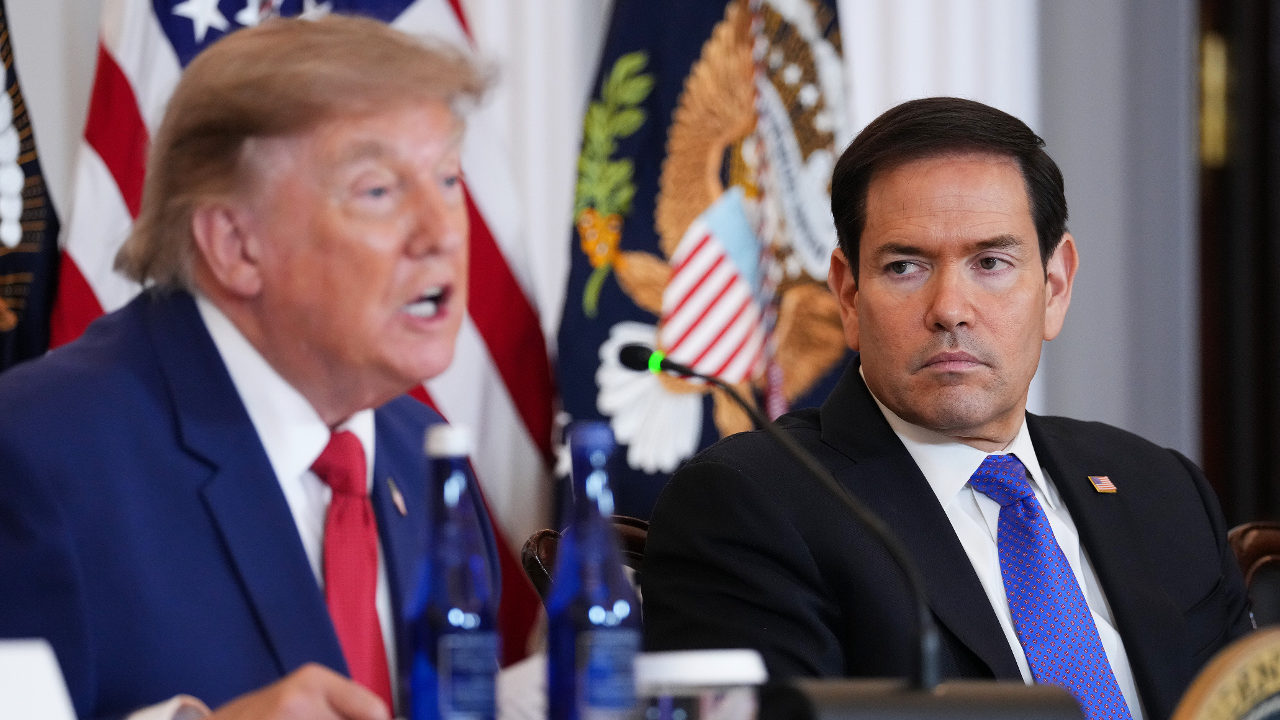
Chinese leader Xi Jinping didn’t mince words with President Donald Trump during their summit in Beijing, delivering what amounted to a verbal warning shot over Taiwan.
The communist strongman made clear that any U.S. move perceived as backing Taiwanese independence would risk plunging China and the United States into a direct confrontation.
“The Taiwan question is the most important issue in China-U.S. relations,” Xi told Trump, according to a Chinese government account of the meeting.
He went further, adding that if handled incorrectly, the two nations could face “clashes and even conflicts” that endanger the entire relationship.
Here’s What They’re Not Telling You About Your Retirement
For Washington, relations with Taipei have always been a delicate balancing act. For Beijing, they’re a matter of eventual “reunification,” coerced or otherwise.
Xi has been explicit: the People’s Liberation Army should be ready to invade Taiwan by 2027. It’s a timeline that hasn’t gone unnoticed within the War Department, where commanders continue to prepare for potential Pacific contingencies.
Since the 1970s, U.S. administrations have publicly adhered to “strategic ambiguity,” leaving open the question of whether the U.S. military would step in if China launched an invasion. That ambiguity has kept the peace for decades, but as Beijing grows more aggressive, the strategy looks increasingly tested.
George Chen, a partner for the Greater China practice at the Asia Group, suggested that Xi’s tough rhetoric wasn’t necessarily an escalation but rather a deliberate boundary-setting tactic.
This Could Be the Most Important Video Gun Owners Watch All Year
“President Xi’s opening remarks, right in front of President Trump, put a huge emphasis on Taiwan because Xi wants to make it crystal clear he has zero tolerance for any moves toward Taiwan independence,” Chen said.
He added that Xi doesn’t appear to want a military showdown “at least not yet,” betting instead on diplomacy or intimidation to achieve his goals.
However, when a regime builds new amphibious assault ships and expands air bases across the Taiwan Strait, words like “not yet” only carry so much credibility.
Meanwhile, the Trump administration has balanced firmness with pragmatism. Ahead of the meeting, President Trump acknowledged that the State Department had stalled a proposed $14 billion arms deal with Taiwan, saying he planned to raise the issue directly with Xi.
“President Xi would like us not to. And I’ll have that discussion,” Trump told reporters before departing Washington.
U.S. officials haven’t forgotten that just last year the Trump administration signed off on the largest arms sale to Taiwan in history, a package valued at $11 billion.
That sale, which included cutting-edge drones and missile systems, sent a clear message of U.S. resolve in the face of Beijing’s saber-rattling.
The Beijing talks came after a delay caused by the ongoing conflict in Iran, which consumed much of Washington’s focus in recent weeks.
Despite the tense timing, the Chinese government rolled out the red carpet for Trump’s visit. A 21-gun salute boomed across the Forbidden City while children waved U.S. and Chinese flags in carefully choreographed displays of pageantry.
But the diplomatic niceties couldn’t hide the fact that both leaders are navigating multiple global flashpoints at once.
In the Middle East, the fragile ceasefire with Tehran again teeters on collapse, and Iran’s tightening grip on the Strait of Hormuz continues to threaten world oil markets.
According to a White House readout, both Trump and Xi agreed that the Strait must remain open.
They also rejected any Iranian efforts to impose tolls on passing vessels—an unacceptable provocation in one of the world’s most strategic waterways.
In a follow-up interview with Fox News, President Trump said Xi expressed interest in helping to stabilize the region.
“President Xi would like to see a deal made,” Trump said. “Anybody that buys that much oil has obviously got some sort of relationship with them.”
Even more telling, Trump noted that Xi pledged China would not supply military equipment to Iran—a notable concession that carries weight as Beijing continues to expand its military influence globally. “That’s a big statement,” Trump emphasized.
The exchange showcased Trump’s ability to confront authoritarian leaders directly while keeping diplomatic channels alive.
Where the previous administration might have wilted under Beijing’s pressure, Trump matched Xi’s tough talk stride for stride, making it clear that while America seeks peace, it will not fold when its allies are threatened.
For China, the message was equally sharp: the American president is no pushover.
And for Taiwan, Washington’s commitment—rooted in credible strength and guided by a pro-American posture—remains as firm as ever.
Whether Xi’s warning was bluster or a genuine threat, one thing is certain: the Taiwan flashpoint just became even hotter, and Beijing knows that under Trump’s leadership, the United States won’t back down.
Warning: Account balances and purchasing power no longer tell the same story. Know in 2 minutes if your retirement is working for you.
The opinions expressed by contributors and/or content partners are their own and do not necessarily reflect the views of LifeZette. Contact us for guidelines on submitting your own commentary.
Read the full article here


![JD Vance Torches Fake News Hack Downplaying $46M Taxpayer Rip-Off in Maine [WATCH]](https://www.lifezette.com/wp-content/uploads/2026/05/2026.05.15-11.37-lifezette-6a070580848b1.jpg "JD Vance Torches Fake News Hack Downplaying $46M Taxpayer Rip-Off in Maine [WATCH]")