


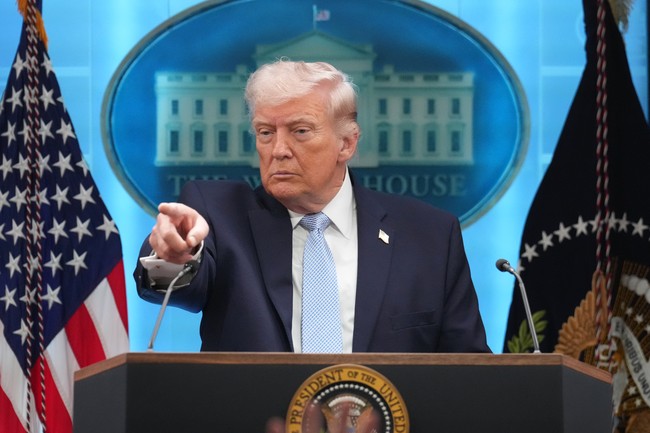
![DeSantis Pushes Florida Lawmakers to Ban Cousin Marriage, Cites Cultural Concerns [WATCH]](https://www.rvmnews.com/wp-content/uploads/2026/01/2026.01.06-01.49-rvmnews-695d12e787885.jpg "DeSantis Pushes Florida Lawmakers to Ban Cousin Marriage, Cites Cultural Concerns [WATCH]")

Florida Gov. Ron DeSantis is calling on state lawmakers to ban marriage between first cousins, saying the state is behind others that already prohibit the practice, as reported by Fox News.
DeSantis made the remarks Monday during a signing ceremony in Tampa for a separate law that allows state officials to designate certain groups as terrorist organizations and expel students who support them.
While discussing the legislation, the governor raised the issue of cousin marriage, noting that Florida law does not currently prohibit unions between first cousins.
Florida Weighs Ban on ‘Stealth Jihad’ Cousin Marriages.
Florida is considering a potential ban on marriage between first cousins. “Florida doesn’t ban cousin marriage: That’s a hanging curveball for us to do; we need to do that,” said Governor Ron DeSantis (R) in Tampa on… pic.twitter.com/4ugCN6oeyy
— Raheem J. Kassam (@RaheemKassam) April 7, 2026
“Florida doesn’t ban cousin marriage: That’s a hanging curveball for us to do; we need to do that,” DeSantis said during the event.
Here’s What They’re Not Telling You About Your Retirement
Florida law already bans marriages involving close relatives such as siblings, parents, grandparents, nieces, and nephews.
However, first cousins are not included in those restrictions. DeSantis said he believes that should change and pointed out that other states have already taken similar action.
“Other states have done it,” he said.
“I don’t know why we wouldn’t, but obviously that feeds into some of the stealth jihad that we see when you’re allowing things like that. It’s things that are coming in from other cultures that are not consistent with the United States culture, and certainly our culture here in Florida.”
This Could Be the Most Important Video Gun Owners Watch All Year
The governor’s push follows the failure of House Bill 733 in 2025, which would have added first cousins to the list of prohibited marriages beginning July 1.
Supporters of the measure have cited public health concerns, including an increased risk of genetic disorders, while critics have argued that such decisions fall within the realm of personal freedom and private family matters.
DeSantis had previously indicated that the issue could return to the legislative agenda. In a post on X last month, he wrote, “For some reason, the ban on cousin marriages was dropped during the legislative process. Stay tuned.”
Yes, the bill is necessary but not sufficient. More needs to be done.
For some reason the ban on cousin marriages was dropped during the legislative process.
Stay tuned. https://t.co/dPRoXnic8s
— Ron DeSantis (@RonDeSantis) March 30, 2026
The current legislative session is expected to be DeSantis’ final one as governor, as he is term-limited and set to leave office at the end of the year.
However, he suggested that additional action could still be taken, including the possibility of a special session to revisit the issue.
“Now, there were some things that were a part of this package that we may need to add in upcoming, because I think there were some things that we really need,” DeSantis said.
He described the issue as “important” for American culture and immigration law.
“We have got to stop as a country importing people that reject the values of this country, and that’s just been going on for a long time,” he added.
BREAKING: After cracking down on Sharia Law, Gov. Ron DeSantis is moving to BAN the common Islamic practice of marrying a first cousin
“Florida needs to get with the program. It’s part of cultures that are antithetical to American values!”
DO IT! pic.twitter.com/wtudTBqyED
— Eric Daugherty (@EricLDaugh) April 8, 2026
During his remarks, DeSantis also referenced a recent federal case involving relatives of a high-ranking Iranian military figure.
He pointed to the arrest of the niece and grand niece of former Islamic Revolutionary Guard Corps Major General Qasem Soleimani.
The arrests followed Secretary of State Marco Rubio’s decision to terminate their lawful permanent resident status.
“How do they get to where she was even here to begin with?” DeSantis asked. “What is it about our laws or administrative bureaucracy over what, I think, a period of four or five years?”
The law signed Monday grants authority to the state’s chief of domestic security, along with the governor and cabinet, to designate organizations as terrorist groups if they are determined to be involved in extremist activities.
Once designated, those groups can be dissolved and face a freeze on state funding.
The legislation also includes provisions related to higher education, stating that students can be expelled if they are found to have promoted a domestic or foreign terrorist organization.
Warning: Account balances and purchasing power no longer tell the same story. Know in 2 minutes if your retirement is working for you.
The opinions expressed by contributors and/or content partners are their own and do not necessarily reflect the views of LifeZette. Contact us for guidelines on submitting your own commentary.
Read the full article here



![Britney Spears Shares a Butt-Slapping Dance Clip Just Before Rehab Headlines [WATCH]](https://www.boredtrashpanda.com/wp-content/uploads/2026/03/2026.03.05-08.34-boredtrashpanda-69a9e8d7c7867.jpg "Britney Spears Shares a Butt-Slapping Dance Clip Just Before Rehab Headlines [WATCH]")

![SWAT Team Hunts Student Suspect After Deadly Natomas High Shooting in Sacramento [WATCH]](https://www.rvmnews.com/wp-content/uploads/2025/05/2025.05.04-09.35-rvmnews-681734ef9d352.jpg "SWAT Team Hunts Student Suspect After Deadly Natomas High Shooting in Sacramento [WATCH]")