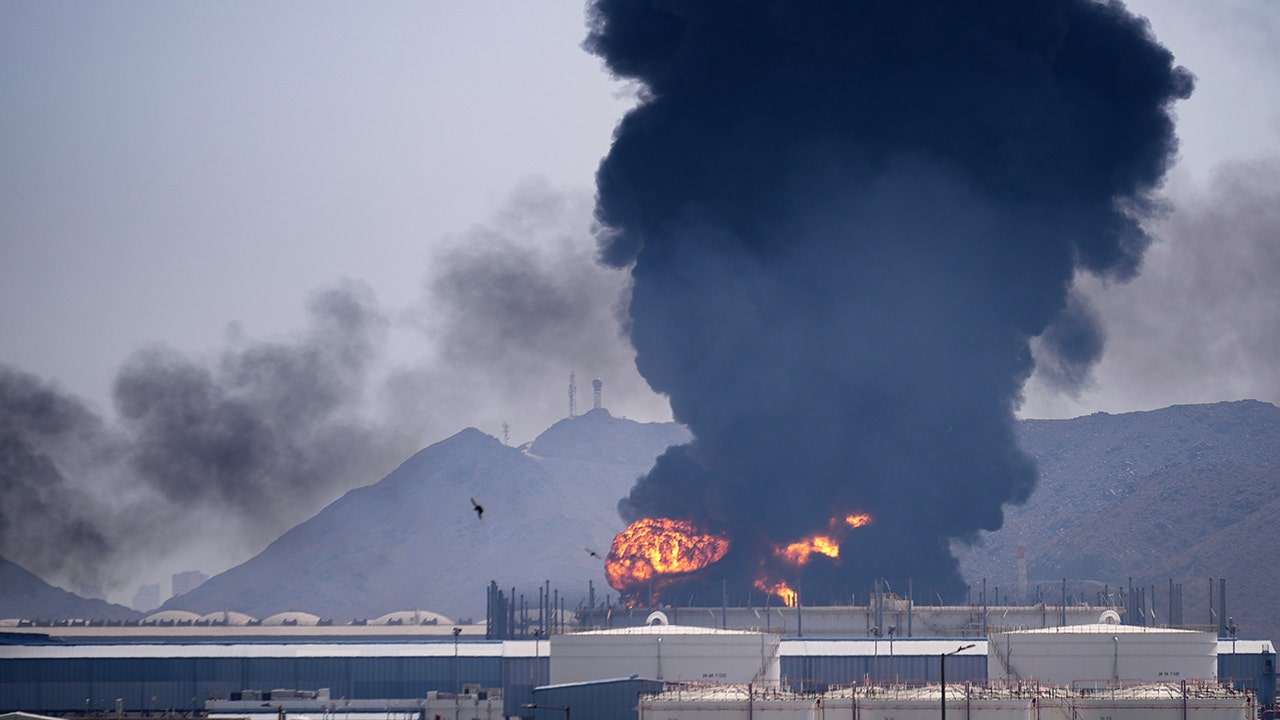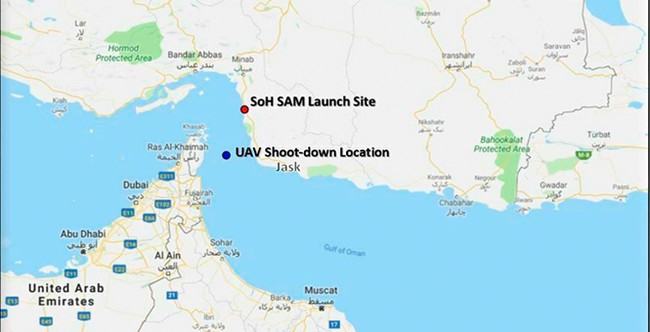

The Strait of Hormuz stand-off is causing a lot of heartburn to countries that rely on that transit to deliver the fossil fuel products – oil, liquid natural gas (LNG), etc – that keep them on the move, in the air, and the country’s lights on.
But there’s another commodity being throttled at the moment that has farmers around the world tremendously concerned, and has implications for consumers down the road. And unlike the fossil fuel situation, which only minimally impacts us by raising costs but not shortages here in the States, the fact that components that make up nitrogen fertilizer cannot make the passage is a whole different barrel of apples.
Something close to 49% of the some of the world’s fertilizers go through the Strait of Hormuz. Let that sink in.
NEW: According to the Financial Times, the Strait of Hormuz is as critical for global food security as it is for energy, carrying essential fertilizer components that support half of the world’s food supply.
Gulf states provide 49% of globally traded urea and 30% of ammonia,… pic.twitter.com/3BZRy3Ytxr
— Mintel World (@mintelworld) March 24, 2026
…Gulf states provide 49% of globally traded urea and 30% of ammonia, both vital for high-yield agriculture. Supply disruptions are forcing farmers to switch from corn to crops like soybeans that require less nitrogen, guaranteeing lower global yields.
With many nations lacking long-term grain reserves, the shortage risks pushing regions like the Horn of Africa into famine and triggering widespread political instability within 18 months due to price spikes.
A significant portion of the formula, urea, originates from Iran and surrounding countries.
…The Middle East is a particularly large exporter of urea and nitrogen products, according to Chris Lawson, vice president of market intelligence and prices at CRU.
“With the Strait of Hormuz essentially cut off, there’s a big chunk of global trade that isn’t able to move right now,” Lawson said. “We estimate around 30% of exportable suppliers are not really available to the market right now, that is Saudi Arabia, Qatar and Bahrain, but that also includes Iran.”
Iran, Lawson said, is an important producer of nitrogen-based fertilizers and one of the largest exporters globally.
“There’s a lot of traded supply that is at risk — 30% of global urea trade comes out of Iran and the Hormuz-constrained countries,” he told CNBC.
“It’s a long supply chain — if farmers aren’t able to get the urea that they need, crop yields will inevitably go lower. Nitrogen is the main nutrient that a crop needs to grow, [and] there will be inventories that can be drawn down, so you’re not really going to see an impact on crop yields and a loss of crop production until later in the year.”
As this analyst explains, everyone overthought fuel reserves in the event of a geopolitical shutdown, but no one thought about the food chain.
BREAKING: The world spent fifty years and hundreds of billions of dollars building Strategic Petroleum Reserves so that no geopolitical shock could starve civilization of energy.
Nobody built the equivalent for fertilizer.
That is the most expensive oversight in the history of… pic.twitter.com/xXggG2bRSH
— Shanaka Anslem Perera ⚡ (@shanaka86) March 16, 2026
…The Strait of Hormuz does not merely carry 20% of global oil. UNCTAD estimates roughly one-third of all seaborne fertilizer trade passes through it. The Fertilizer Institute estimates that conflict-exposed exporters account for nearly 49% of global urea exports and nearly half of global sulfur trade. Since February 28, daily ship transits have collapsed by 97%. Here is what almost nobody understands about why this is not “just another commodity spike.”…
…Agriculture runs on biological deadlines. Corn Belt farmers need nitrogen applied by mid-April. Indian Kharif season prep starts in May. Australian winter crop needs urea by June. These are not financial deadlines that reprice. They are photosynthetic deadlines that, once missed, produce irreversible yield loss. A diplomatic breakthrough on April 15 does not help a farmer who needed fertilizer on April 1.
And the yield math is nonlinear. Wall Street models fertilizer-to-output as proportional. It is not. The response is quadratic. In developed systems that over-apply nitrogen, a 15% reduction costs 2-5% of yield. In the Global South where farmers already under-apply, the same reduction pushes crops off a biophysical cliff. Sri Lanka proved this in 2021 when a sudden fertilizer ban collapsed rice production 40% in a single season and brought down the government.
The market is pricing a 45-day disruption. The insurance architecture says 120 days minimum. Even after a hypothetical ceasefire, Solvency II capital rebuild, reinsurance treaty renegotiation, and vessel re-underwriting take months. The Red Sea precedent: 26 months after Houthi attacks began, war-risk premiums never returned to pre-crisis levels…
…Meanwhile: 51% of US corn areas in drought. El Nino favored by June at 62% probability. Skymet assigns 60% chance of below-normal Indian monsoon. Bangladesh has shut five of six urea factories. India formally asked China for urea on March 12. Egypt faces $28 billion in debt repayments while importing 12.7 million tonnes of wheat. WFP identifies 318 million people already at crisis-level hunger.
The world stockpiled oil but forgot to stockpile the molecules that produce half its food.
It’s dramatic but hugely interesting.
Fertilizer futures have already begun a skyward climb, and American farmers are affected by both the closure and the price hikes, since up to a third of our fertilizer is imported.
…According to the U.S. Fertilizer Institute, around a third of nitrogen, phosphate and potash fertilizers used in the United States are imported.
“It’s going to be inflationary for the farmer,” Heyl said of rising fertilizer prices trickling through to the United States. “Are there going to be certain regions that can’t get their hand on the fertilizer or have to ration?”
A total of 54 agricultural groups recently wrote to U.S. President Donald Trump to call for “much-needed market relief for America’s farmers” amid surging fuel and fertilizer prices.
“As planting season began in earnest across much of the U.S., the closure of the Strait of Hormuz sent fuel and fertilizer prices skyrocketing,” they said. “Maritime freight disruptions from the ongoing conflict in Iran pose significant consequences to food security here at home and around the world.”
Analysts believe many American farmers will have a bit of a buffer against price shocks and possible shortages, as they tend to stock up before the season, but the prices when they do have to buy for planting will be brutal.
Disruptions to nitrogen fertilizer supply through the Strait of Hormuz could reduce global grain yields and shift planting decisions, potentially lifting grain prices, Goldman Sachs said in a report on Tuesday.
…In the U.S., where farmers import up to 50% of urea fertilizer in some years, spring planting could face challenges as supplies remain around 25% below typical levels, according to The Fertilizer Institute.
Nitrogen fertilizer, which accounts for roughly 20% of grain production costs, has seen prices rise 40% since the onset of the conflict, Goldman said. A quarter of global nitrogen trade and about 20% of LNG shipments — key for nitrogen production — transit the Strait of Hormuz, which has been effectively blocked since the war in Iran started.
The Chinese, who are normally major fertilizer exporters, have been scaling back their business to protect their domestic supply, putting even more pressure on a constrained market.
China restricts fertiliser exports, further crimping war-tightened supply
China is clamping down on fertiliser exports to protect its domestic market, a number of industry sources said, putting an additional strain on global markets that were already grappling with shortages caused by the U.S.-Israeli war on Iran.
China is among the largest fertiliser exporters – shipping more than $13 billion worth of it last year – and it has a history of controlling exports to keep prices low for farmers.
Shipments through the war-blocked Strait of Hormuz account for roughly one-third of the sea-borne supply. In mid-March, Beijing banned exports of nitrogen-potassium fertiliser blends and certain phosphate varieties, sources told Reuters.
Indian and Bangladeshi companies that provide urea fertilizers have had to shut down due to a lack of LNG to run their operations after the Iranians took out the Qatari LNG facility that supplied them. 17% of Qatari production is projected to be offline for another 5 years while repairs are carried out.
The longer this continues, the only solution is for the world to use less gas
Without gas, power plants curtail output, fertilizer and textile factories shut pic.twitter.com/Xe86Dwm7ud
— Stephen Stapczynski (@SStapczynski) March 19, 2026
Russia typically provides about 15% of the world’s nitrogen fertilizer supply, but it’s been under unrelenting pressure from Ukrainian attacks, and that has fallen off as well.
It’s all one big vicious circle, like that ‘head bone’s connected to the toe bone‘ song we used to sing as kids.
What it does mean is more pricing pressure coming down the pike at the grocery store
…The timing is the cruelest part. Last week I spoke with a grain grower in Australia, a country that imports 70% of its urea from the Gulf region. His operation has access to about 15% of what it needs with planting time weeks away and no viable source to fill the gap. He was describing a physical absence, not a price problem. That same conversation, in different languages about different crops, is being replicated from the Punjab in India to Italy’s Po Valley and Brazil’s Cerrado. In the U.S., too, farmers face rising costs, though not a shortage because of domestic production.
Assuming it will take at least six months to return traffic to normal in the Strait of Hormuz, our base case at Helios AI predicts global food prices will rise 12% to 18% above precrisis levels by the end of 2026 and even higher in the first half of 2027 before stabilization becomes possible. This scenario reflects three sequential shocks. The first is already here, brought on by the rising cost of energy and logistics, which is affecting every stage of food production, from diesel-powered irrigation to refrigerated freight. The second will arrive in the third and fourth quarters of 2026, when spring planting shortfalls materialize in grain and oilseed harvest data. The third shock will begin in early 2027, as grain stocks drawn down in 2026 go unreplenished because this year’s harvests fall short. This is where price pressure stops being cyclical and starts being structural.
It’s a system availability shock – when farmers have to plant to the fertilizer that is available, and then that smaller harvest is all that’s available.
…The distinction that separates this crisis from every supply shock the food system has absorbed before is availability. A price shock means you can still source wheat, corn, soybean meal. You pay more, compress margins and pass much of the additional cost on to customers. Physical unavailability means the cargo doesn’t exist to be purchased at any price. Spot markets that normally clear within days go weeks without offers because no one is selling.
The strait will eventually reopen. QAFCO too. But the food-system clock can’t be turned back. The Australian grower scheduling his planting with 15% of his required nitrogen will produce a harvest shaped by today’s conditions. The question isn’t whether the damage will happen. It already is.
One third of the world’s fertilizer trade transits the Strait of Hormuz. The Strait is closed. Nobody is talking about what happens next to food.
Urea, the nitrogen compound that feeds half the planet’s crops, hit $584.50 per ton on 9 March. Up 29% in eleven days. Up 52% year… pic.twitter.com/qZg11OtspG
— Shanaka Anslem Perera ⚡ (@shanaka86) March 10, 2026
…The World Bank’s calibrated model estimates that every 1% rise in fertilizer prices transmits a 0.45% rise in food commodity prices. Urea is up 29% in eleven days. The FAO Food Price Index reached 125.3 in February, up 0.9% from January, the highest in four months, and that was before the full Hormuz shutdown registered in the data. The March and April readings will capture the transmission. By the time the numbers are published, the planting window will have closed….
They had better hope they can get the Strait opened while everyone is still just talking about oil.
Editor’s note: If we thought our job in pushing back against the Academia/media/Democrat censorship complex was over with the election, think again. This is going to be a long fight. If you want to join the conversation in the comments — and support independent platforms — why not join our VIP Membership program? Choose VIP to support Hot Air and access our premium content, VIP Gold to extend your access to all Townhall Media platforms and participate in this show, or VIP Platinum to get access to even more content and discounts on merchandise. Use the promo code FIGHT to join or to upgrade your existing membership level today, and get 60% off!
Read the full article here


![Rising GOP Star Exposes Democrats’ ‘Absolutely Grotesque’ and ‘Perverse Political Ambitions’ [WATCH]](https://www.lifezette.com/wp-content/uploads/2025/12/2025.12.30-09.27-lifezette-69539b0dacba8.jpg "Rising GOP Star Exposes Democrats’ ‘Absolutely Grotesque’ and ‘Perverse Political Ambitions’ [WATCH]")