
Pirates with no small amount of artillery, let us remember. Not to mention some “nuclear dust,” which makes the piracy all the more dangerous – and the mission essential.
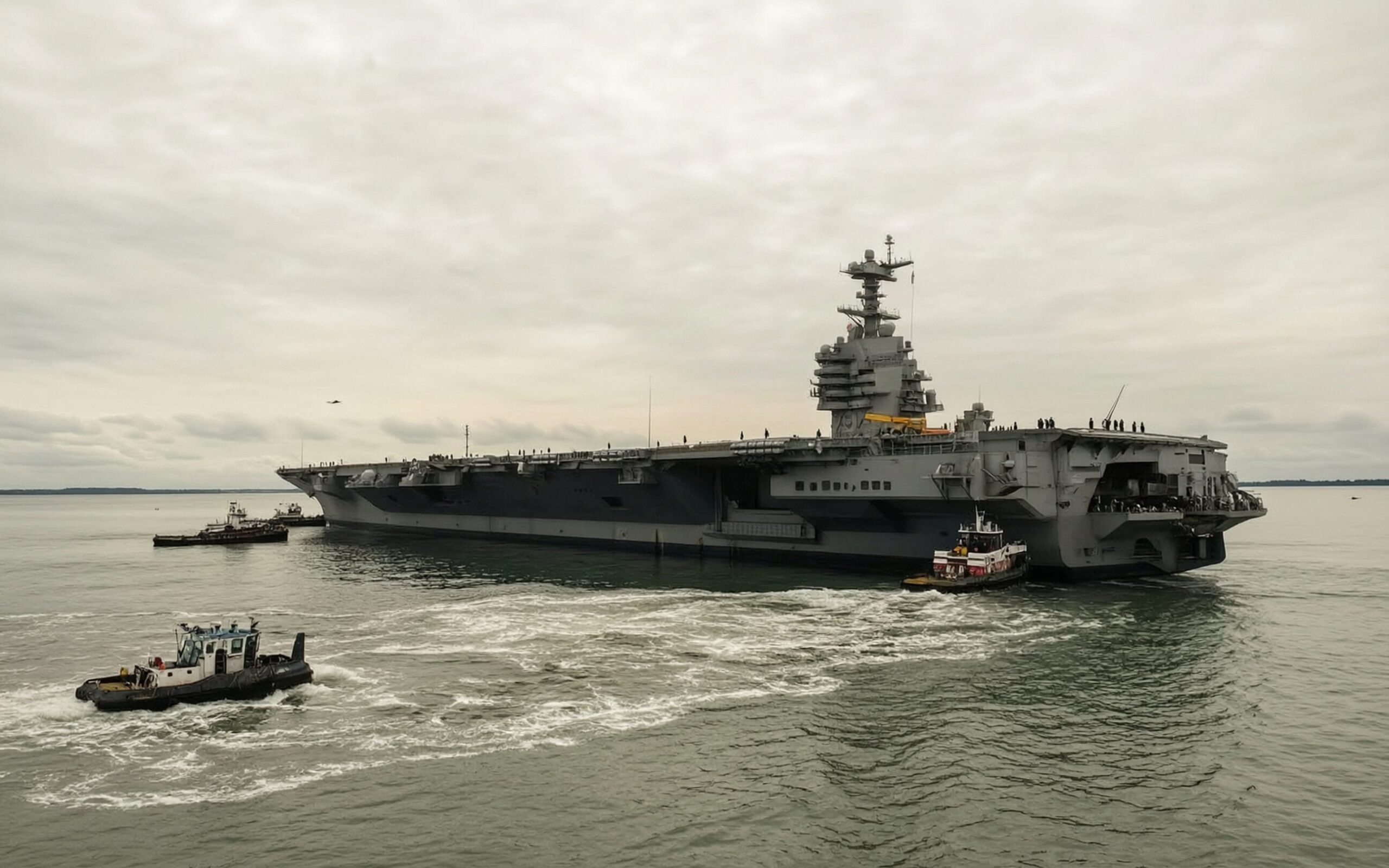
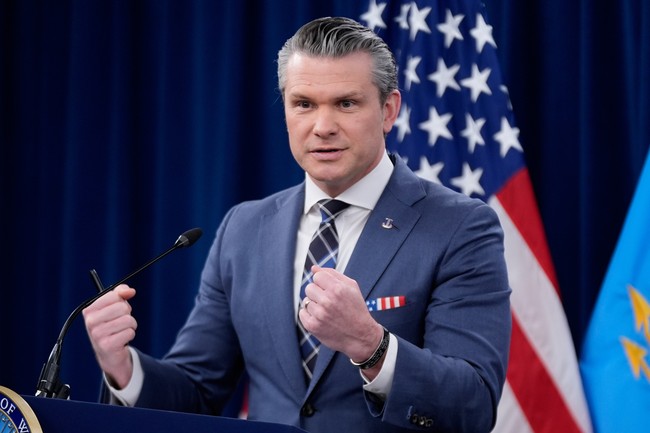
Pete Hegseth knows this, of course, and in today’s briefing, he reminded reporters that the Pentagon has all the assets necessary in place if the war resumes. Hegseth focused on the blockade today and the addition of the USS George H.W. Bush carrier group to the Indian Ocean for blockade support. The War Secretary touted the success of the blockade on Iran, with almost three dozen ships interdicted at this point, including some on the open sea:
Sec. Of War Pete Hegseth:
“The United States has imposed an ironclad blockade that grows more powerful by the day. From the Gulf of Oman to the open oceans, our Navy is enforcing this blockade without hesitation or apology.” pic.twitter.com/SQAJ1HhcUn
— Open Source Intel (@Osint613) April 24, 2026
“Our blockade is growing and going global,” Hegseth told reporters.
“No one sails from the Strait of Hormuz to anywhere in the world without the permission of the United States Navy,” he said.
Thirty-four ships had been turned around from the Strait of Hormuz by the US Navy so far, he said.
The Wall Street Journal reported on the second captured vessel in the Indian Ocean, which took place yesterday. The crew of the Dorena thought it had evaded the US Navy. They thought wrong:
The ship, whose movements were tracked by shipping-intelligence firm Kpler, is one of hundreds of sanctions-evading ghost-fleet vessels playing a game of cat-and-mouse as the U.S. tries to lock down Iran’s oil trade and pressure the country to agree to President Trump’s terms for peace.
This time, the U.S. came out on top. Early Thursday morning local time, the military said a Navy destroyer was escorting the Dorena off the west coast of India after foiling its attempt to escape and deliver its cargo. …
U.S. Central Command, which oversees U.S. forces in the Middle East, said it also had intercepted two other Iranian-flagged ships—the Hero II and the Hedy—that had tried to breach the blockade. On Thursday, the military said U.S. forces had boarded a ship known as the Majestic X, which was full of Iranian oil and sailing in the Indian Ocean.
The WSJ notes that one ship apparently did manage to sneak through. For now, anyway:
Since the imposition of the blockade, at least one ship, a bulk carrier, left an Iranian port and exited the region, according to publicly available shipping data. Liberia-flagged Basel listed its port of origin as Iran’s Bandar Imam Khomeini and on Thursday was on its way to Brazil.
Ahem. Want to bet that SOUTHCOM knows about this and has a reception planned? Don’t be surprised if we read in the next couple of days about a Coast Guard/US Navy action in the South Atlantic.
The Trump administration confirmed two other notable policy adjustments today as well. First, Hegseth announced this morning that the Pentagon had changed the rules of engagement following Donald Trump’s announcement about minelaying in the Strait of Hormuz. American forces can now fire at will on Iranian boats that attempt to lay mines or harass shipping in international waters, regardless of the ceasefire. Hegseth said the US would treat these boats like Caribbean drugrunners:
The U.S. is prepared to fire on Iranian fast boats that attempt to lay mines in the Strait of Hormuz, Defense Secretary Pete Hegseth said. The renewed effort to attack minelayers comes amid concerns that Iran has laid additional mines in the narrow waterway in recent days.
“Our commanders have clear rules of engagement. If Iran is putting mines in the water or otherwise threatening American commercial shipping or American forces, we will shoot to destroy. No hesitation, just like the drug boats in the Caribbean,” Hegseth said. He added that “reckless mining” is a violation of the cease-fire.
Better late than never, but this should have been happening already. Minelaying in international waters is a criminal act as well as a violation of the ceasefire. The criminal nature of the act may not mean much – ‘international law’ is mainly a delusion, especially with Iran – but violating the ceasefire should have produced immediate consequences.
The second policy shift is aimed at domestic concerns. Trump had earlier waived the Jones Act to keep downward pressure on gas prices, but the waiver will expire on May 17. Trump issued a 90-day extension this morning, with the White House noting that the waiver ” provides both certainty and stability for the U.S. and global economies.” This should prompt a debate over whether the Jones Act is an anachronistic law that long ago saw its value vanish when the commercial shipbuilding industry largely vanished in America.
All of this takes place in the specter of the deadline approaching this weekend on Trump’s extension of the ceasefire. He made it clear yesterday that he’s in no hurry to restart the war because the blockade will likely do more damage than further bombing. However, Iran’s escalations are already creating escalations on the US side, and their refusal to even discuss the nuclear question may force Trump to remind them of the stakes … or to do another round of “regime change.” Stay tuned this weekend.
Editor’s Note: For decades, former presidents have been all talk and no action. Now, Donald Trump is eliminating the threat from Iran once and for all.
Help us report the truth about the Trump administration’s decisive actions to keep Americans safe and bring peace to the world. Join HotAir VIP and use promo code FIGHT to get 60% off your VIP membership.
Read the full article here

![SPLC ‘Anti-Hate’ Scam Bankrolling Extremist Hoaxes Broken Down in Under 2 Minutes by Will Cain [WATCH]](https://www.lifezette.com/wp-content/uploads/2026/04/2026.04.24-01.02-lifezette-69eb69f3bc348.jpg "SPLC ‘Anti-Hate’ Scam Bankrolling Extremist Hoaxes Broken Down in Under 2 Minutes by Will Cain [WATCH]")