
WHAT YOU NEED TO KNOW
- The Marine Corps issued interim guidance covering religious accommodations for uniforms, grooming, vaccinations, diets and religious holidays.
- Marines must submit written requests explaining the conflict and provide supporting information showing that their beliefs are sincerely held.
- Commanders must evaluate sincerity, mission requirements, operating hazards and the Marine’s ability to use required protective equipment.
- Commands generally have 30 to 60 days to respond, while Marines must continue following existing requirements until written approval is granted.
The Marine Corps issued interim guidance this week outlining how Marines may seek religious accommodations involving uniform rules, grooming standards, vaccination requirements, dietary practices and religious holidays.
The process places responsibility on Marines to submit their requests in writing and explain the conflict involved.
According to Wednesday’s announcement, each written request must go through the Marine’s command.
The command will evaluate whether the religious belief is sincerely held and whether the requested accommodation could affect mission readiness.
Gold. Upgraded. Buy real gold from $1. Store it in America. Sell it with one click.
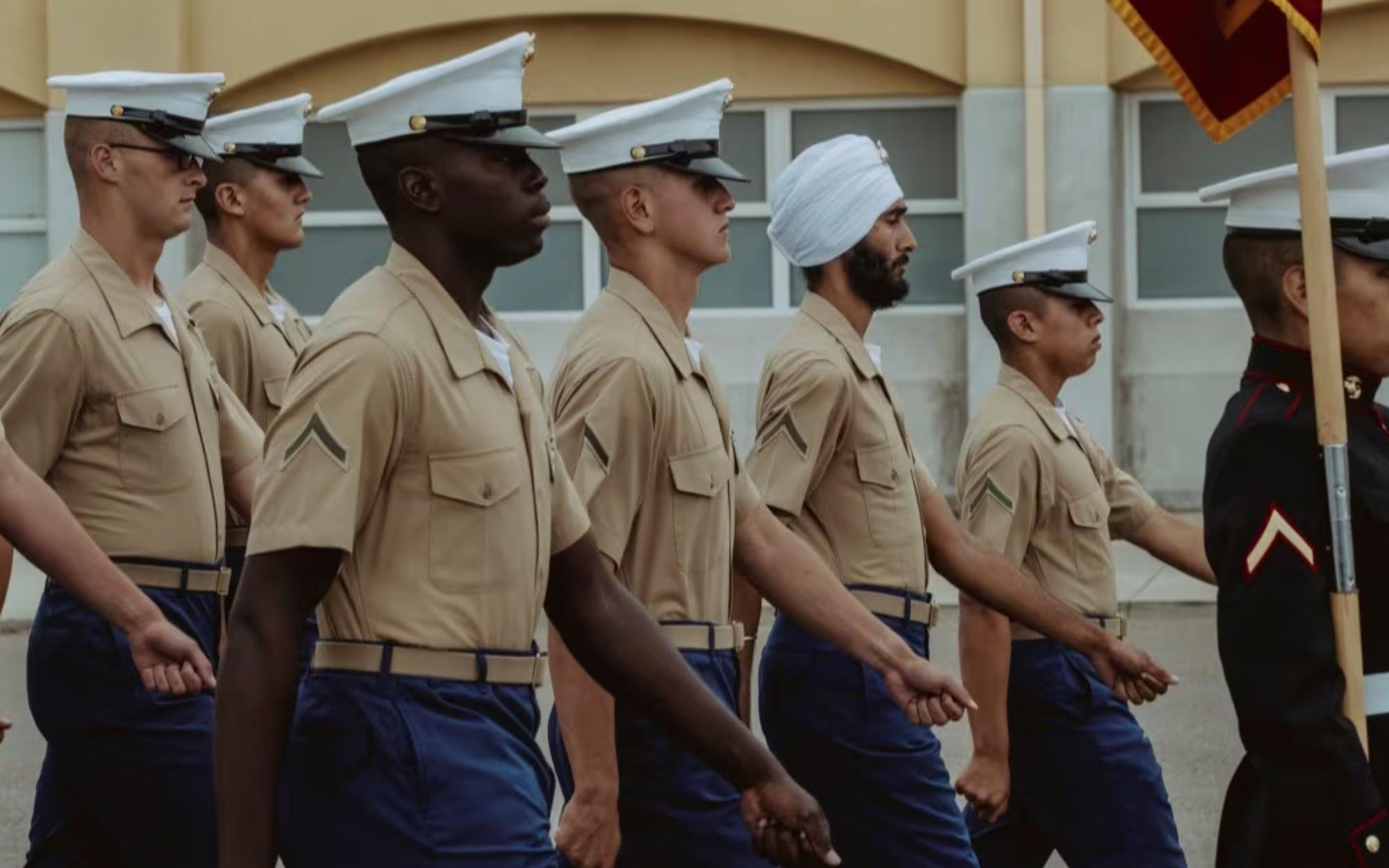
The guidance arrives as the War Department continues an effort to narrow the list of recognized religions and restrict permissions for facial hair in the name of readiness. At the same time, the department is loosening vaccination requirements to honor individual freedoms.
Under the interim process, a Marine must identify how a religious belief conflicts with a service policy or regulation.
The request may instead explain how the applicable service policy or regulation conflicts with the Marine’s belief.
The guidance also calls for material that supports the Marine’s assertion.
This Could Be the Most Important Video Gun Owners Watch All Year
It says a request should include “Supporting information or evidence that demonstrates the religious belief is sincerely held, which may include, but is not limited to, personal testimony, participation in religious observances, or corroborating statements from religious leaders or community members,”
That supporting information can therefore come from the Marine, religious leaders or members of a religious community.
Participation in religious observances is another factor that may be presented as evidence that the belief behind the request is sincere.
Image Credit: DoW
Each Marine submitting a request must sign a sworn statement affirming that the information provided is valid.
The statement must also acknowledge that providing false information could lead to disciplinary action under the Uniform Code of Military Justice, commonly identified as the UCMJ.
Commanders have two central questions to answer before an accommodation may be approved.
They must determine whether the request stems from a sincerely held religious belief and whether granting the request would affect mission requirements.
When evaluating sincerity, commanders are directed to consider contextual factors that could help distinguish religious conviction from personal preference or convenience.
The guidance identifies the circumstances surrounding a request and the Marine’s statements and conduct as relevant considerations.
Those factors include “circumstances existing at the time of the request, contradictory or inconsistent statements and conduct,” the guidance says.
That review gives commanders a framework for examining the basis of a request before sending it through the appropriate decision process.
Mission demands remain a separate part of the assessment. Commanders must determine whether the requested accommodation would interfere with a Marine’s ability to operate in specific environments, function around particular hazards or use required protective equipment.
The guidance specifically identifies “helmets, masks, and respirators” as examples of protective equipment that commanders must consider.
A requested accommodation could therefore face additional scrutiny when it affects equipment required for particular duties, environments or hazards.
Commands generally have between 30 and 60 days to respond after receiving an accommodation request.
The timetable gives the command a defined period to examine sincerity, supporting information, mission requirements and any potential effect on protective equipment.
Submitting a request does not immediately exempt a Marine from the policy, practice or duty at issue.
Until the proper adjudication authority approves the accommodation in writing, the existing requirement remains in force.
The guidance states that a Marine must “continue to comply with the policy, practice, or duty from which an accommodation has been requested.”
That obligation continues throughout the review and ends only if written approval is issued by the appropriate authority.
The interim guidance establishes a documented process built around written explanations, supporting evidence, sworn statements and command review.
It also keeps mission readiness, operating conditions and protective equipment at the center of the decision while a Marine’s stated religious belief is evaluated.
Gold is the oldest answer. SoundMoney makes owning it as easy as the apps you already use.
The opinions expressed by contributors and/or content partners are their own and do not necessarily reflect the views of LifeZette. Contact us for guidelines on submitting your own commentary.
Read the full article here