


WHAT YOU NEED TO KNOW
- As many as 16,300 troops could receive medical shaving waivers and face separation evaluations after 12 consecutive months.
- Nearly 3,400 soldiers, 144 Marines and 8,000 airmen and guardians held temporary waivers as of September.
- More than 4,760 sailors received diagnoses that could qualify for accommodations, though diagnosis does not guarantee waiver approval.
- Religious beard accommodations remain legally distinct and generally continue indefinitely unless circumstances or operational requirements change.
As many as 16,300 troops could be granted medical shaving waivers in the coming months, placing them under tighter grooming requirements.
Troops unable to meet the Pentagon’s new clean shaven standards over the following year could be evaluated for separation.
Figures provided to Task & Purpose by the Army, Marine Corps, Air Force and Space Force were current as of September.
Navy data covered sailors diagnosed with medical conditions that could prevent shaving, but did not specify how many had received waivers.
Gold. Upgraded. Buy real gold from $1. Store it in America. Sell it with one click.
Those totals could change as service members undergo medical reevaluations and counseling for temporary shaving waivers.
The services are implementing policies announced after the Pentagon changed military grooming standards in fall 2025.
Secretary of War Pete Hegseth called for a “clean-shaven” military as part of that change.
The policy instructed commanders to evaluate service members for separation when they have “permanent conditions” or shaving accommodations lasting longer than one year.
This Could Be the Most Important Video Gun Owners Watch All Year
During the first several months of 2026, the services issued directives explaining how troops must meet the revised standards.
The services now provide only temporary medical shaving waivers, including for troops suffering from pseudofolliculitis barbae, known as PFB.
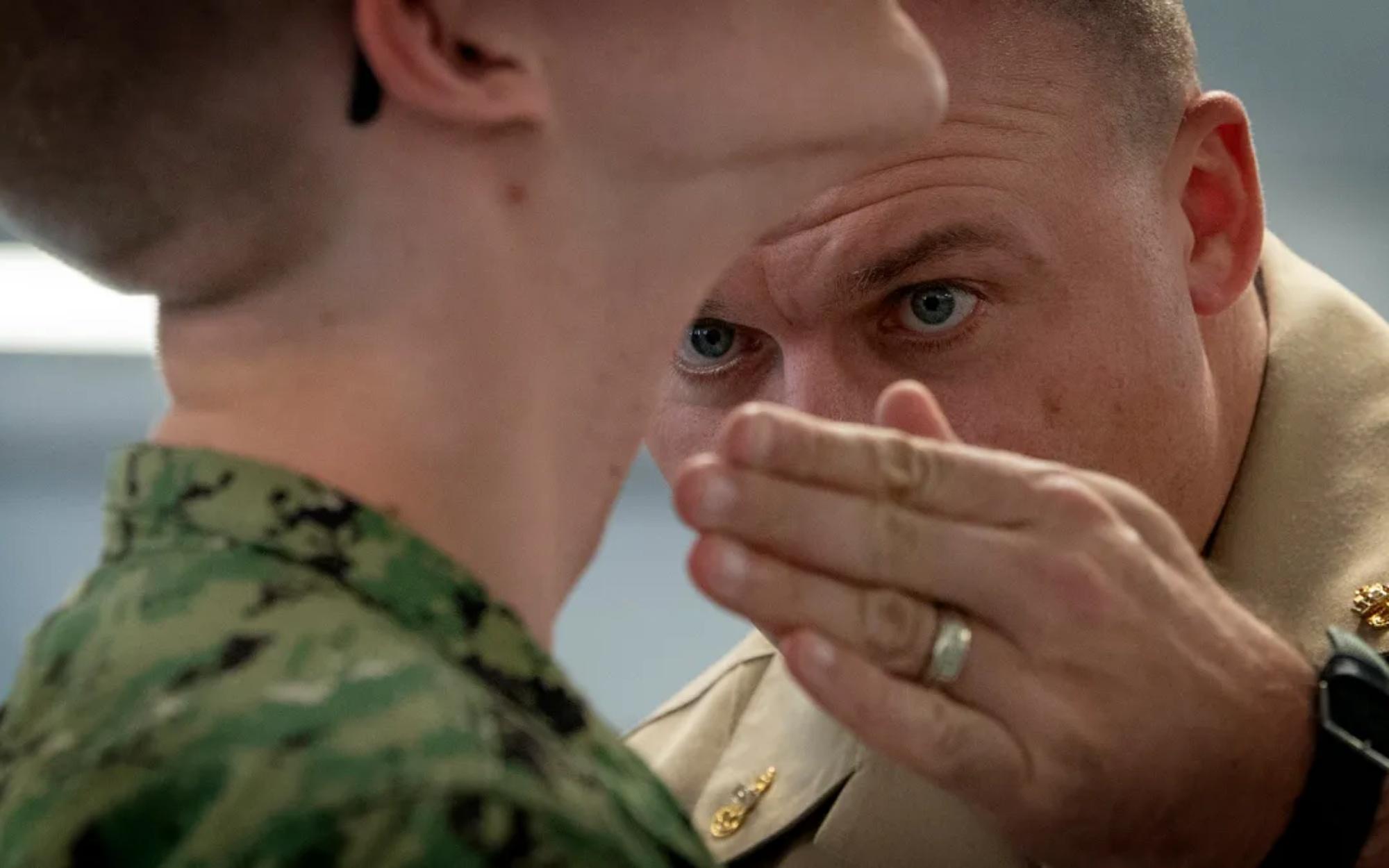
PFB is a painful inflammatory skin condition that produces papules and pustules and can be aggravated by shaving, particularly among people with naturally curly hair. Uniformed Services University said the condition is “especially prevalent in African American service members.”
Troops holding temporary medical waivers must be reevaluated periodically while following medical treatment plans.
Image Credit: DoW
Those plans can include hair release treatment, changes in shaving technique, hair removal creams or government funded laser hair removal.
Service members who accumulate 12 consecutive months of shaving waivers will be evaluated for separation.
The September figures supplied by the services were tens of thousands lower than previous annual averages.
While developing its grooming policy last year, the Army described the effort as a “back to standards” shift. Officials noted that more than 40,000 soldiers were permitted to grow beards for medical reasons in 2024.
Air Force officials said their latest total was “down from historical averages” of 18,000 to 20,000 Airmen and 300 Guardians before recent policy changes and clinical reevaluations.
As of September, nearly 3,400 soldiers, 144 Marines and 8,000 airmen and guardians held temporary medical shaving waivers.
More than 4,760 sailors received medical diagnoses during fiscal year 2026 that officials said could qualify for medical accommodations.
Navy officials cautioned that the figure “represents the upper limit of potentially impacted sailors because a medical diagnosis does not automatically generate a sailor-initiated waiver submission or an approved command-level request.”
Previously approved Navy facial hair grooming waivers are also being reviewed under the service’s July policy.
“That process is ongoing; therefore, current numbers are not available for public release,” Navy officials said.
Image Credit: DoW
Maj. Travis Shaw, an Army spokesperson, said the service’s number “continues to remain in flux due to medical treatment plan timelines.”
Advocates with the Black Veterans Project said shaving profiles are more common among enlisted troops, whether they have served one enlistment or several.
Black Veterans Project founder Kyle Bibby said advocates fear the policy could alter military culture, end careers and affect veterans’ benefits depending on the type of separation. “We are promoting now a zero-defects mentality towards facial hair,” Bibby said.
Richard Brookshire, a former infantry combat medic who served in Afghanistan, said younger soldiers may seek temporary shaving waivers, while permanent shaving profiles are more likely among troops with longer service.
He said daily shaving, field hygiene limitations and infection risks can influence when troops seek profiles.
Bibby called the policy “absurd” after 20 years of war in Iraq and Afghanistan, where troops in some elite units were allowed to wear beards.
He acknowledged that beards can complicate a mask seal but argued that the issue had not prevented bearded troops from operating during those conflicts.
Troops with religious beard accommodations have also been required to resubmit requests for review.
Those numbers remain lower than medical waiver totals, with slightly more than 300 Navy sailors receiving religious accommodations on average in recent years and 19 Marines holding approved beard accommodations as of September.
Air Force officials said medical profiles and religious accommodations operate under different frameworks.
Medical profiles are temporary clinical tools capped at 12 months, while religious accommodations are protected by federal law and carry no time limit.
Navy officials said approved religious beard accommodations remain “valid indefinitely without periodic expiration unless there is a material change in circumstances or operational exigence.” Medical waivers, by contrast, continue to face reevaluation and tracking under the stricter grooming policies.
Gold is the oldest answer. SoundMoney makes owning it as easy as the apps you already use.
The opinions expressed by contributors and/or content partners are their own and do not necessarily reflect the views of LifeZette. Contact us for guidelines on submitting your own commentary.
Read the full article here



![Industrial Might Moves to Make More in America [WATCH]](https://www.rvmnews.com/wp-content/uploads/2026/09/2026.09.19-15.26-rvmnews-6aaea9badac2a.jpg "Industrial Might Moves to Make More in America [WATCH]")