



Oh, dear and gentle readers – how I wish I could say this was a Bee article, but it’s not.
In an extraordinary DERP, it seems that the engineering titans who brought you the Battery Electric Vehicle, as well as all the associated range anxiety that comes with depending on getting from Point A to B on a pure BEV charge if it’s a tad outside your normal comfort zone, have found the magic bullet, and it smells like *sniff* gasoline.
Why not just admit the technology failed, won’t provide the service needed and use the actual technology that works?
— Rick Maddox (@RickMaddox68932) September 7, 2026
They’re serious.
Worse, I don’t think this brilliant new idea is as ‘new’ as they think it is, whatever snazzy letters they pin on it.
The auto industry has a new solution to Americans’ fear that electric vehicles will run out of juice: a gasoline engine.
Hyundai, Ford Motor F -2.80%decrease; red down pointing triangle and Jeep parent Stellantis STLA -2.61%decrease; red down pointing triangle are among the first U.S.-market automakers planning to roll out a new kind of plug-in vehicle called an extended-range EV. It is a fully electric car with the security blanket of a gas-powered generator to charge the battery, if needed—ensuring you won’t end up stranded as long as a gas station is nearby.
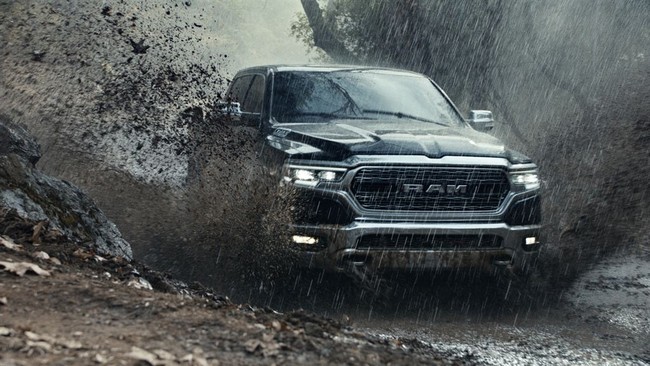
“It is simply a good answer,” said Micky Bly, head of propulsion systems at Stellantis, which aims to kick off the “EREV” trend in the U.S. later this year or early next with its Jeep Grand Wagoneer SUV. A second range-extended vehicle, a pickup truck called the Ram 1500 REV, will follow it. The truck couples a large EV battery with a gas V-6 to recharge it, promising up to 690 miles of driving—more than twice the typical EV in the U.S.
In late August, Korean giant Hyundai announced that its next Santa Fe SUV will offer an EREV version in 2027. Hyundai has said it would provide about 600 miles of driving. Its luxury brand Genesis will offer a similar vehicle. And after canceling its money-losing electric F-150 Lightning truck last December, Ford says it will resurrect that truck as an EREV.
This is hilarious.
Smearing some more lipstick on that pig isn’t going to help it stop squealing, no, sir.
…“Now we’re throwing in another layer of complexity and oddity,” said Ivan Drury, director of insights at car-shopping site Edmunds. “There’s going to be a major level of education required.”
Nick Phucas, a mechanical engineer in Virginia, recently swapped a Rivian EV truck for a Ram gas pickup. Phucas said the EREV concept is intriguing, but wonders whether the truck’s performance will be compromised when relying on the gas generator. Other unknowns remain, he said.
“If I get to the end of my (EV) range and I refill with gas, what will my range be?” he said.
And why did they feel compelled to add a teeny, tiny gasoline battery charger to an already complicated and finicky machine?
Because sales nose-dived when those subsidies died and haven’t recovered appreciably, but these companies are so smitten with the concept that they want to lose more money, I guess.
But who is going to think that the miserable mileage of these early models is worth the possible premium?
And it’s never comforting when engineers say it ‘should’ deliver a better driving experience than what’s currently available with plug-in hybrids (PHEV).
Really not a resounding endorsement. Kind of plops it into the ‘you go first’ category, as you point to the other guy looking at one in the showroom.
…Engineers say EREVs should deliver a better experience than current plug-in hybrids. Most of those don’t offer much electric range before reverting to the gas engine. The Subaru Crosstrek plug-in—discontinued after 2023—got a paltry 17 all-electric miles. The plug-in Jeep Wrangler, discontinued after 2025, got about 20 miles.
The first mass-market EREV in the U.S. did a little better. That was General Motors’ groundbreaking Chevrolet Volt, built from 2011 to 2019, which could achieve about 50 miles of battery-only driving.
This new crop of EREVs will have more than 100 miles of all-electric range, meaning most drivers should rarely have to put gas in them, said Sam Abuelsamid, an engineer and industry analyst at Detroit research firm Telemetry.
Crucially, EREVs can use gas to tow heavy loads without running out of range. Towing is a key reason that larger electric trucks such as the F-150 Lightning and the Chevrolet Silverado EV failed to sell in large numbers.
With the gas generator, “You’re not really sacrificing anything in terms of how far you can tow, how long you can tow,” Abuelsamid said.
And 100 miles of all-electric? What does that mean in the heat or deadly cold, with the impacts those have on EV range? What does it drop your usable battery range to?
I know you couldn’t conceive that certain politicians are still pushing dying EV manufacturers, even as those sales crater. California is once again giving away taxpayer money in the form of EV tax credits for a new or used purchase, as long as you didn’t purchase a vehicle from anyone whose name starts with ‘Elon.’
I didn’t realize the electric vehicle rebate Gavin Newsom has been touting was essentially designed to benefit Rivian.
The law creates a $135.5 million taxpayer-funded subsidy for manufacturers like Rivian—while excluding Tesla.
Between that and the nearly $100 million in… pic.twitter.com/WuiNNd6c5Y
— Laura Powell (@LauraPowellEsq) August 11, 2026
…Between that and the nearly $100 million in state purchases from the company, you have to wonder how Rivian has so much pull with decision-makers in California.
How’d they grease Rivian’s skid into oblivion?
California just did something automakers almost never get from a state government: it rewrote the rulebook to help. In July, Governor Gavin Newsom signed a $3,500 EV rebate that Tesla is legally locked out of, while Rivian and Lucid can claim it on trucks and sedans costing well into six figures. It was about as close to a custom-fitted incentive as a legislature has handed a single struggling automaker in its own back yard. And Rivian’s home state still did not buy the trucks.
Rivian registered 3,970 electric vehicles in California through the first half of 2026, down 28.3% from 5,540 a year earlier. Among the state’s 30 best-selling brands, only Dodge fell faster. That is an odd neighborhood for a company that sells nothing but EVs to be standing in, closer to a brand that sells almost none.
The second quarter was worse than the first. Rivian delivered 1,759 vehicles in California in Q2, a 34% drop from a year earlier, even after regulators revised the prior quarter’s figures upward. The trend did not moderate. It accelerated in the wrong direction.
…Here is the detail that matters more than the 28.3%. Rivian did not have to rely on demand alone to move R1 trucks in California this year. Sacramento built it a shortcut. MyFirstEV pays qualifying buyers up to $3,500 at the point of sale, but caps out most EVs priced above $50,000. The law carves out one exception: a zero-emission vehicle maker headquartered in California, as of a specific frozen date, qualifies regardless of price. That description fits exactly two companies anywhere. Tesla, which builds more cars and employs more Californians than Rivian and Lucid combined, does not qualify, because its corporate address now says Austin.
A rebate can lower a sticker price. It can’t manufacture desire.
Maybe they should whip up a model real quick with a little mini-bike motor attached to a generator for the battery, like everyone else is doing.
Audi has rolled out a program to its EV lessees, trying to incentivize them to keep the car when the lease is up instead of turning it back in to the dealership.
This has all been precipitated by the drop in used EV prices. It’s much more economical for Audi to offer a big discount on the back end of a lease buyout than to have a used, nearly unsellable premium EV sitting on an unhappy dealer’s lot for too long.
The car company has even thought to include a little sweetener in the mix for the dealership.
Audi is eager to see current lessees of its electric models buy out their vehicles at the end of their terms, and it’s offering some pretty generous incentives to encourage them to do so.
A recent Audi BEV Lessee Buyout Option Incentive, sent to dealerships on September 1, reveals that current e-tron GT lessees are being offered a $10,000 discount to purchase their vehicle at the end of the lease term. In addition, a $5,000 purchase incentive is available for the Q4 e-tron, while a $4,000 one has been confirmed for the Q8 e-tron.
In addition, dealerships stand to benefit as they will receive $500 for each lessee who uses the incentive to buy out their vehicle. This incentive program was first launched in July, but now the Q4 e-tron’s discount has increased to $5,000 from the original $3,000, CarsDirect reports.
The move may make it a little easier to digest the extraordinary depreciation Audi EVs and other electric models from premium brands continue to experience in the United States and elsewhere.
Cox’s EV monitor for July shows Tesla as the lone ranger holding its own in a super challenging market, where new EV sales were up a smidge for the month, but still down over 40 percent compared to a year ago as the tax credits expired.
New EV Sales: New EV sales totaled an estimated 77,266 units in July, up 3.2% from June and down 41.5% from a year earlier. EVs accounted for 5.6% of total new-vehicle sales, a slight improvement from June, though the market remained well below year-ago levels, when demand was supported by consumers accelerating purchases before the federal EV tax credit expired.
Tesla remained the volume leader with 42,435 units sold, followed by Rivian, Hyundai, Toyota, and Cadillac. Tesla’s share of total EV sales increased to roughly 55% as its sales rose 4.9% month over month. The Model Y alone accounted for roughly 37% of all new EV sales, generating more volume than the entire EV lineup of any other manufacturer. Hyundai posted the strongest month-over-month gain among high-volume brands, with sales rising 36% from June. Kia also posted solid gains, led by continued strength from the EV9.
Used EV Sales: Used EV sales increased 7.9% month over month and 10.1% year over year in July to 36,810 units. Market share held steady at 2.4%, led by Tesla, while Hyundai, Ford, BMW, and Chevrolet rounded out the top five brands.
Tesla remained the primary driver of used EV market growth, supported by strong gains from Ford, Chevrolet, Nissan, and Cadillac. Ford posted the strongest growth among high-volume brands, with sales increasing 18.9% from June. Several high-volume models, including the Tesla Model 3, Tesla Model Y, Ford Mustang Mach-E, Hyundai IONIQ 5, Chevrolet Blazer, and Cadillac LYRIQ, helped drive July’s growth.
Inventories are also starting to ease, but still remain on dealers’ lots for longer than comparable ICE vehicles do.
This is not the case in Europe right now. In fact, almost completely the reverse, thanks to the Iran conflict and Strait of Hormuz embargo, the price at the pump on any given day, and the fact that the European Union has taken some of the green grifting pressure off besieged European manufacturers being eaten alive by cheap Chinese imports of mostly EVs.
No, EU central planners mandating the shift to EVs is killing Europe’s old style industrial base.
— PaperbackWriter (@PaperhackWriter) September 4, 2026
But cozy European cities and jaunts that only take an hour or two to reach another country are EV-friendly, making that forced adoption of electric vehicles bearable, as long as their power generation holds out so everyone can plug in at night.
I don’t know that this latest gas gimmick is going to change a thing for Americans who have been pretty consistent in their overall rejection of EVs as the national vehicle of choice.
Here in the good old US of A, the skepticism remains high, the aversion to being dictated to remains firm, and the vast distances we have to travel have not been bridged by anything but our preferred own modes of transportation, the open highway, and pedal to the metal.
We are a whole different world.
Editor’s Note: Do you enjoy HotAir’s conservative reporting that takes on the radical Left and woke media? Support our work so that we can continue to bring you the truth.
Join HotAir VIP and use promo code FIGHT to receive 60% off your membership.
Read the full article here