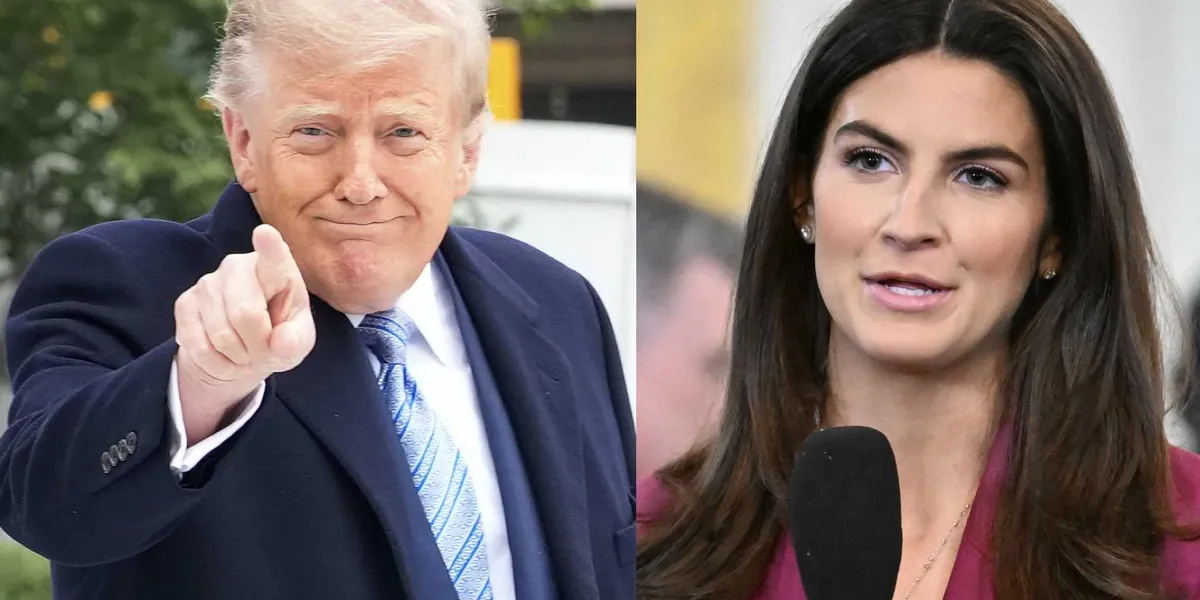
![The Democrats Have a Major Primary Problem, The Math is Unforgiving [WATCH]](https://www.lifezette.com/wp-content/uploads/2025/08/2025.08.05-01.06-lifezette-689201c7889c4.jpg "The Democrats Have a Major Primary Problem, The Math is Unforgiving [WATCH]")

Former Republican National Committee Chairman Reince Priebus said the Democratic Party’s ongoing primary battles in Michigan and Wisconsin represent more than routine election contests, arguing they expose a broader struggle over the party’s identity and direction heading into the midterm elections.
Priebus made the comments during a discussion with Fox News hosts Bill Hemmer and Dana Perino, where the three examined the Democratic primaries in two key swing states and the growing influence of candidates aligned with the Democratic Socialists of America and other progressive movements.
Priebus predicted that the nomination contests in both states would remain competitive for an extended period because, in his view, the candidates generating the most enthusiasm are not necessarily those appealing to moderate voters.
“Primaries will take very long, whether it be in Michigan or Wisconsin,” Priebus said.
Gold. Upgraded. Buy real gold from $1. Store it in America. Sell it with one click.
He argued that voters who favor more traditional Democratic candidates may find themselves at odds with the activists driving the primary electorate.
“I mean, I know that people who are normal would rather see Haley Stevens win, or someone normal would rather see a guy like David Crowley, the county executive Milwaukee. But normal isn’t winning. What’s winning is middle finger politics.”
According to Priebus, the primary contests have become a debate between competing views of the country rather than simply a contest between individual candidates.
“It is a more of a debate, in my opinion, about two different visions of America: people who see America through a lens of good and hope, and people who see America through a lens of grievance, complaints, flaws,” he said. “That’s the big difference in all of these candidates.”
This Could Be the Most Important Video Gun Owners Watch All Year
Priebus also questioned why Democratic Party leaders continue allowing candidates whose views differ from the party’s traditional platform to compete under the Democratic banner.
“The second thing here is what I don’t understand: is this is not a silly debate among candidates. This is a debate over, as your previous reporter said, the future of the Democrat Party. Where do they want to go?” Priebus said.
He argued that many of the candidates now emerging from Democratic primaries are promoting agendas separate from the party’s historical platform.
“And the reality is, these people in the Democrat Party, they don’t have. They’re not adhering to the platform of the party. They’ve got their own platform. They’ve got a different party.”
Priebus noted that political parties are private organizations and said they have broad authority over how they select their nominees.
“So, to me, the biggest oddity of this whole thing is why the DNC and the state parties would allow people who don’t agree with their platform to take over their party,” he said.
“These are private political organizations. They do not have to adhere to the state laws as to who their nominees will be, their members get to choose. They can do a convention. They can do. They can have a vote at their executive committee.”
Although he acknowledged the procedural discussion might not interest every viewer, Priebus maintained that party leaders have the ability to prevent ideological opponents from becoming their nominees.
“So I don’t want to bore you all with with this part of the debate. But the reality is, a private organization, the Republican Party, Democrat Party, they get to choose their candidates. They do not have to allow people who don’t agree with their platform to take over their party. It’s crazy.”
Hemmer then turned the discussion to recent Democratic politics in Michigan and Wisconsin.
“Well, six years ago, Michigan ended Bernie Sanders’ primary run. That that was it when they went up there and Joe Biden went head to head with him,” Hemmer said.
He also referenced Dana Perino’s recent interview with a Democratic socialist candidate for Wisconsin governor before introducing clips from that conversation.
Perino had challenged the candidate about previous positions, asking, “It’s going to be very easy for people to put up on the board and say, ‘You said abolish the Senate, defund the police, abolish the police, and why should they not believe that you would want to do that? That you would try to do that if you became governor?'”
Hemmer then quoted the candidate’s response: “I believe that people can evolve. We need Trump voters from previous elections who now would like to vote for me, who have a sign in their yard.”
Hemmer followed by highlighting an earlier social media post written during the COVID-19 pandemic that read: “Thanksgiving canceled. It should have done it in 1621. It takes a worldwide pandemic for us to realize we should stop celebrating colonialism and the original superspreader event that killed Indigenous folks, F-O-L-X, clever, and women.”
Turning back to Priebus, Hemmer asked how those positions would be received in Wisconsin.
Priebus responded that the debate illustrates what he sees as a broader political problem for Democrats.
“Well, I’ll be in Wisconsin later today. Here’s the deal. Number one, you’re showing what’s happening to the Democrat Party. They’re getting on the wrong side of normal.”
He argued that winning statewide elections in Wisconsin and Michigan depends on attracting a relatively small group of swing voters.
“When you’re on the wrong side of normal, you can’t win 4% of swing voters in places like Wisconsin or Michigan,” he said.
Priebus also described what he sees as a divide within Wisconsin Democrats, contrasting Madison’s liberal electorate with Democratic voters in Milwaukee.
“Wisconsin, like Michigan, is divided into two parts of the Democrat Party. Number one is in Madison, which is highly educated, you know, wealthy, and and and people who you know are very very liberal, and then you’ve got Democrats in Milwaukee, which are you know African American. They care about safety. That these are important issues.”
He argued that issues surrounding policing and other controversies could hurt Democratic candidates in a general election while still helping them secure the nomination.
“So how does it play out? It gets them on the wrong side of normal, and there’s only 4% of the public that are in play in Wisconsin and Michigan. I think it hurts them in a general, but they’ll launch to a primary victory, and it’ll be a real barn burner.”
Priebus concluded by predicting that President Donald Trump would remain an influential figure in both battleground states.
“And what Trump does will matter because those 4% swing voters in Wisconsin and Michigan they like Trump he’s won in Michigan Wisconsin so he will play a big role here in these swing states.”
WATCH:
Gold is the oldest answer. SoundMoney makes owning it as easy as the apps you already use.
Read the full article here

![Dem Candidate Arrested After Starting Fight, Getting Knocked Out in Wild Beach Scene [WATCH]](https://www.lifezette.com/wp-content/uploads/2025/11/2025.11.24-11.19-lifezette-69243f29ae31e.jpg "Dem Candidate Arrested After Starting Fight, Getting Knocked Out in Wild Beach Scene [WATCH]")


![Obama’s Biggest Promise Turned into His Biggest Lie: Dan Bongino [WATCH]](https://www.rvmnews.com/wp-content/uploads/2026/09/2026.09.24-08.38-rvmnews-6ab4e16809a48.jpg "Obama’s Biggest Promise Turned into His Biggest Lie: Dan Bongino [WATCH]")
![Sinister Russian Network Busted in Secret Service Infiltration Plot Using American Tech CEO [WATCH]](https://www.rvmnews.com/wp-content/uploads/2026/09/2026.09.24-07.33-rvmnews-6ab4d23d320ee.jpg "Sinister Russian Network Busted in Secret Service Infiltration Plot Using American Tech CEO [WATCH]")