

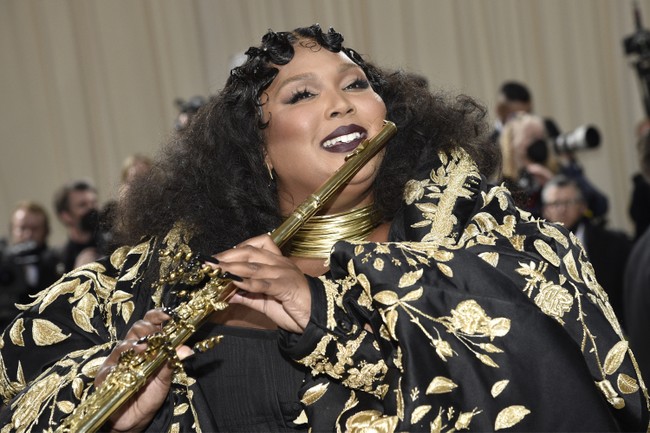

Have you heard? Lizzo just put out a new album and, well, it seems no one bought it. The album, titled “Bitch,” was meant to be a comeback for Lizzo but it looks like no one wants her back.
After reaching eye-watering success with hits like “Truth Hurts” and “About Damn Time,” the four-time Grammy winner’s latest effort has dropped with a thud, reportedly streaming under a million times on Spotify within the first 24 hours of its release, selling fewer than 3,000 copies in its first week according to Rolling Stone and failing to crack the Billboard 200 in the first two weeks.
Once ubiquitous in the culture — as much for her full-on embrace of self-love and body positivity as for her infectious anthems — Lizzo is now relegated to “what happened to her?” status.
I think the issue is that Lizzo was riding a particular wave in her earlier career which was looking for someone to be the face of body positivity. Lizzo fit the bill because she was successful and also really overweight.
That led to a low of fawning coverage of her like this:
If there was a ranking for singers preaching self-love, Lizzo would certainly be at the top. The 34-year-old unabashedly wears skin-tight glitter onesies, and celebrates her curvy figure on stage during her performances and in the media. Her message is simple: Love yourself — you’re great just the way you are. With her anthems of self-empowerment, Lizzo is one of the most interesting — and sought-after — people in the music world today.
She was anointed the nation’s foremost happy fat person. And then something changed. And then things changed. She got sued by several people who’d worked for her. The gist of the lawsuits was that Lizzo was a different person off stage.
“I felt like I was living in a madhouse,” fashion designer Asha Daniels, 35, told NBC News the day before she filed her lawsuit against Lizzo and other members of the singer’s team. “It was totally shocking.”
“I was listening to this Black woman on this huge stage have this message of self-love and caring for others and being empathetic and being strong and standing up for others,” she said. “And I was witnessing myself, the dancers and the background vocalists and my local team in every city be harassed and bullied regularly.”
The suit, filed Thursday by lawyers for Daniels in Los Angeles County Superior Court, accused wardrobe manager Amanda Nomura of doing stereotypical impressions of Black women, referring to the performers as “fat,” “useless” and “dumb,” and forcing them to change in front of a mostly white, male stage crew who would “lewdly gawk” at them, the suit says.
Basically, Lizzo had a brand and the word coming from those close to her was that she didn’t live up to it in real life. Lizzo of course has denied that she ever body shamed anyone working for her. But just the fact that she was having to deny it must have hurt her image.
And then Lizzo decided to lose weight. She took a year off of social media and touring and when she returned she was somewhat thinner. By 2025 she had published an explainer defending her decision to lose weight.
I started losing weight in the fall of 2023. I was severely depressed. I had been the subject of a vicious scandal, and it felt like the whole world turned its back on me. I became deeply suicidal. I cut off all my loved ones. I couldn’t trust anyone because during the scandal, former close colleagues and friends (who I’d been on pleasant or neutral terms), started to come out and make things up about me. God knows why…
I’d decided that winter to sit and record a video saying I wanted to intentionally lose weight. Why? I guess I felt like I had lost everything, and I wanted to change. After talking to a few therapists I discovered that my weight had been a protective shield, a joyful comfort zone, and even sometimes a super hero suit to protect me through life…
I was sick and tired of my identity being overshadowed by my fatness. People could not see my talent as a musician because they were too busy accusing me of making “being fat” my whole personality…
I want us to allow the body positive movement to expand and grow far away from the commercial slop its become. Because movements move.
Being fat may not have been Lizzo’s personality. I’m sure the people close to her knew there was more to her. And it sounds to me like the therapy was helpful. She realized being fat was her shield. But it was also her image, her brand if you will. It was the thing that made her distinctive. So when she was accused of fat shaming and then decided to take a year off and lose a bunch of weight, it really did seem like she had abandoned that brand for something else.
“What’s complicated about Lizzo is Lizzo did make her body size part of her brand,” said Tigress Osborn, executive director of the National Association to Advance Fat Acceptance (NAAFA). There’s also the fact that Lizzo is a Black woman, the activist said…
“If you want your fans to relate to you as a person, then you have to be a person, not a brand,” said Osborn, who is clear that people have a right to be whatever size they wish. “If you want your fans to relate to you as a brand, then brand loyalty ends when the brand changes.”
Lizzo had a successful brand and she blew it up. Now she’s essentially starting over as something else and this new person isn’t a star and isn’t riding the same cultural wave.
Editor’s Note: Do you enjoy HotAir’s conservative reporting that takes on the radical Left and woke media? Support our work so that we can continue to bring you the truth.
Join HotAir VIP and use promo code FIGHT to receive 60% off your membership.
Read the full article here


![Two-Year-Old Boy Found Alive After 6 Days Under Venezuelan Earthquake Rubble [WATCH]](https://www.rvmnews.com/wp-content/uploads/2026/07/2026.07.01-18.36-rvmnews-6a455e498bbb2.jpg "Two-Year-Old Boy Found Alive After 6 Days Under Venezuelan Earthquake Rubble [WATCH]")