
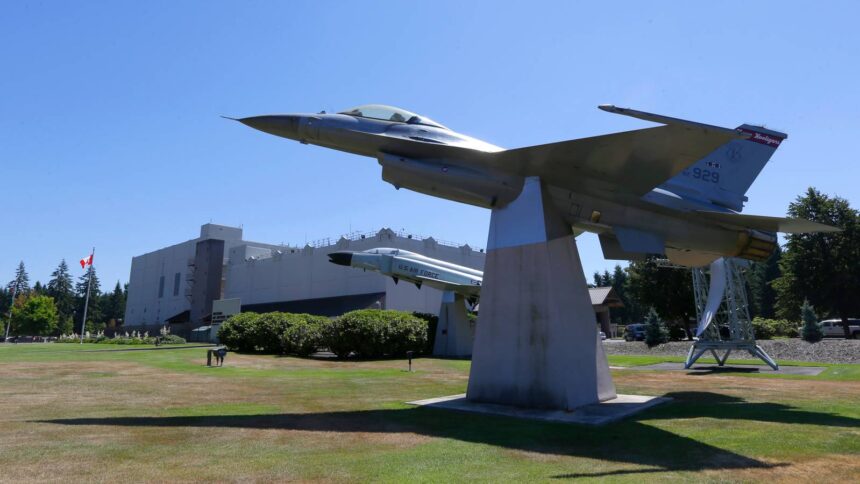

By the time most Americans understood that the country was under attack on Sept. 11, 2001, the military’s air defense network had already been improvising for nearly an hour, working with a fraction of the information it needed and, in at least one case, chasing a hijacked airplane that had already crashed.
The 9/11 Commission spent years reconstructing what happened inside that network that morning, and its findings, laid out in detail by Air & Space Forces Magazine’s minute-by-minute account of the commission’s report, describe a military response defined less by failure than by an air defense architecture unsuited to the threat it suddenly faced.
A System Built for the Wrong War
The North American Aerospace Defense Command, or NORAD, was created during the Cold War to watch for Soviet bombers approaching from outside U.S. borders, according to the 9/1 commission’s report as summarized by Air & Space Forces Magazine. After the Soviet Union collapsed, the Pentagon scaled back NORAD’s alert sites dramatically, and the commission noted that some Pentagon officials in the 1990s had argued that the sites should be eliminated from the continental U.S. entirely.
By the morning of Sept. 11, only seven alert sites remained operational nationwide, and none of them sat near New York City or Washington, D.C., the two cities that would be struck that day.
Nine Minutes, Then Nothing
Hijackers took control of American Airlines Flight 11 and turned toward New York with the military receiving almost no warning at all. Air defenders at the Northeast Air Defense Sector, known as NEADS, had nine minutes of notice before Flight 11 crashed into the World Trade Center’s North Tower at 8:46 a.m.
That nine-minute window, the commission found, was the most warning the military would receive before any of the four hijackings that day. The other three planes gave air defenders no advance notice whatsoever.
Col. Robert Marr, the NEADS battle commander, called Maj. Gen. Larry Arnold, head of NORAD’s continental air defense region, seeking guidance as the first reports came in. Arnold told him to scramble fighters from Otis Air National Guard Base, Massachusetts, on Cape Cod and sort out the paperwork afterward, according to the commission’s account relayed by Air & Space Forces Magazine. The Otis F-15s were airborne within seconds, but Flight 11 had already struck the North Tower before they ever left the ground.
Related: 9/11 Air Defense Stories You Might Not Know
Chasing a Plane That No Longer Existed
The most striking failure the commission documented wasn’t a lack of urgency. It was a case of fighters being scrambled to intercept a hijacking that had already ended. At 9:21 a.m., NEADS received a call from the FAA’s Boston Center reporting that American Flight 11 had not, in fact, struck the North Tower as previously believed and was instead still airborne, now heading toward Washington. Flight 11 had crashed 35 minutes earlier. NEADS had no way of knowing that in the moment, and the report of a phantom aircraft prompted the scramble of three fighters from the 1st Fighter Wing at Langley Air Force Base, Virginia, at 9:24 a.m.
The commission later found that NORAD officials had publicly and repeatedly misstated why those Langley fighters were scrambled, at various points claiming the launch was in response to reports about Flight 77 or Flight 93. According to the commission’s report, as detailed in a June 2004 staff statement archived by the University of North Texas Libraries, those explanations were incorrect. The evidence, drawn from taped conversations at NEADS and FAA facilities alike, showed the fighters had been scrambled to chase down a plane that no longer existed, an episode the commission noted was never once mentioned in any public timeline or statement the Department of Defense issued after the attacks.
Compounding the confusion, the Langley pilots themselves were never told why they had been scrambled or where they were actually needed. According to the commission’s findings, the unbriefed pilots defaulted to their standard training flight path and flew due east, out over the Atlantic, rather than toward Washington, where the fighters had actually been ordered to go.
Andrews Air Force Base: Airborne With No Missiles
The most extraordinary individual response of the morning came from Andrews Air Force Base in Maryland, home to the District of Columbia Air National Guard’s 121st Fighter Squadron. Now-Joint Chiefs Chairman Gen. Dan Caine was a young officer serving as the squadron’s chief of weapons and tactics on Sept. 11, and he recounted the morning in a first-person reflection published on the CIA’s website when he served as its associate director for military affairs.
Caine described how he and his fellow pilots were ordered to protect the skies over Washington almost immediately after the second tower was struck, in what he called an unprecedented decision by the military to let individual fighter pilots based near the capital decide for themselves whether to shoot down any aircraft that threatened the city.
Two of those pilots, Lt. Col. Marc Sasseville and 1st Lt. Heather Penney, took off from Andrews at 10:42 a.m. with no time to load live missiles into their F-16s, according to an account of the mission published by History.com. Sasseville told Penney they would need to fly directly into United Flight 93 to bring it down if it approached Washington, since neither aircraft carried anything capable of shooting it out of the sky. Flight 93 had already crashed in Pennsylvania nearly 40 minutes earlier, though neither pilot had confirmation of that as they took off.
Related: The Pentagon Attack on 9/11 and the Lucky Break that Saved Lives
The Response That Never Reached the Pentagon
The confusion documented by the commission wasn’t limited to the fighters in the air. According to the commission’s report as summarized by Air & Space Forces Magazine, there is no evidence that President George Bush, Vice President Dick Cheney, NORAD (North American Aerospace Defense Command) or top Pentagon leadership even knew the Andrews fighters were airborne that morning, a gap that illustrates how disconnected the various pieces of the military’s real-time response had become from the White House’s understanding of what was happening.
The commission’s concluded that NORAD had essentially no chance of stopping any of the hijacked aircraft that day, not because of individual negligence, but because the air defense system in place on Sept. 11 had been built to watch an ocean for incoming bombers, not to defend against a threat originating from inside the country’s domestic airspace.
That gap between the threat the system was built for and the threat it actually faced became the foundation for the sweeping military reorganization that followed within the year, including the creation of U.S. Northern Command in October 2002, built to give the military a homeland defense mission that, on the morning of Sept. 11, effectively didn’t exist yet.
Related: How 9/11 Reshaped the US Military From the Ground Up

![JD Vance’s Mom Fiercely Defends Humble Usha Against Petty Online Critics [WATCH]](https://www.rvmnews.com/wp-content/uploads/2026/09/2026.09.07-14.21-rvmnews-6a9ec88219155-e1788799379627.jpg "JD Vance’s Mom Fiercely Defends Humble Usha Against Petty Online Critics [WATCH]")

![Susan Sarandon Says Movies Were Recently Taken Away over Political Beliefs [WATCH]](https://www.boredtrashpanda.com/wp-content/uploads/2026/09/2026.09.07-18.02-boredtrashpanda-6a9efc4a4db67-e1788804945787.jpg "Susan Sarandon Says Movies Were Recently Taken Away over Political Beliefs [WATCH]")
![JD Vance’s Mom Beverly Laughs Off Taylor Swift’s Childless Cat Ladies Swipe [WATCH]](https://www.boredtrashpanda.com/wp-content/uploads/2026/09/2026.09.07-14.41-boredtrashpanda-6a9ecd31d8856-e1788804068815.jpg "JD Vance’s Mom Beverly Laughs Off Taylor Swift’s Childless Cat Ladies Swipe [WATCH]")