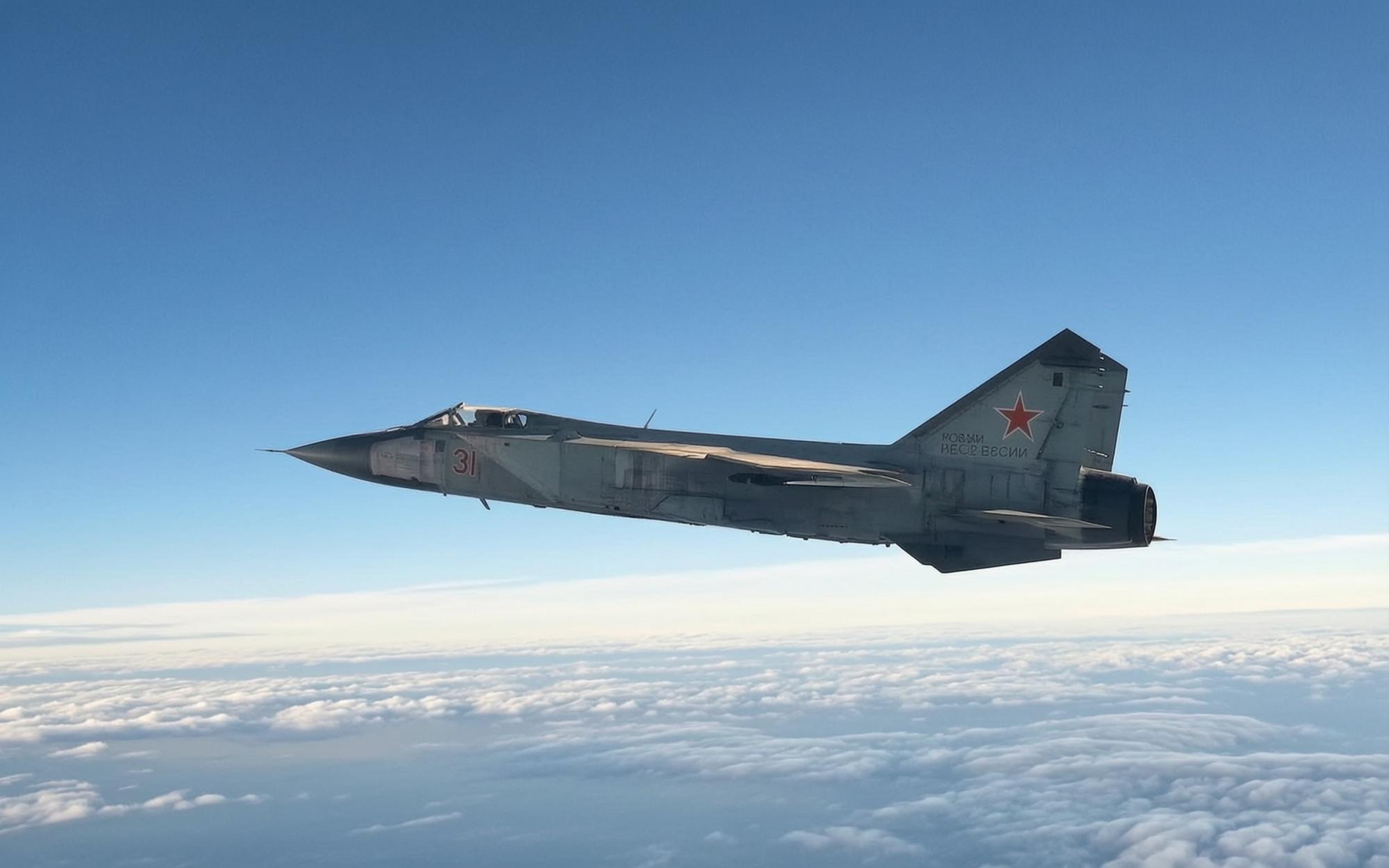


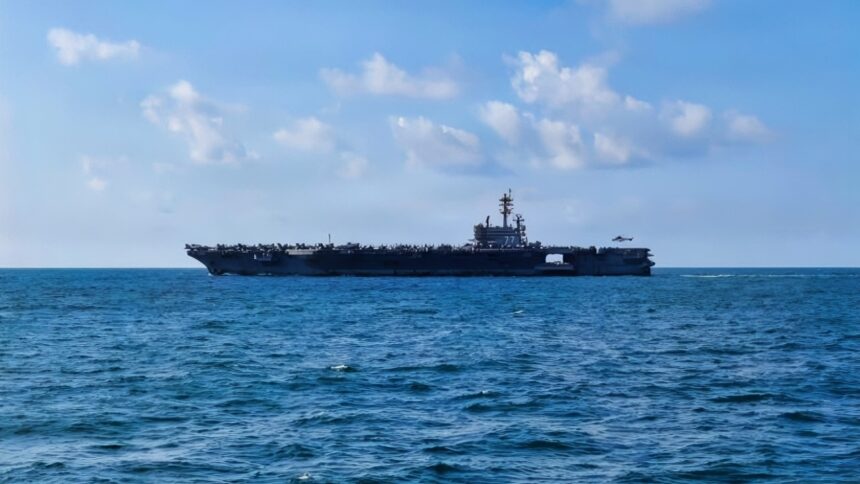

Summary and Key Points: When the US Navy retired the A-6 Intruder in 1997, several airframes were sunk off the coast of Florida to create artificial reefs. That was the end of an aircraft that could find a target at night, in bad weather, at low level, carrying a bomb load that embarrassed some heavy bombers — and the stealth aircraft meant to replace it, the A-12 Avenger II, had already been canceled by Dick Cheney in January 1991. Nothing ever took the mission. That is how the modern carrier air wing was built: not by design, but by subtraction. Stand on a flight deck in 1985, and you would count roughly 90 aircraft across eight types, flown by seven or eight separate communities each with its own training pipeline and institutional memory. Stand on one today, and you count about 65 — and outside the helicopters and the Hawkeyes, nearly every one of them is a version of the Super Hornet.
The Shrinking Aircraft Carrier Air Wing Is Now Devoid of Specialists
The flight deck used to look like an aviation museum with the engines running.
Walk the deck of a carrier in the mid-1980s, and you’d count something like 85 to 90 aircraft of at least eight different types. There were F-14 Tomcats, A-6 Intruders, A-7 Corsairs, S-3 Vikings, EA-6B Prowlers, E-2 Hawkeyes, and helicopters tucked in wherever the handlers could find room.
F-14 Tomcat at the Smithsonian. 19FortyFive.com original photo.
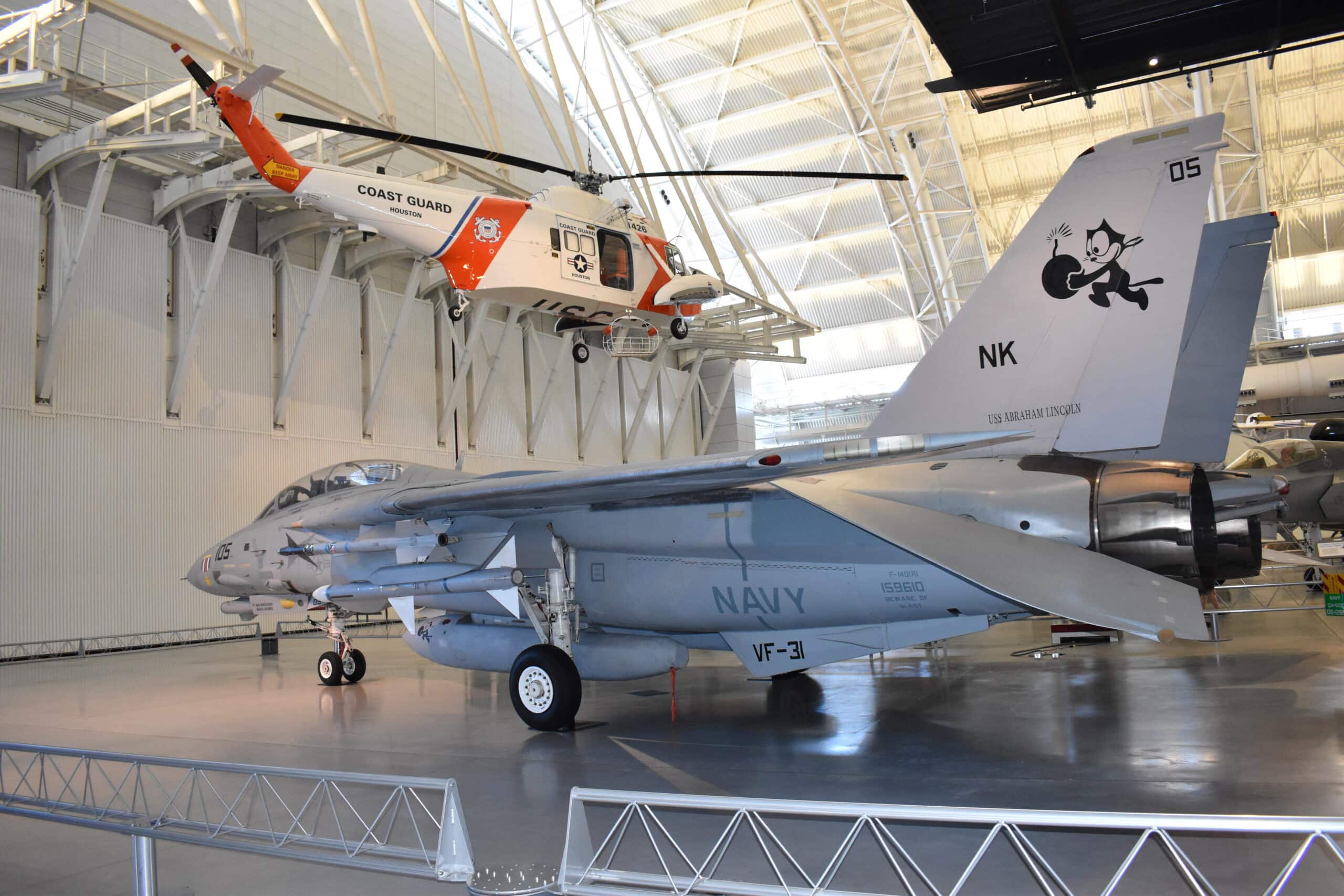
F-14 Tomcat at the Smithsonian. Image Credit: 19FortyFive.com
Each one was built to do one job very well. Walk the deck today, and you’ll count around 65 aircraft. Nearly every one of them that isn’t a helicopter or a Hawkeye is a version of the same airframe.
That’s the story of the modern carrier air wing in two sentences. It got smaller and much less diverse. There are always two sides to every story, but what are the pros and cons of reshaping the air wings of carriers?
The Numbers Tell The Story
A CIMSEC analysis of the air wing’s evolution lays it out plainly. A typical 1980s wing carried about 90 aircraft, 60 of them fighters or strike jets. By 2015 that was down to roughly 64 aircraft, with about 44 fighters and strike jets. That’s a cut of about a quarter in total aircraft and about a quarter of the jets that actually carry the fight to the enemy.
However, the headcount only tells half of it. The bigger loss is what went away along with the numbers.
In 1985, an air wing had two F-14 fighter squadrons for fleet air defense and an A-6 squadron for medium attack. It had two A-7 squadrons for light attack, an EA-6B squadron for electronic warfare, and an S-3 squadron for anti-submarine warfare. An E-2C squadron and a helicopter squadron rounded it out.
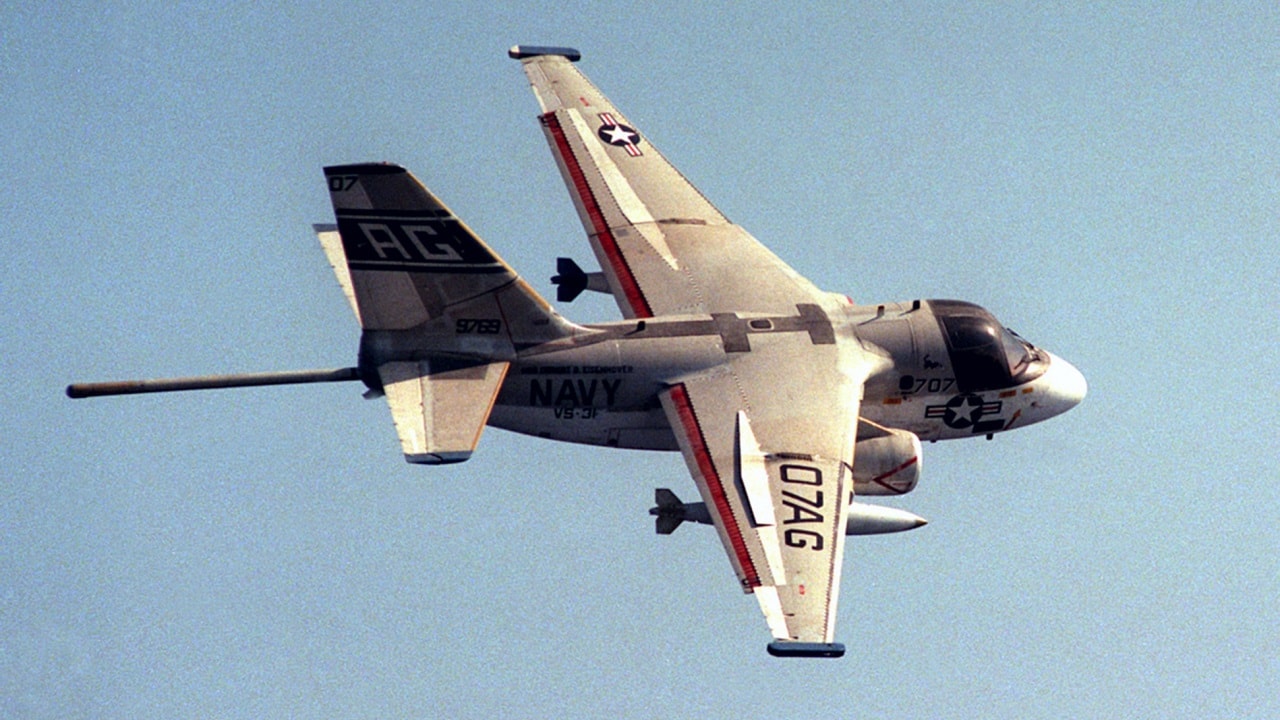
A Lockheed S-3A Viking aircraft of anti-submarine squadron VS-31 in flight with an ASQ-81 Magnetic Anomaly Detection (MAD) boom extending from the tail section. The aircraft was assigned to Carrier Air Wing Seven (CVW-7) aboard the USS Dwight D. Eisenhower (CVN-69) in 1983.
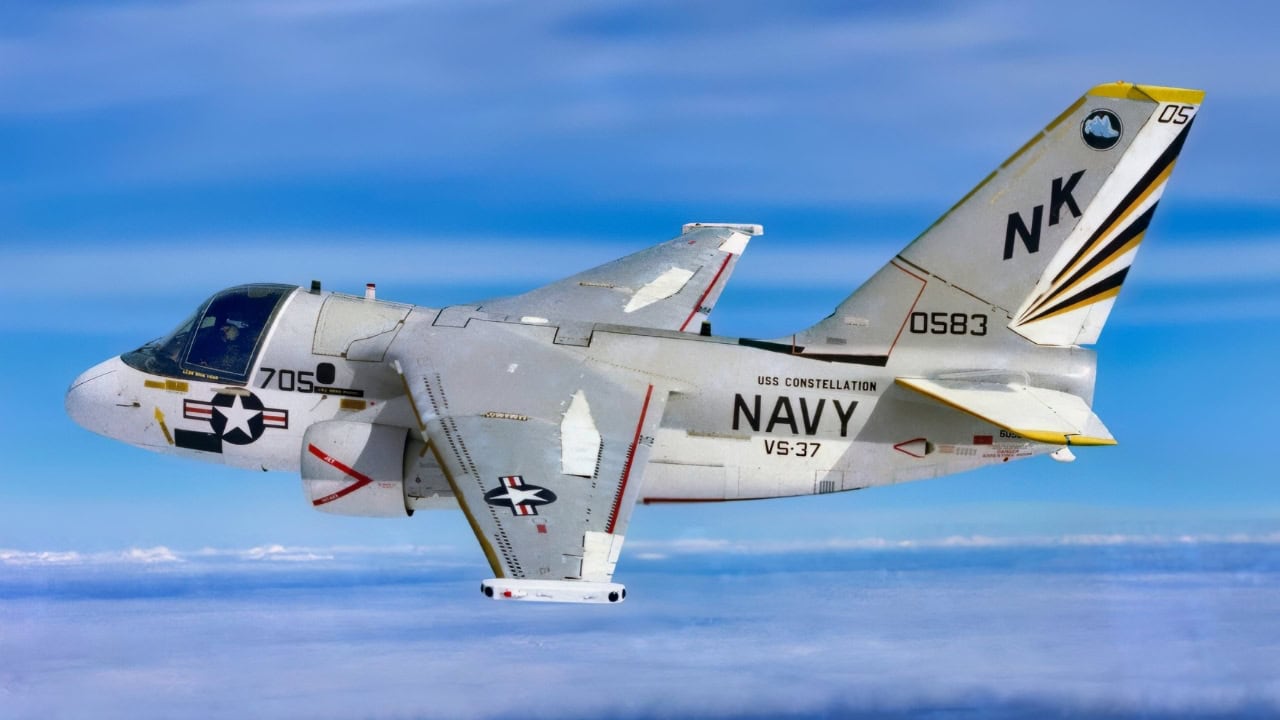
S-3 Viking. Image Credit: Creative Commons.
Seven or eight distinct communities each had their own training pipeline, tactics, and institutional memory.
Today it’s Super Hornets (with a jamming suite), a squadron of F-35Cs in some wings, E-2Ds, and MH-60s. For those keeping score at home, that’s one airframe doing the jobs of four or five.
Aircraft Carrier Drama: The Specialists Went Away One At A Time
The A-6 Intruder went first. The Navy was supposed to replace it with the stealthy A-12 Avenger II, but Defense Secretary Dick Cheney canceled that program in January 1991.
Nothing ever took its place. The last Intruders left the fleet in 1997, and a good number of them ended up sunk off the Florida coast as artificial reefs. That’s an unceremonious ending for an airplane that could fly low in any weather, at night, with a bomb load a lot of heavy bombers would envy.
The F-14 Tomcat followed. The Navy flew its last Tomcat mission in 2006. Say what you want about its maintenance hours, and there was plenty to say. That’s beside the point.
The Tomcat and its AIM-54 Phoenix gave the fleet a long-range interceptor built to kill Soviet bombers before they got within missile range of the carrier. The Super Hornet is a fine multirole jet. However, it was never designed for that mission.
Next was the S-3 Viking. Lockheed Martin marked the retirement of the last fleet S-3B in January 2009, ending a 35-year career. As Proceedings pointed out, the Viking performed antisubmarine warfare, surface warfare, electronic surveillance, tanking, and over-the-horizon targeting, and the Navy ultimately needed several different aircraft to replace it.
Its fixed-wing submarine-hunting job went to the helicops and to shore-based P-8s. Its tanking job went to the Super Hornet.
The EA-6B Prowler was the last to go. The Navy’s Prowlers made their final active-duty flight in 2015, and the Marines flew theirs a few more years before retiring the type in 2019. The Growler took over the jamming mission and does it well. It’s also yet another Super Hornet.
The “Jack-of-all-Trades” Compromise
To be fair, there’s a real case for what the Navy did. One airframe means one set of spare parts, one maintenance pipeline, and one training syllabus for most of the air wing.
Readiness rates are easier to keep up. Deck space is easier to manage. In the budget squeeze after the Cold War, retiring four aging, maintenance-heavy aircraft in favor of one modern design looked like the smart play, and in many ways it was.
While that lack of diversity was good for the budgetary and operational realities of the 1990s and 2000s in fighting the Global War on Terror, today’s operational realities paint a different picture.
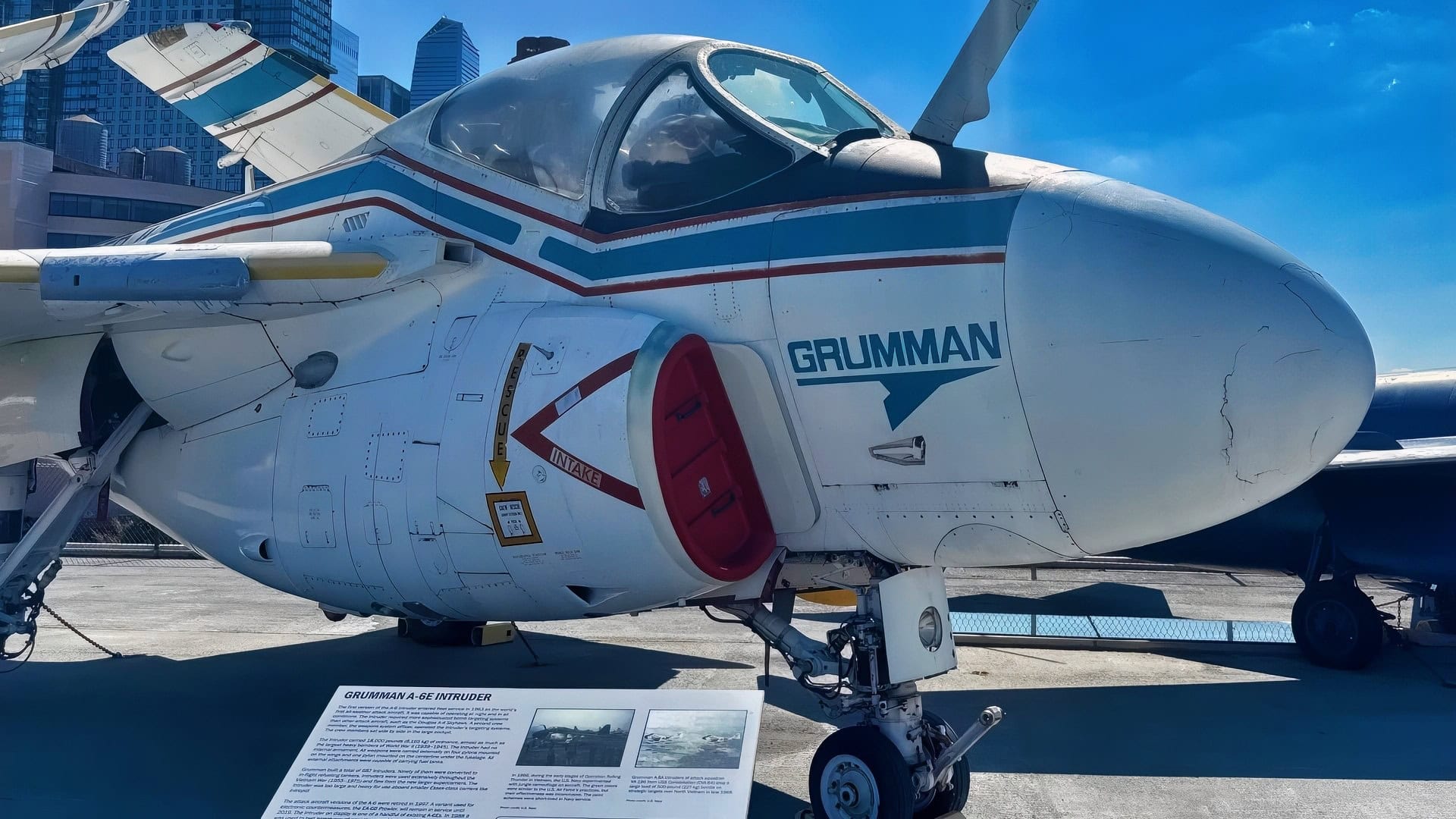
A-6 Intruder Original 19FortyFive.com Image Taken in July 2025.
And the bill lies elsewhere. The biggest one is range. The Super Hornet doesn’t have the legs of the Intruder or the Tomcat, which is why a big share of Super Hornet sorties are spent hauling fuel for other Super Hornets.
Every jet that isn’t striking or defending the fleet. The MQ-25 Stingray was built to take that job back, and it can’t get to the fleet soon enough. The Stingray is currently in initial low-rate production and is expected to be deployed with the fleet by FY 2029 or 2030.
The Navy has recognized its lack of diversity and is trying to address it by integrating unmanned systems.
The other bill is resilience. When one airframe does nearly everything, a fleet-wide grounding, a parts shortage, or a design flaw hits nearly everything at once. The old air wing’s variety was inefficient. It was also a hedge.
Why It Matters Now for Aircraft Carriers
The aircraft carrier air wing was pared down for a world in which the carrier could park close to a coast and launch airstrikes into an enemy that couldn’t reach it. That world is gone. China’s anti-ship missiles are designed to push beyond the point where a short-legged air wing can do much.
In my opinion, we’ll spend the next decade trying to rebuild the reach and depth we gave away in the 1990s, with drones, the F-35C, and whatever eventually comes out of the F/A-XX program. Some of that will work. None of it is cheap.
The 1980s air wing was crowded, complicated, and expensive to run. It could also do nearly anything asked of it without borrowing a jet from another mission. The Navy traded that for efficiency. Now it has to find out what that efficiency cost.
About the Author: Steve Balestrieri
Steve Balestrieri is a National Security Columnist. He served as a US Army Special Forces NCO and Warrant Officer. In addition to writing on defense, he covers the NFL for PatsFans.com and is a member of the Pro Football Writers of America (PFWA). His work was regularly featured in many military publications.