



The legacy media feverishly concern-mongered about COVID-19 and then tried unsuccessfully to generate similar hysteria over the gay-spread monkeypox virus.
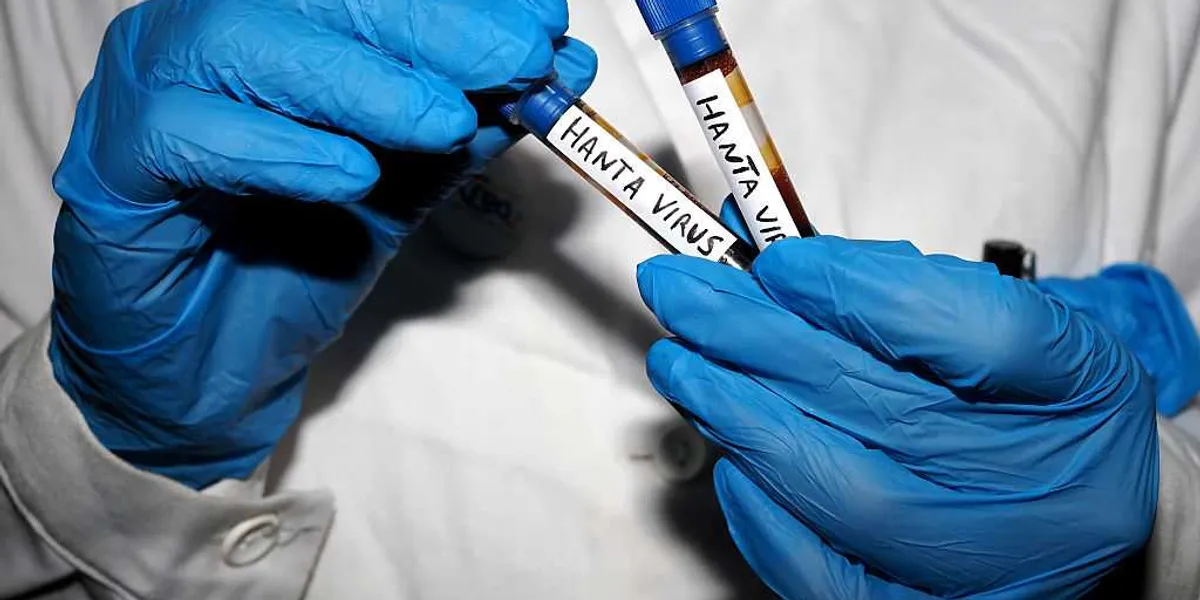
Clearly desperate for a new health scare — especially after America formally rejected the World Health Organization — outlets seized upon reports of a deadly outbreak of hantavirus last month among passengers and crew of the MV Hondius, a Dutch cruise ship carrying 147 souls embarking from the southern tip of the Andes mountains in South America to the Canary Islands off the coast of Morocco.
‘We should shy away from making bold pronouncements that may prove dangerously misleading weeks or months later.’
While some publications rushed to attack emerging theories about the nature of the virus, including the notion that it was cooked up in a lab — narrative attacks that neglected to mention a recent gain-of function experiment involving hantaviruses — others pushed alarmist headlines such as:
- “Is hantavirus the next COVID? Is the U.S. response on point? An outbreak update” — NPR
- “Why hantavirus is giving us a ‘sinking feeling,’ despite experts’ reassurance” — Canadian state media
- “Fears rat virus has spread to seven countries” — The Telegraph
- “Could human-transmitted hantavirus be the next pandemic threat?” — The Week
- “Hantavirus: Many unknowns surround an ‘unprecedented and worrying’ outbreak” — Le Monde
Despite provocative headlines and framing, many media outfits and experts have acknowledged that it is extremely unlikely that there will be a hantavirus epidemic, let alone a pandemic — though a news article at CNN cautioned against “calm-mongering” over hantavirus lest “post-COVID anxiety” be triggered.
A new article in the International Journal of Infectious Diseases, for instance, emphasized that while the suspected variety of hantavirus on the MV Hondius “can cause severe disease, high case fatality, and intense public anxiety when they emerge in mobile or closed settings,” such “outbreaks are not frequent” and are “unlikely to become a global outbreak.”
Hantavirus is a family of potentially deadly single-stranded RNA viruses that are naturally found in rodents. Only 890 cases of hantavirus were reported in the U.S. between 1993 and 2023, 35% of them fatal.
RELATED: Bizarre academic paper about releasing ticks resurfaces amid surging bites
The MV Hondius. Omar Havana/Getty Images
When spread to humans, hantaviruses can cause two diseases: hemorrhagic fever with renal syndrome — a condition affecting the kidneys — and hantavirus pulmonary syndrome, which affects the lungs.
The hantavirus affecting people on the MV Hondius, the HPS-associated Andes strain, is unique.
Whereas other strains leap from rodents to humans, the Andes virus — symptoms of which appear anywhere from four to 42 days after exposure — has been reported to transmit from person to person via saliva droplets and other oral fluids, although this transmission theory has not been definitively proven.
The breakout on the cruise ship, which has so far claimed the lives of three people, is hardly unprecedented in terms of alleged mass human transmissions of the disease — at least where South America is concerned.
From November 2018 through February 2019 in Chubut Province, Argentina, there was, for instance, a person-to-person outbreak that resulted in 34 confirmed infections and 11 deaths.
Amid continued uncertainty over the genesis of the latest outbreak and media fearmongering, a wide range of theories have emerged about the rodent-borne virus.
Having heard for years about the various efforts to enhance the transmissibility, virulence, or host range of certain viruses, some have speculated that human-to-human transmission of hantavirus points to gain-of-function experimentation.
While there’s been nothing yet to suggest that the virus responsible for the breakout on the Hondius was the result of intentional genetic meddling, scientists have previously modified viruses incorporating hantavirus components and increased their viral fitness in a lab setting. This is similar to the controversial work done on bat coronaviruses at the lab in Wuhan, China.
Hantaviruses are considered a bioagent requiring Biosafety Level 3 containment for research and viral propagation. Consequently, BSL-2 laboratories won’t cut it.
However, a peer-reviewed study funded by the National Institutes of Health and published in 2019 by the American Society for Microbiology describes how researchers developed a work-around for conducting hantavirus research in a lower biocontainment-security BSL-2 laboratory.
Researchers tried to make a safer chimeric virus — which is a hybrid virus created by piecing together parts of two different viruses. They used a relatively weaker virus, vesicular stomatis virus, as the main body, and then attached the entry proteins from the more dangerous hantavirus to the outside so that it could infiltrate and infect cells.
This new recombinant virus — the result of an artificial mash-up of genetic material — apparently started acting just like a real hantavirus and underwent a series of mutations to become more infective:
Serial passage of the rescued rVSV-HTNV Gn/Gc virus markedly increased its infectivity and capacity for cell-to-cell spread. This gain in viral fitness was associated with the acquisition of two point mutations: I532K in the cytoplasmic tail of Gn and S1094L in the membrane-proximal stem of Gc. Follow-up experiments with rVSVs and single-cycle VSV pseudotypes confirmed these results. Mechanistic studies revealed that both mutations were determinative and contributed to viral infectivity in a synergistic manner.
The lead researcher on the 2019 study declined Blaze News’ request for comment.
This study is anything but a smoking gun. Whereas the COVID-19 pandemic appears to have originated in the neighborhood of the Wuhan Institute of Virology, where dangerous gain-of-function experiments were being conducted on coronaviruses, the Hondius outbreak seemingly took place a world away from this ostensibly low-danger hantavirus study.
Still, researchers have yet to provide a comprehensive and satisfying explanation for how the Andes virus spreads, prompting speculation that members of the scientific community that possibly manufactured the SARS-COV-2 virus are again not being entirely forthright about what they know and don’t know regarding the Hondius outbreak.
“Public health officials have to be more honest and more humble about how this virus actually spreads,” noted Joseph Allen, professor of exposure assessment science at the Harvard T.H. Chan School of Public Health. “An essential lesson from COVID is that officials should be candid about communicating that we are often learning in real time, and we should shy away from making bold pronouncements that may prove dangerously misleading weeks or months later.”
Like Blaze News? Bypass the censors, sign up for our newsletters, and get stories like this direct to your inbox. Sign up here!
Read the full article here




![Kara Swisher Melts Down, Vows to Ditch CNN After Paramount Settlement [WATCH]](https://www.lifezette.com/wp-content/uploads/2026/09/2026.09.23-14.16-lifezette-6ab3df2880ac7.jpg "Kara Swisher Melts Down, Vows to Ditch CNN After Paramount Settlement [WATCH]")