
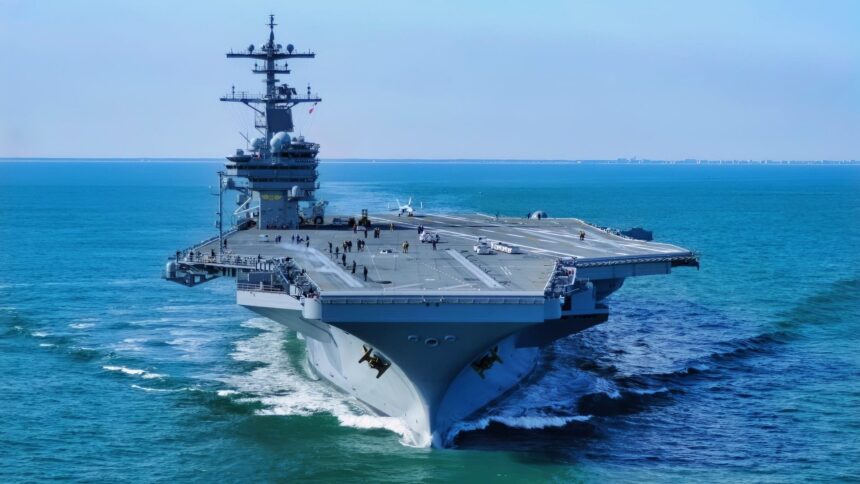

Summary and Key Points: Iran fired ballistic missiles at a US destroyer and an aircraft carrier over the weekend and claimed both were damaged and withdrawn. Central Command says neither ship was hit, and that it answered by destroying one Revolutionary Guard tanker and disabling two more. The claims matter less than what the attempt says. Iran has spent seven months making American bases across the Middle East progressively harder to use, which has left naval aviation carrying the war — and Tehran has now demonstrated that it knows exactly where the American center of gravity sits.
Iran Targeted an Aircraft Carrier and More
Over the weekend, Iran claimed publicly to have attacked two US Navy warships, a destroyer and an aircraft carrier, with ballistic missiles. According to Iranian statements, both ships were damaged and have withdrawn from the area. Central Command acknowledged the attack, but denied that either warship had been hit or damaged.
In response to what it characterized as an unprovoked escalation, the US responded with attacks against three tankers owned by the Iranian Revolutionary Guard, destroying one and disabling the other two.
The Iran War Just Keeps Going
CENTCOM’s claims notwithstanding, the attacks were hardly unprovoked. The United States and Iran have been trading blows periodically for seven months, the result of a decision by Washington to launch a war of choice without any particular plan for how to bring that war to an end.
The attacks may represent a kind of escalation, although given that the US Navy opened the war by sinking an Iranian frigate, it does not seem that either side considers warships off limits.
The Nimitz-class aircraft carrier USS George H.W. Bush (CVN 77) sails in the Atlantic Ocean, Feb. 6, 2026. The George H.W. Bush Carrier Strike Group is at sea as an integrated warfighting team. Composite Training Unit Exercise (COMPTUEX) is the Joint Force’s most complex integrated training event and prepares naval task forces for sustained high-end Joint and combined combat. Integrated naval training provides combatant commanders and America’s civilian leaders highly capable forces that deter adversaries, underpin American security and economic prosperity, and reassure Allies and partners. (U.S. Navy photo by Mass Communication Specialist 3rd Class John R. Farren)
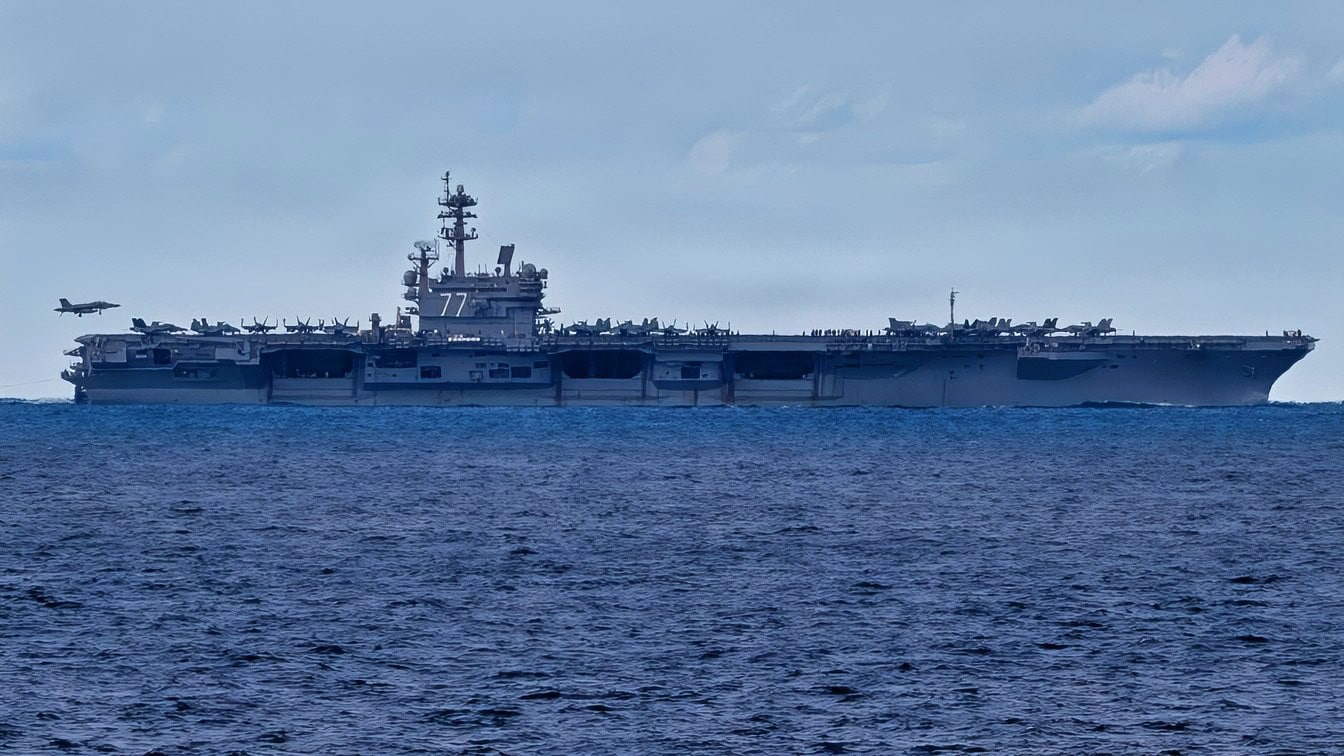
The Nimitz-class aircraft carrier USS George H.W. Bush (CVN 77) sails in the Atlantic Ocean, Feb. 14, 2026. The George H.W. Bush Carrier Strike Group is at sea training as an integrated warfighting team. Composite Training Unit Exercise (COMPTUEX) is the Joint Force’s most complex integrated training event and prepares naval task forces for sustained high-end Joint and combined combat. Integrated naval training provides combatant commanders and America’s civilian leaders highly capable forces that deter adversaries, underpin American security and economic prosperity, and reassure Allies and partners. (U.S. Navy photo by Mass Communication Specialist 3rd Class Mark Peña)
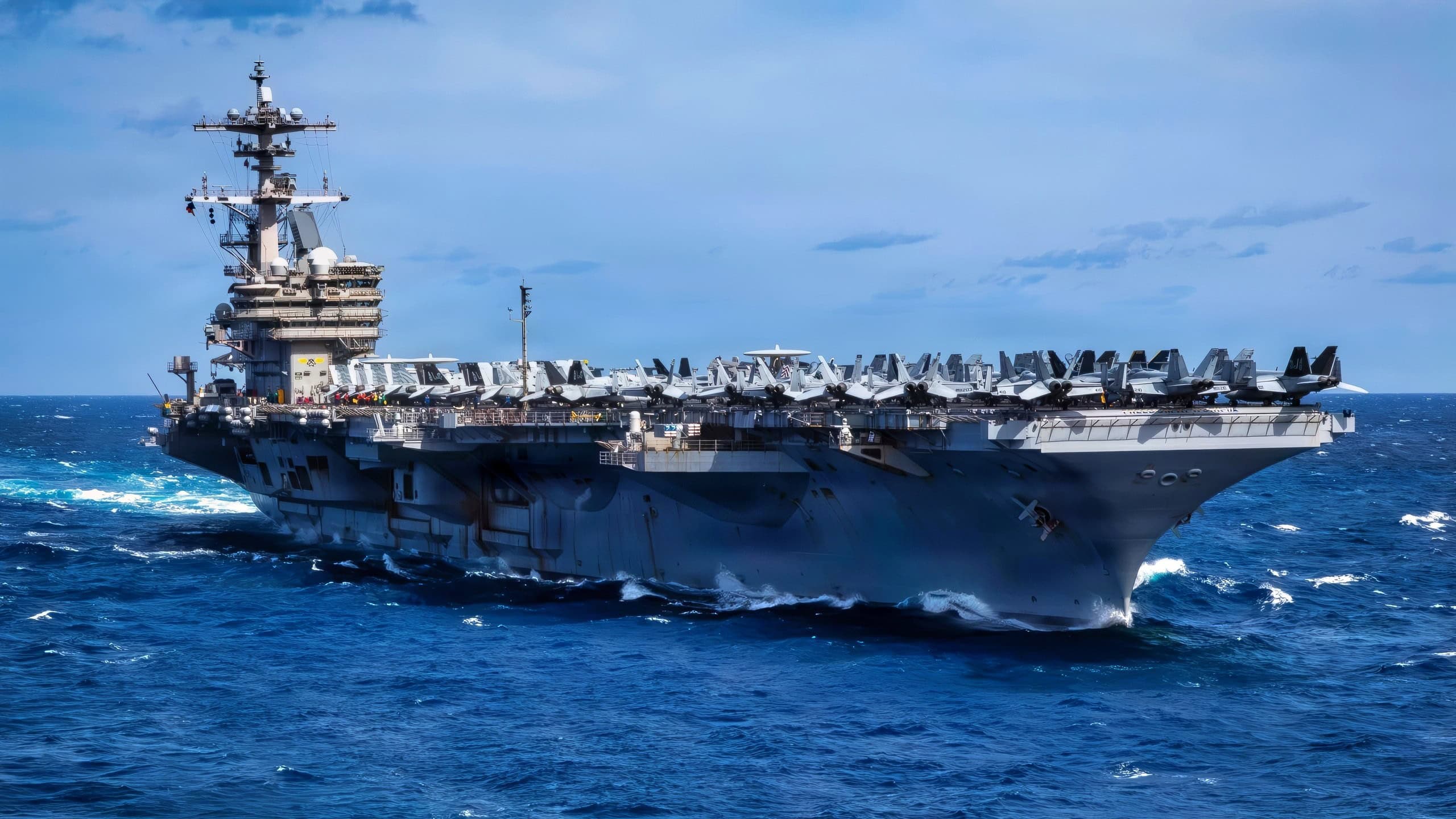
The Nimitz-class aircraft carrier USS George H.W. Bush (CVN 77) transits the Atlantic Ocean, Feb. 15, 2026. The George H.W. Bush Carrier Strike Group is at sea training as an integrated warfighting team. Composite Training Unit Exercise (COMPTUEX) is the Joint Force’s most complex integrated training event and prepares naval task forces for sustained high-end Joint and combined combat. Integrated naval training provides combatant commanders and America’s civilian leaders highly capable forces that deter adversaries, underpin American security and economic prosperity, and reassure Allies and partners. (U.S. Navy photo by Mass Communication Specialist 2nd Class Mitchell Mason)
The real significance of the attacks is that they reflect an Iranian understanding that naval power, and especially naval aviation, is the US center of gravity in this conflict.
The US cannot continue the blockade and cannot prosecute the war if US ships are damaged, sunk, or put in chronic jeopardy by Iranian missiles.
Forts
Iranian attacks against US bases across the Middle East have had the effect of making aircraft carrier aviation critical to the continuance of the war.
The United States has spent decades building and maintaining a sophisticated network of bases across the Middle East, a network that has made the campaign against Iran logistically possible. These bases are protected by formidable defenses intended to defeat drone, aircraft, and missile attacks.
Fixed bases with formidable defenses are still fixed bases, and targeting them with missiles and drones is simply a problem of mathematics. Iranian missiles have caused extensive damage to US installations around the region, and with interceptor stocks depleted, the danger will only continue to grow.
Although most of these bases remain operational and continue to serve as platforms for attacks against Iran, they are nevertheless increasingly vulnerable to Iranian counter-attacks.
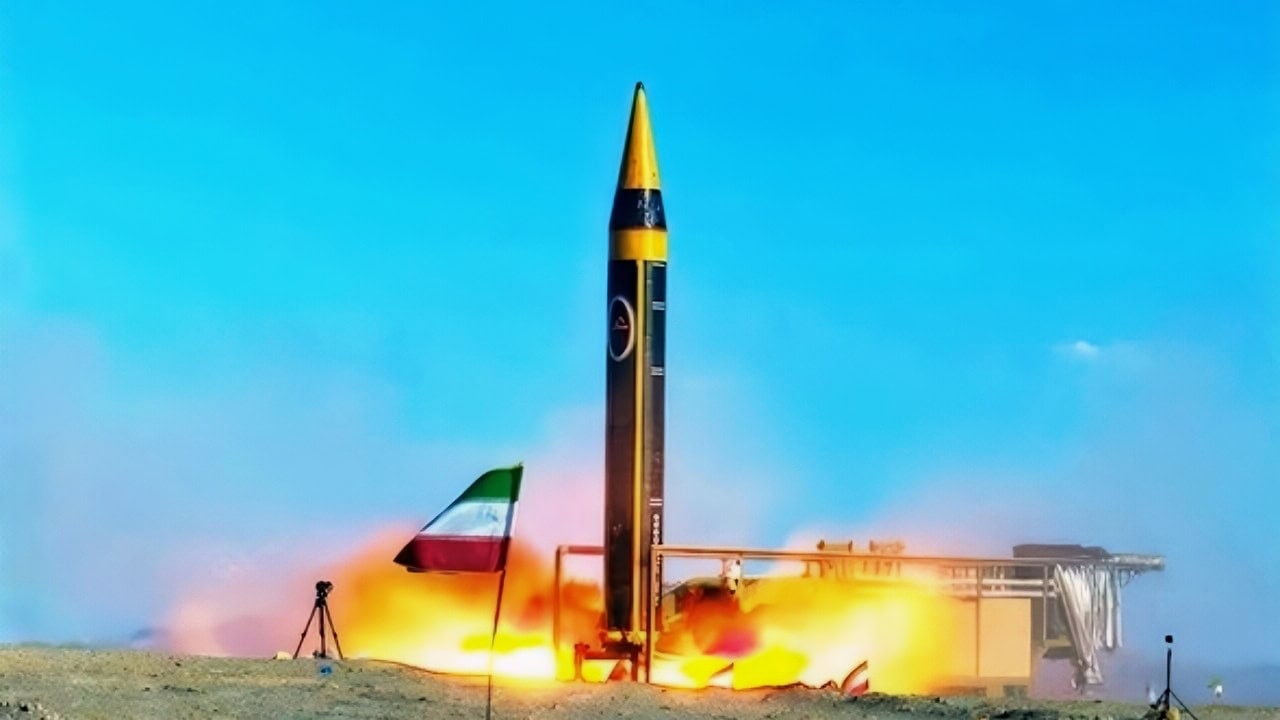
Khorramshahr-4 Iran State Media Photo
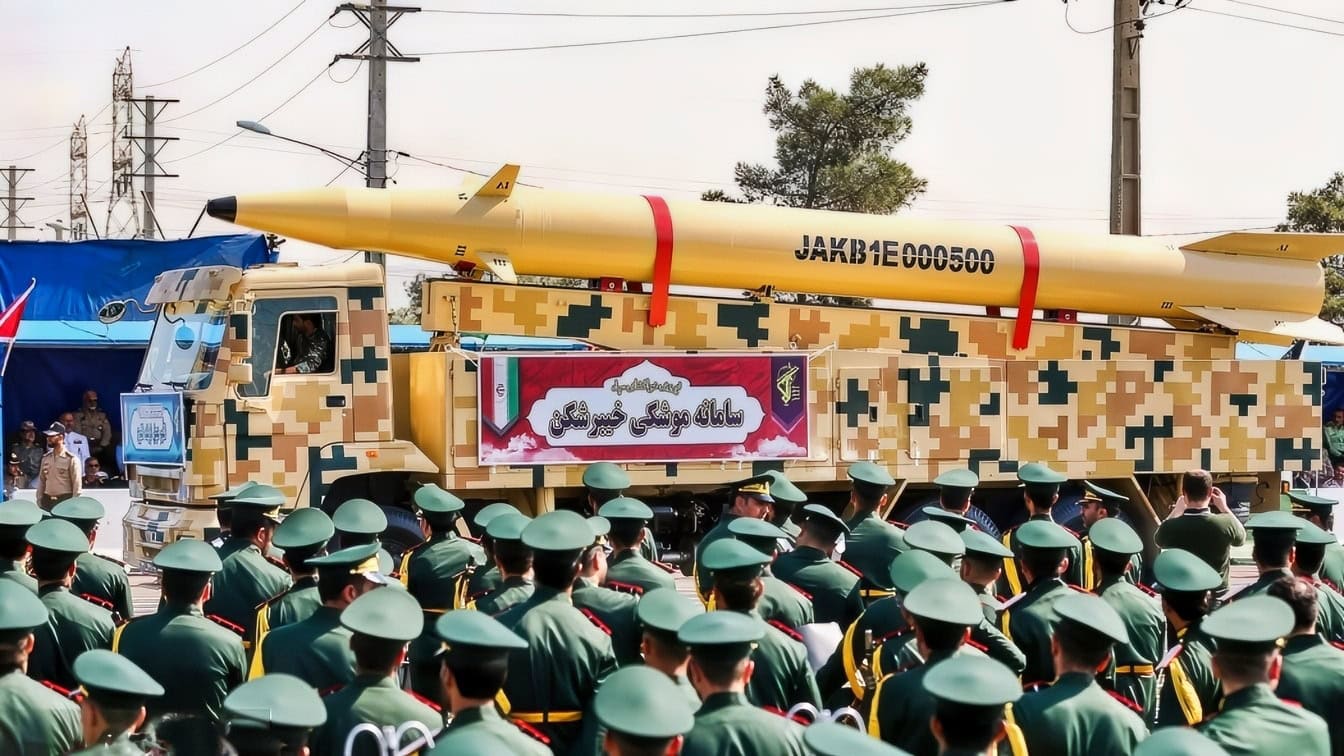
Iranian Kheibar Shekan “Fortress Buster” Ballistic Missile Creative Commons Image
Ships
In this context, it is not surprising that two US Navy aircraft carriers have been worn down since the beginning of the war.
Iran’s closure of the Strait of Hormuz and the US decision to impose its own naval blockade put the US Navy front and center in terms of the prosecution of the conflict.
Combined with the vulnerability of fixed bases, this has made it nearly impossible for the United States to prosecute the war without a major contribution from naval platforms.
Warships, by nature, are mobile. Targeting is a much more difficult problem, requiring more expensive weapons and surveillance systems. Defeating long-range missile attacks has been a core mission of modern navies since the early Cold War, and modern warships have multiple, redundant defensive weapons.
Moreover, missiles that miss plunge harmlessly into the ocean rather than damaging infrastructure.
US warships were regularly targeted by Houthi forces while operating in the Red Sea from 2023 on, and while those attacks forced US ships to expend large numbers of interceptors, they inflicted no significant damage.
Shooting at an Aircraft Carrier Isn’t Hitting or Sinking a Carrier
Shooting at an aircraft carrier is different than hitting one.
Iran does not yet possess a reconnaissance-strike complex sufficient to put a US Navy carrier battlegroup in substantial jeopardy.
The infrastructure needed to locate warships, target them, and defeat their defensive systems is incredibly expensive, even if individual munitions are cheap.
But these attacks surely indicate that Iran understands its strategic problem and is working on a solution.
Given reports that China and Russia are both supplying Iran with intelligence and technology, the Navy will need to continue to take extraordinary care with respect to the protection of its most expensive and powerful assets.
About the Author: Robert Farley
Dr. Robert Farley has taught security and diplomacy courses at the Patterson School since 2005. He received his BS from the University of Oregon in 1997, and his Ph. D. from the University of Washington in 2004. Dr. Farley is the author of Grounded: The Case for Abolishing the United States Air Force (University Press of Kentucky, 2014), the Battleship Book (Wildside, 2016), Patents for Power: Intellectual Property Law and the Diffusion of Military Technology (University of Chicago, 2020), and most recently Waging War with Gold: National Security and the Finance Domain Across the Ages (Lynne Rienner, 2023). He has contributed extensively to a number of journals and magazines, including the National Interest, the Diplomat: APAC, World Politics Review, and the American Prospect. Dr. Farley is also a founder and senior editor of Lawyers, Guns and Money.

![Britons Reach Boiling Point as Kayak Grandmas Challenge Migrant Landing [WATCH]](https://www.lifezette.com/wp-content/uploads/2026/09/2026.09.07-12.56-lifezette-6a9eb47b51746.jpg "Britons Reach Boiling Point as Kayak Grandmas Challenge Migrant Landing [WATCH]")