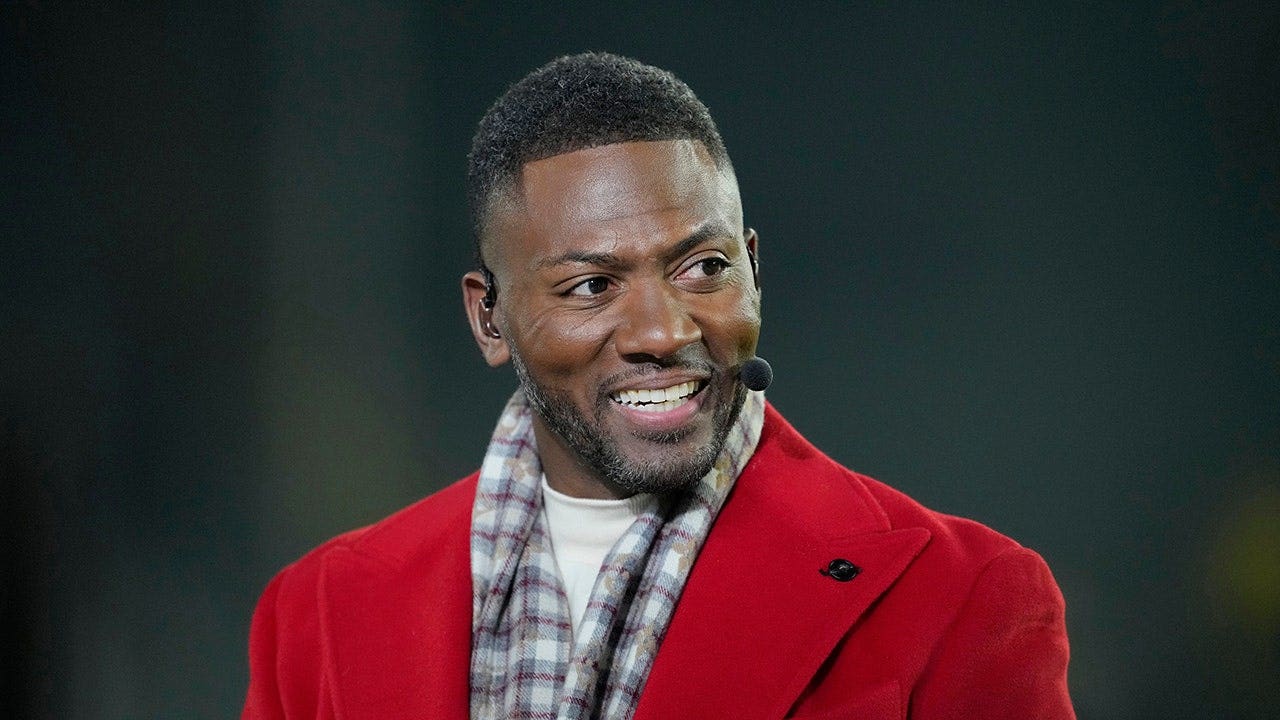

Within hours of Ryan Clark’s dismissal, many of the biggest names in sports media had already reached the same conclusion: Clark was the victim and ESPN was the villain.
Stephen A. Smith said he confronted ESPN executives over the decision and called Clark “arguably the best NFL analyst in America.” Emmanuel Acho accused the network of handling the situation in a “cowardly” and “wildly disrespectful” manner.
RYAN CLARK BECAME A HEADACHE FOR ESPN
Sarah Spain described Clark as “another incredibly smart, thoughtful, nuanced talent let go,” while Pro Football Talk’s Mike Florio declared that Clark took “the high road” after “ESPN took the low road.”
Jemele Hill went even further.
Hill suggested Clark had “a hater,” perhaps multiple haters, inside ESPN. She attacked OutKick as a “disgusting” right-wing “rag” and theorized that someone within the network intentionally leaked Clark’s dismissal to OutKick in order to create a conservative media narrative against him. She offered no evidence for that claim.
But the fact that Clark’s dismissal leaked so widely and so quickly raises a question that his defenders have mostly avoided: How many enemies had he made inside ESPN?
Much of the criticism centered on the fact that Clark was informed during a live edition of NFL Live. The assumption was that ESPN knowingly allowed a longtime employee to begin the show before abruptly firing him during a break.
I don’t think that’s what happened.
I think ESPN planned to inform Clark later and simply failed to anticipate that news of his dismissal would leak first. Once OutKick contacted the network with a confirmed story, ESPN realized it had lost control of the timeline and had to tell Clark before he learned about it publicly.
That’s not cruelty. It’s poor planning.
My colleague Bobby Burack and I developed separate lines of reporting that the network was preparing to part ways with Clark. Four sources confirmed the information. Despite concerns that alerting ESPN could jeopardize the story, I contacted the network’s communications department at 4 p.m. and asked ESPN to confirm or deny the report before our publication deadline.
ESPN asked us to wait until 5:45 p.m. while it was “trying to chase this down.” We declined but told the network we would add anything it provided before that time. It’s reasonable that ESPN wanted more time to inform Clark before the news became public.
At 4:49 p.m., ESPN unexpectedly told us we could “stick to” our original timeline. Fourteen minutes later, Andrew Marchand published a brief report in The Athletic. OutKick’s more detailed story followed one minute after that.
The most logical explanation is that ESPN believed it still had time to manage Clark’s exit quietly. Once OutKick informed the network that four sources had already confirmed the decision, executives were forced to accelerate a conversation they apparently had not planned to have during NFL Live.
ESPN’s mistake was not deciding to embarrass Clark on live television. It was failing to anticipate that the information would leak before the network was ready to tell him.
That raises a more uncomfortable question than the ones Clark’s defenders have been asking: Why were so many people inside or around ESPN willing to talk about his dismissal?
Hill may be correct that Clark had “haters” inside the company.
What she never seriously considered, or chose to ignore, is how he might have acquired them.
How Ryan Clark made enemies inside ESPN
I worked at ESPN for years and spent time in rooms with Clark. He appeared on several shows I produced. The thing I remember most clearly is how uncomfortable he could make those rooms.
Clark often carried himself as though he were the smartest person present, and he made sure everyone knew it. That dynamic was especially difficult for producers and other employees beneath him in ESPN’s hierarchy. There was little room to challenge him or offer feedback that amounted to anything other than telling him he was great.
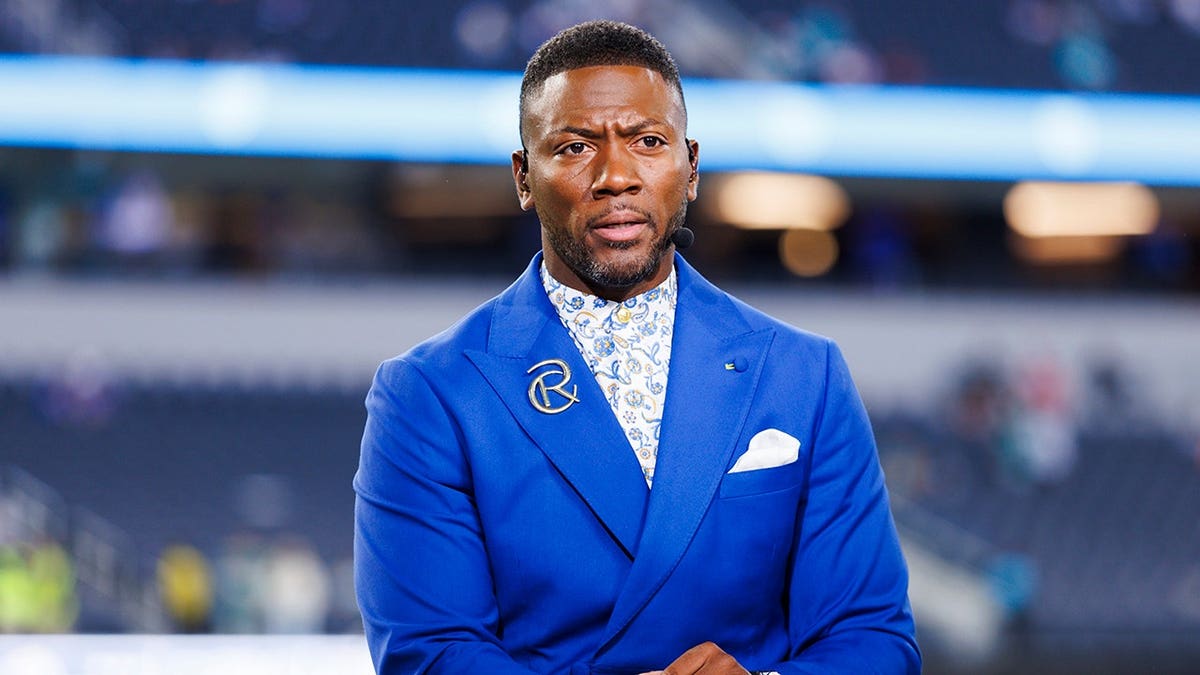
I distinctly remember one NFL season when talent, producers and other ESPN employees gathered on Sunday afternoons to watch the games in a large conference room. There were usually 25 or 30 people there. The mood was light. Chris Berman often sat near the front and cracked jokes throughout the afternoon.
Clark joined the group one Sunday and sat in the back with his arms folded. Several times, someone offered an opinion about a game and Clark scoffed. Eventually, most people stopped talking. I left and watched the games from a control room because he had completely ruined the experience for me.
How dare anyone offer an opinion when the world’s greatest NFL analyst was available to explain what everyone else was apparently too stupid to understand?
That was one afternoon years ago. It does not prove why ESPN fired Clark, nor does it mean every person who worked with him had the same experience.
It does, however, make the speed of the leak less surprising to me.
People rarely risk their relationships with a company to leak sensitive personnel news about a universally beloved colleague.
Clark’s defenders largely presented his dismissal as though it happened in a vacuum.
It didn’t.
Clark was forced to apologize after making inaccurate claims on ESPN about the investigation into former LSU receiver Kyren Lacy’s role in a fatal crash. He presented claims from Lacy’s attorney as established fact and accused law enforcement of wrongdoing before Louisiana State Police released additional evidence that contradicted key parts of the story Clark told viewers.
He later acknowledged that he had failed to provide complete and accurate information.
Clark also admitted on ESPN that he had argued in favor of Bryce Young over C.J. Stroud despite privately believing Stroud was the superior quarterback. His explanation was that Young needed someone to support him publicly.
That’s a remarkable admission from an analyst whose job is supposed to be giving viewers his honest evaluation.
ESPN’S RYAN CLARK WANTS TO BE AN NFL GM, LIES ABOUT C.J. STROUD & BRYCE YOUNG TO PROVE HE CAN DO IT
Then there was Clark’s public feud with Robert Griffin III, during which he suggested Griffin was not qualified to discuss Black women because he is married to a White woman. The dispute became deeply personal and reportedly frustrated people inside ESPN. This led to another Clark apology.
Then there was Clark’s on-air confrontation with Peter Schrager that became another viral controversy. Clark later apologized (again), but the exchange likely contributed to concerns among network executives.
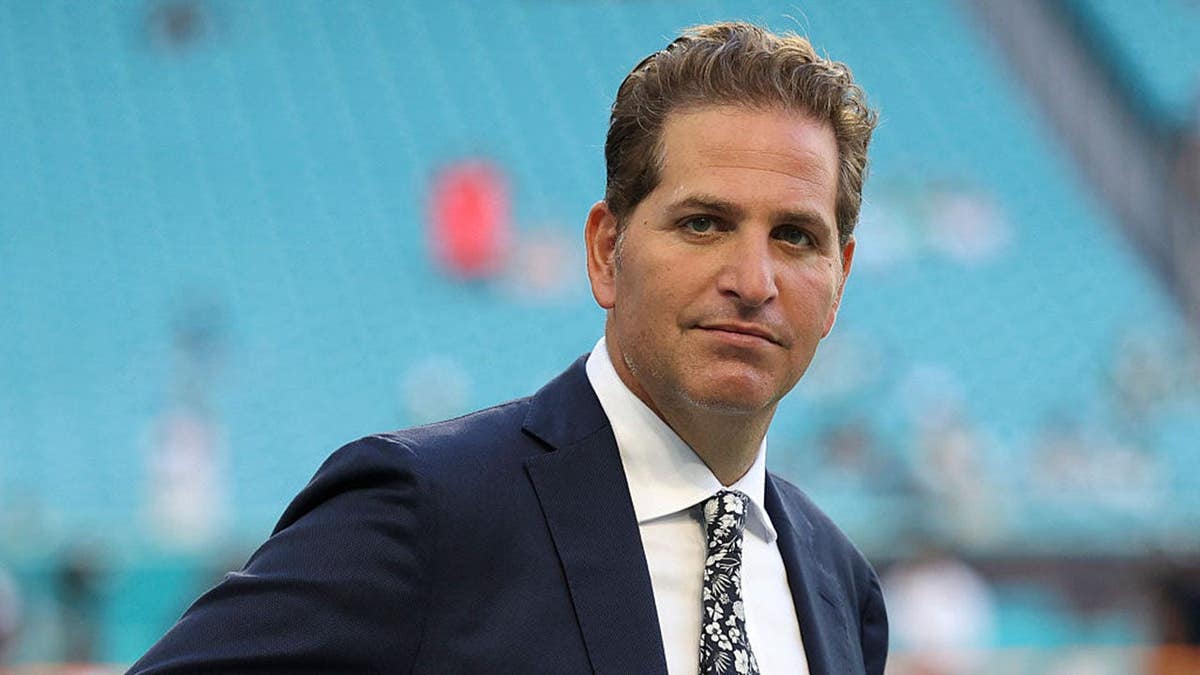
Plus, Clark’s difficult relationship with ESPN management was hardly limited to interpersonal friction.
His 2024 contract negotiations became a public spectacle. Clark allowed his deal to expire, posted videos about his status and openly applied pressure to the network while seeking a substantial raise. ESPN eventually brought him back on a deal reportedly worth around $2 million per year, but the process was contentious.
ESPN executives do not enjoy being publicly cornered during contract negotiations, particularly by employees using their own platforms to rally outside pressure against the company.
My belief is that Clark’s 2024 extension was always going to be his final contract with ESPN. The network may have decided that keeping him temporarily was preferable to another public fight at the time, while also concluding it had no desire to negotiate with him again.
That would help explain why ESPN was willing to move on despite his high salary and recent extension. The decision may not have been prompted by one argument, one apology or one uncomfortable television segment. It may have been the culmination of a relationship that had already run its course.
Essentially, Clark’s tenure had become more complicated than his defenders acknowledged.
Spain praised him as “thoughtful” and “nuanced” without mentioning the multiple inaccurate claims that forced him to apologize on national television. Hill assumed the existence of internal enemies proved something nefarious without examining Clark’s own role in creating friction. Smith emphasized Clark’s talent, which was never really in dispute.
Acho offered perhaps the most exaggerated defense, claiming Clark helped build NFL Live into the “juggernaut it is today.”
Acho pointed to the show’s Sports Emmy victories as evidence. But awards demonstrate that people within the television industry and the Hollywood elites like a program. They do not necessarily demonstrate that the public at large enjoys a show.
The available audience data show that NFL Live drew larger audiences before Clark became one of the faces of the program than it has in recent years. ESPN reported that the show averaged 688,000 viewers during a comparable early-season period in 2013 and 624,000 in 2012. It averaged roughly 486,000 in 2015, 492,000 in 2016, 449,000 in 2021 and 440,000 in 2025.
That doesn’t mean Clark hurt NFL Live. It does make the claim that he “built” a show that debuted in 1998 into a modern ratings juggernaut impossible to support.
The argument becomes even more amusing when compared with Acho’s commentary about Caitlin Clark. He has argued that the WNBA would be better off without her, even though she has driven enormous gains in television audiences, attendance and general interest.
By Acho’s standard, Caitlin Clark has a much stronger claim to having “built” the modern WNBA than Ryan Clark does to having built NFL Live.
Apparently, the meaning of the word depends on which Clark is receiving the credit.
By the time ESPN reached this week’s layoffs, Clark was an expensive employee who had publicly pressured the company during his previous contract negotiation, accumulated enemies inside the building and repeatedly created controversies outside it.
ESPN TO PART WAYS WITH CAM NEWTON AS PART OF TALENT LAYOFFS THAT ALSO INCLUDED RYAN CLARK
The sports media narrative was that ESPN betrayed Ryan Clark.
OutKick’s reporting suggested something different.
ESPN didn’t lose control of the story because OutKick uncovered some closely guarded secret. It lost control because too many people already knew.
And too many people were willing to talk.
That doesn’t happen by accident.
Read the full article here

![Courtney Stodden Confronts Seinfeld Actor Over Inappropriate Sketch Filmed When She Was Just 17 [WATCH]](https://www.boredtrashpanda.com/wp-content/uploads/2026/07/2026.07.22-14.55-boredtrashpanda-6a60d9d2011fc-e1784734154958.jpg "Courtney Stodden Confronts Seinfeld Actor Over Inappropriate Sketch Filmed When She Was Just 17 [WATCH]")