
Summary and Key Points: Dassault puts the Rafale’s cost at roughly $16,500 per flight hour. An F-35A runs about $42,000 — roughly 2.5 times more. That gap is the entire argument for an aircraft that entered service in 2001, has no meaningful stealth, and is currently selling better than at any point in its history. Its radar cross-section is estimated at 0.05 to 0.1 square meters against about 0.005 for the F-35, which is the difference between a small bird and a golf ball on a radar screen. Dassault’s response to that gap is not to shrink it. The F5 standard, due around 2030, upgrades the Safran M88 engines for 20 percent more thrust without enlarging the engine bay, and pairs the fighter with a stealthy uncrewed wingman derived from the nEUROn demonstrator to do the first-look, first-shot work in contested airspace.
The Dassault Rafale Fighter Doesn’t Need Stealth to Sell
The Dassault Rafale is a twin-jet fighter aircraft capable of operating as a maritime fighter from aircraft carriers and as a land-based fighter.
It has performed exceptionally well in the open market, with Dassault having more export orders for the Rafale than domestic orders.
This is due to its “omnirole” capability to perform multiple missions (air-to-air, ground attack, reconnaissance, etc.) in a single sortie, cost-effectiveness compared to stealthier fifth-generation fighters, proven performance in diverse environments, and the flexibility of its carrier-capable version.
Dassault’s Rafale was designed in the 1980s and entered service in 2001, a full five years before the F-22 and F-35 arrived with radar-evading airframes built into their DNA.
By most measures, the Rafale should be aging out of relevance.
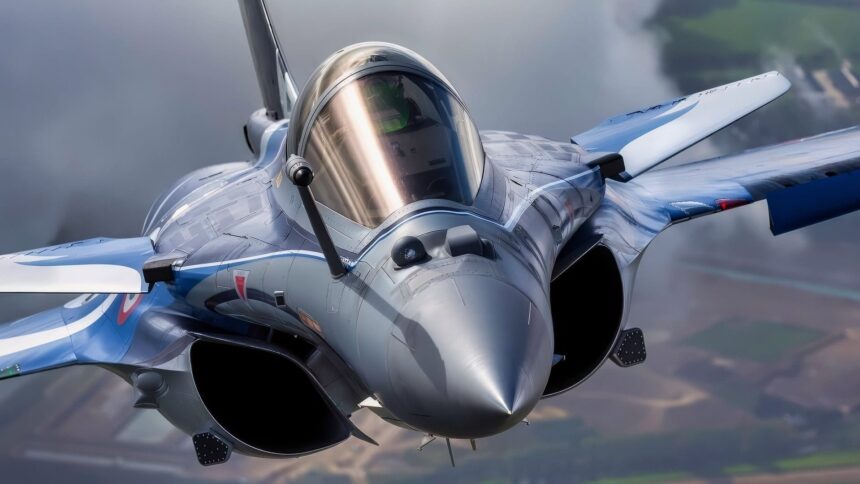
Dassault Rafale Overhead. Image Credit: Industry Handout.
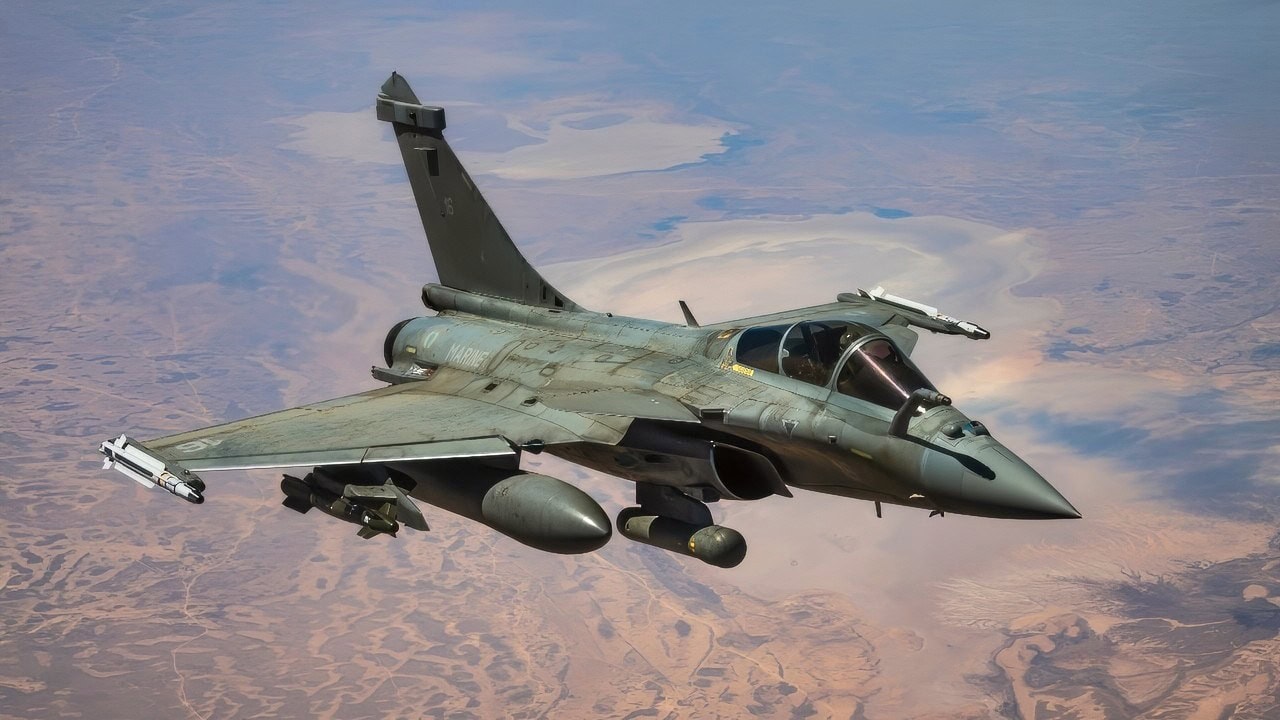
Dassault Rafale Fighter from France. Image Credit: Creative Commons.
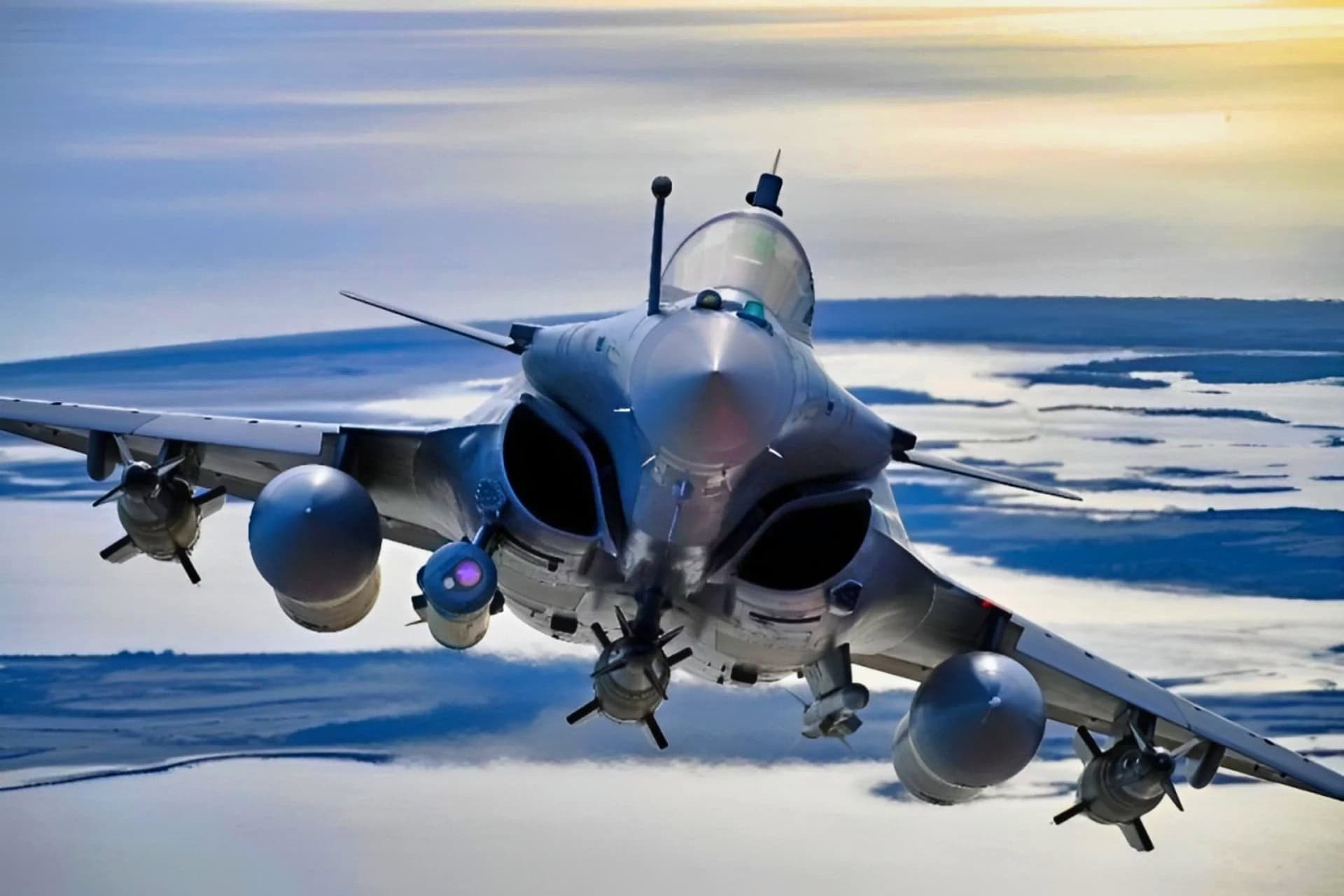
Dassault Rafale Fighter. Image Credit: Creative Commons.
Instead, it’s in the middle of the biggest order book in its history, and the reason has less to do with stealth than with a relentless upgrade cycle designed to keep a 4.5-generation jet dangerous against 5th-generation threats.
The Rafale F4 Standard: Turning a Fighter Into a Node
The current F4.1 standard, qualified in 2023, brought the Rafale into the era of collaborative combat, with key enhancements including the Thales CONTACT software-defined radio, the TALIOS long-range targeting pod, and the helmet-mounted Scorpion display.
The upgrade also integrates the Thales RBE2 XG AESA radar and the 1,000-kg AASM “Hammer” guided bomb, significantly boosting connectivity and precision.
F4 also introduces a new Prognosis and Diagnostic Aid System (PDAS) for predictive maintenance, with further optimization planned around big data and artificial intelligence.
In practice, that means fewer jets grounded for unplanned maintenance and a fleet that stays combat-ready longer, a quieter but just as important form of “survivability.”
Sixteen months after F4 and F5 were described as future prospects, F4.1 is now operational, F4.2 is entering service, and F4.3 is in flight testing, while the F5 program has moved from slideware to hardware, including a new engine.
Rafale F5: The Real Answer to the Stealth Age
The F5 standard, expected to enter service around 2030, is where Dassault is making its most direct play against 5th-generation aircraft.
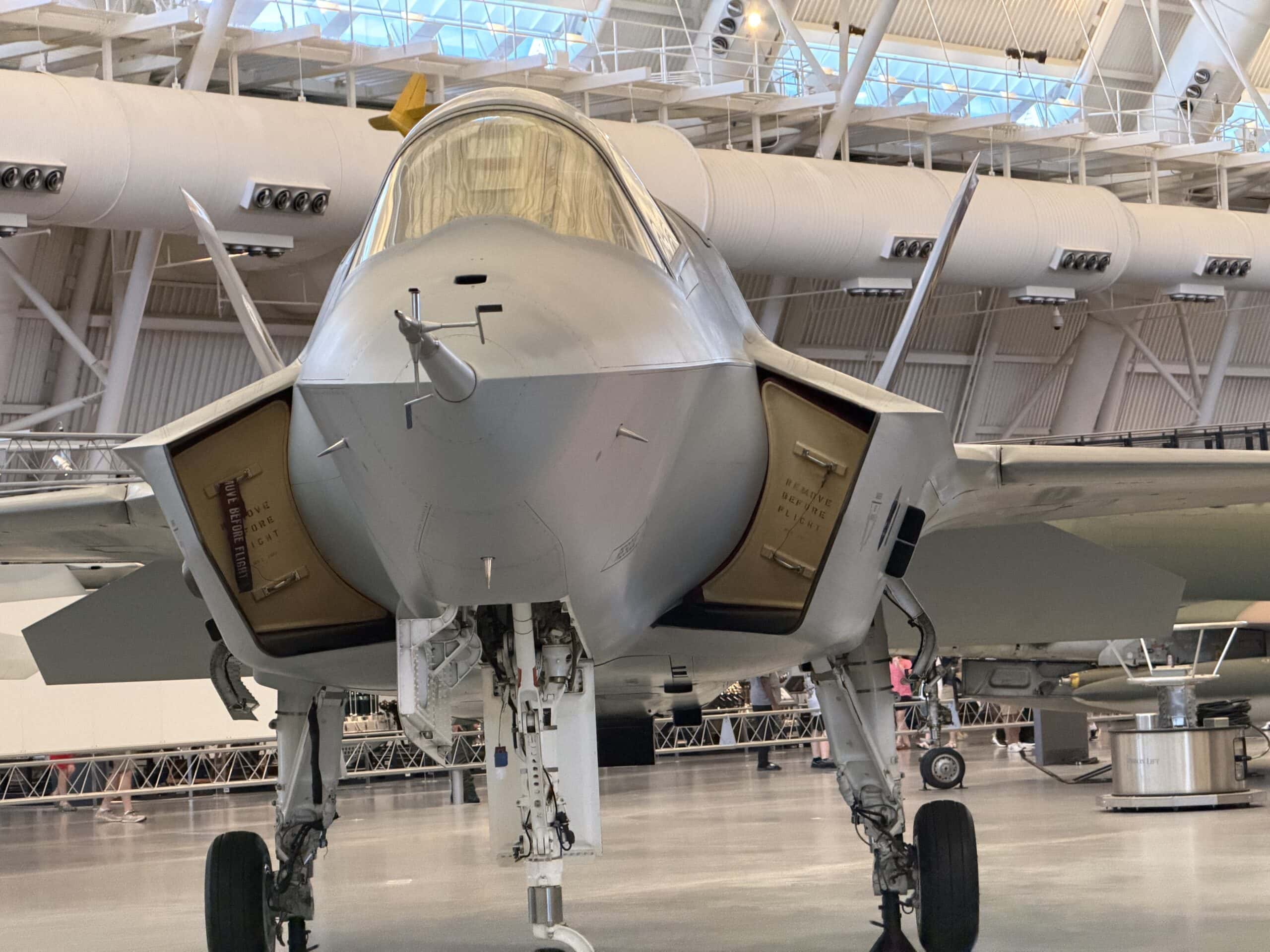
F-35 at the Smithsonian. Image taken on 7/8/2026 by 19FortyFive Staff.
The Safran M88 engines will be upgraded to deliver 20 percent more thrust without enlarging the engine bay, avoiding major structural changes to the airframe.
The F5 will also pair the Rafale with a loyal-wingman uncrewed combat aircraft derived from the stealthy nEUROn demonstrator, plus AI-enabled autonomy.
Beyond the engine and drone wingman, F5 adds joint operations with uncrewed platforms, deeper sensor fusion, expanded data sharing, and support for hypersonic nuclear weapons.
The accompanying uncrewed combat air system will incorporate genuine stealth technology, autonomous control with a human-in-the-loop, and internal weapons carriage, borrowing directly from Europe’s first stealth UCAV demonstrator.
Dassault’s engineers believe that rather than chasing the F-35’s low-observable airframe, Dassault is using a stealthy drone teammate to handle sensing and first-look, first-shot work in contested airspace, while the Rafale itself relies on jamming, speed, sensor fusion, and long-range weapons.
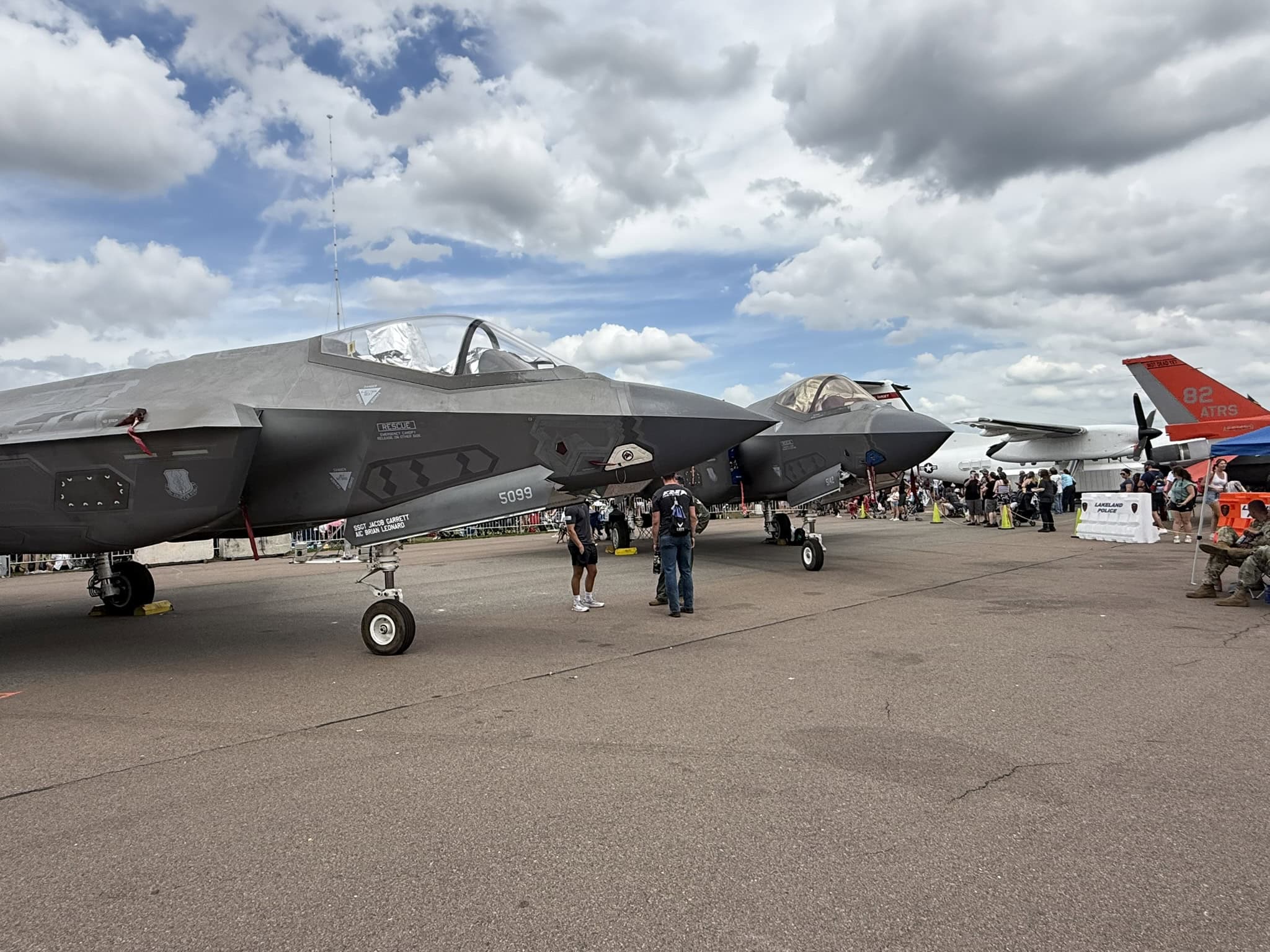
F-35 fighters. Image Credit: 19FortyFive.com taken by Harry J. Kazianis. Original Photo.
The Rafale can carry robust weapon systems on its 14 external hardpoints. These include the Meteor beyond-visual-range air-to-air missile, the Mica heat-seeking and radar-seeking air-to-air missile, the AIM-9 Sidewinder heat-seeking air-to-air missile, and the AIM-120 AMRAAM radar-guided missile for air-to-air missions.
It carries the AGM84 Harpoon anti-ship missiles, the SCALP-EG stand-off cruise missile, the Hammer air-to-ground munition, the AM39 Exocet anti-ship missile, as well as conventional and smart bombs for air-to-surface missions.
The aircraft has an external load capacity of over 20,000 pounds. The Rafale also packs a powerful Nexter 30M791 30mm cannon with 2,500 rounds.
It’s a genuinely different theory of survivability: network and mission-system dominance instead of pure signature reduction.
Reflecting that gap, the Rafale’s radar cross-section is generally estimated at 0.05–0.1 square meters, compared with roughly 0.005 square meters for the F-35, the difference between a small bird and a golf ball on radar.
Whether sensor fusion and drone teaming can fully close that gap in a real shooting war remains the central bet of the whole program.
What Does The Rafale Cost
Rafale pricing can differ widely depending on contracts that bundle different amounts of weapons, simulators, and support, but it is not a cheap aircraft.
A bare Rafale, with no weapons, no specific equipment, and no logistics support, runs between roughly €70 and €100 million, depending on the variant, though French parliamentary figures from December 2025 put the per-aircraft cost at €119 million, or about $138.5 million.
Fully loaded export packages tend to land much higher: comprehensive deals, including weapons, training, and lifecycle support, have ranged from roughly $150 million to $250 million per aircraft.
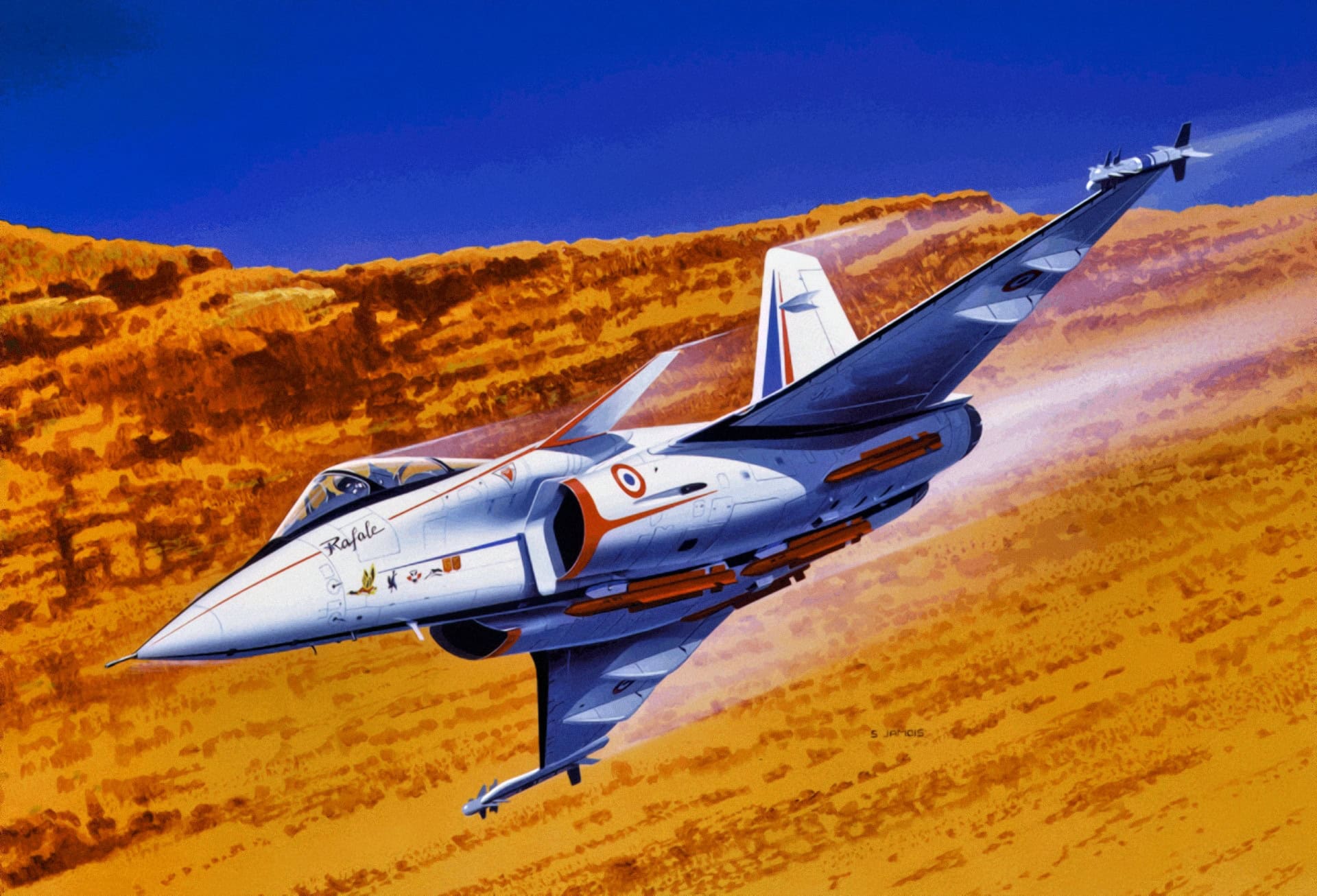
Dassault Rafale Artist Image. Image Credit: Creative Commons.
However, where the Rafale really wins is operating cost: Dassault puts the flight-hour cost at around $16,500, about 2.5 times cheaper than an F-35A’s roughly $42,000 per hour.
The F-35, by contrast, has driven its unit price down through sheer volume before recent inflation reversed the trend.
The average flyaway cost of an F-35A in the latest production lots is $92 million, up 11.5 percent from $82.5 million in the previous lots, the highest unit price in the program’s history, with the F-35B at $121.4 million and the F-35C at $110.8 million.
Total program acquisition cost now stands at $536.3 billion, and that figure covers development and procurement, not the far larger lifetime sustainment bill.
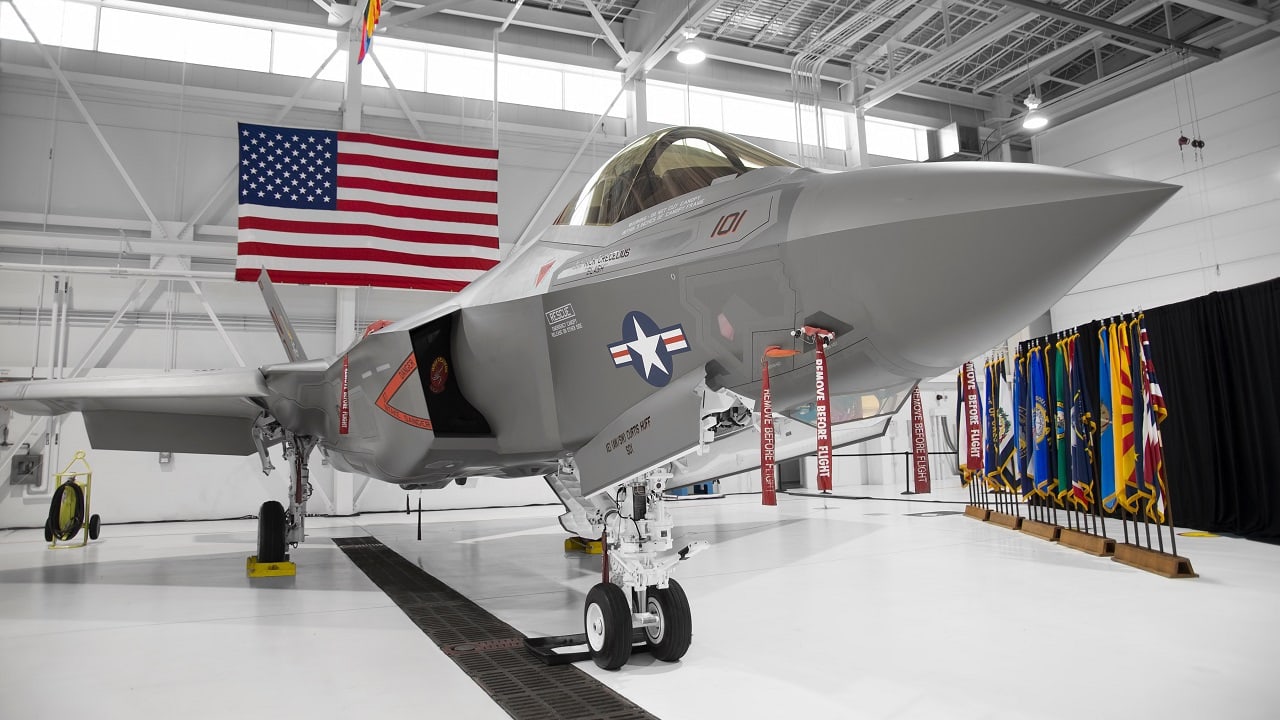
US F-35. Image Credit: Lockheed Martin.
The F-22 sits in a category of its own: a jet so expensive that only the United States ever flew it, with production ending in 2011 at 187 aircraft.
Estimates for its all-in unit cost, including research and development amortized across that small fleet, commonly run to roughly $330–360 million per airframe, versus a flyaway cost closer to $150 million, a gap that illustrates just how brutally low-rate production inflates a stealth fighter’s real price tag.
The Rafale’s Value Is A Selling Point
Put the numbers side by side, and it is clear that the F-22 is the most capable and most expensive; the F-35 sits in the middle with genuine stealth at a moderate but rising price; and the Rafale is the value play.
An aircraft that is cheaper to fly, cheaper (in most configurations) to buy, and kept relevant not by hiding from radar but by out-networking and out-sensing what it can’t outrun.
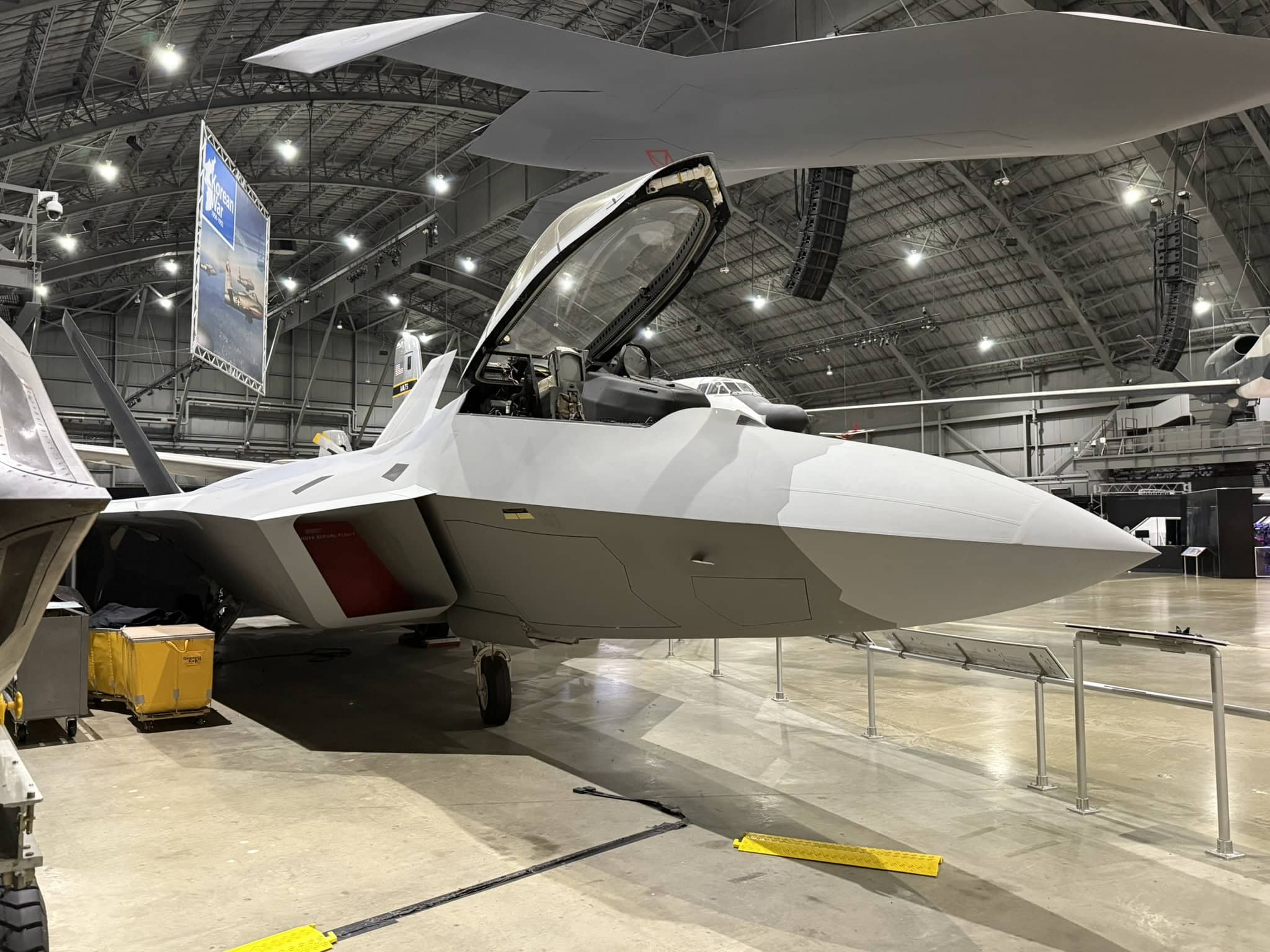
F-22 at the National Museum of the U.S. Air Force in July of 2025. Image Credit: Harry J. Kazianis.
For air forces that can’t afford, or aren’t allowed to buy, an F-22, and want more autonomy than an F-35 contract typically allows, that trade-off is proving to be a very effective sales pitch.
About the Author: Steve Balestrieri
Steve Balestrieri is a National Security Columnist. He served as a US Army Special Forces NCO and Warrant Officer. In addition to writing on defense, he covers the NFL for PatsFans.com and is a member of the Pro Football Writers of America (PFWA). His work was regularly featured in many military publications.





![Kari Lake Explains Why Deportations Aren’t Moving Fast Enough and How That’s Changing [WATCH]](https://www.rvmnews.com/wp-content/uploads/2024/11/2024.11.27-06.51-rvmnews-67476a3f9c86f.jpg "Kari Lake Explains Why Deportations Aren’t Moving Fast Enough and How That’s Changing [WATCH]")