
Summary and Key Points: There is a large opening under the flight deck at the back of every US aircraft carrier, and most people who look at a photograph of one have no idea what it is. It is called the fantail, and it is where sailors bolt down a jet engine and run it to full afterburner. A test can last three to eight hours. Aboard USS Abraham Lincoln, an aviation machinist’s mate watching one reach maximum afterburner described his heart racing. That deck also launches weather balloons every 30 minutes during flight operations, recovers the Nixie torpedo decoy, handles the mooring lines, and deploys a floating gunnery target in the water, which the Navy calls a killer tomato. The practice is older than the ships doing it now — USS Forrestal had a jet engine test facility installed on its fantail between September 1961 and January 1962.
Fantails Are a Workplace Too
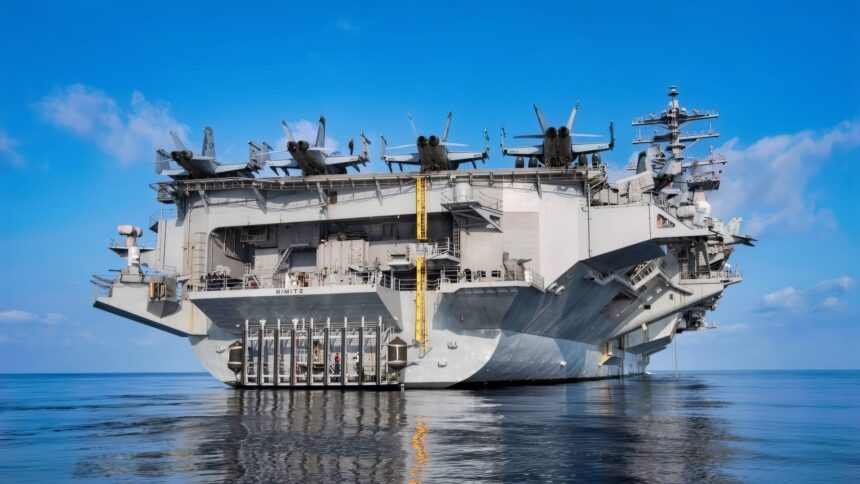
Aircraft is staged for flight operations on the flight deck of Nimitz-class aircraft carrier USS Abraham Lincoln (CVN 72) in support of Operation Epic Fury, Mar. 3, 2026. (U.S. Navy photo)
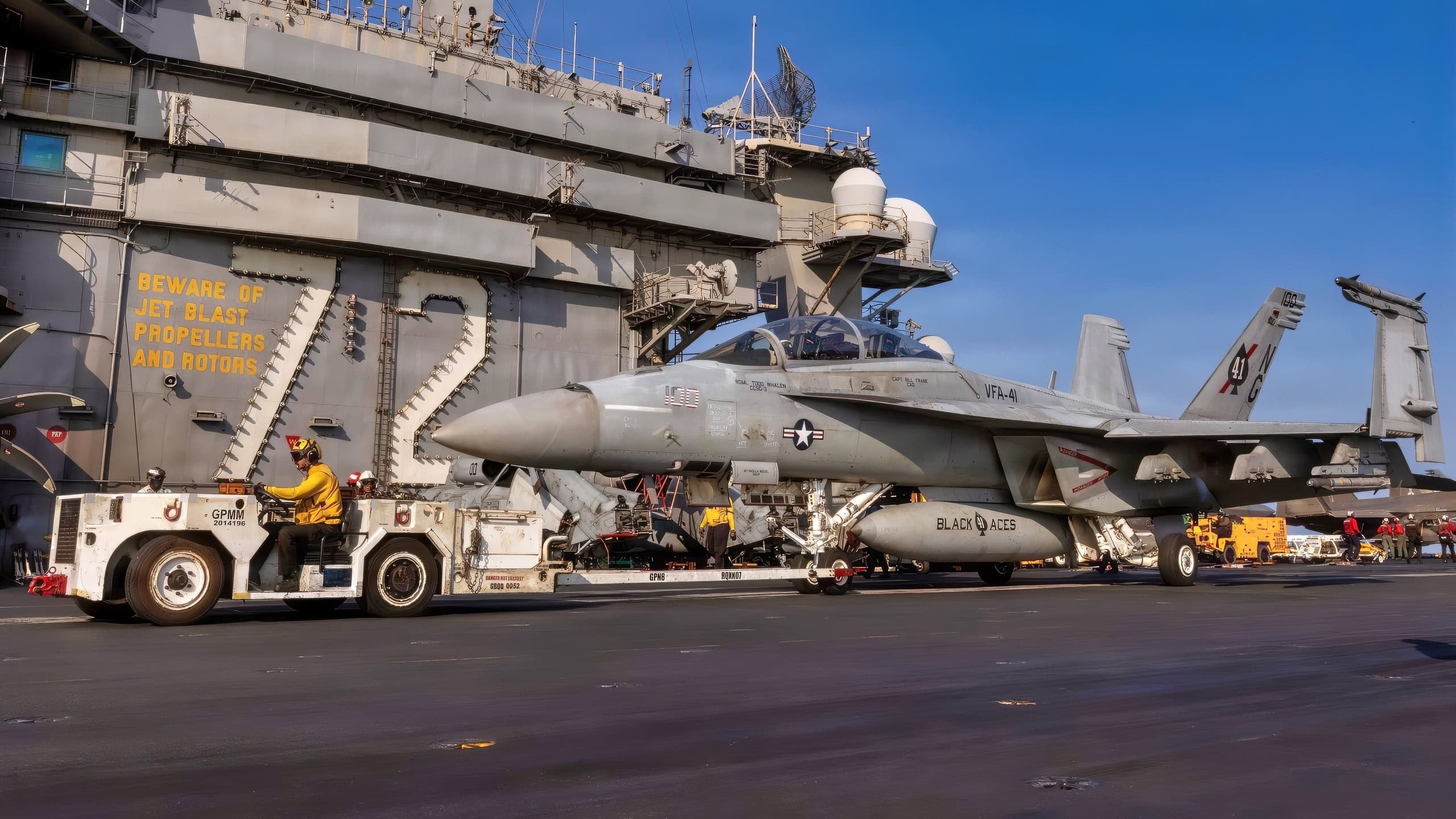
An F/A-18F Super Hornet, attached to Strike Fighter Squadron (VFA) 41, is taxied on the flight deck of Nimitz-class aircraft carrier USS Abraham Lincoln (CVN 72) in support of Operation Epic Fury, March 6, 2026. Abraham Lincoln is deployed to the U.S. 5th Fleet area of operations to support maritime security and stability in the Middle East. (U.S. Navy photo)
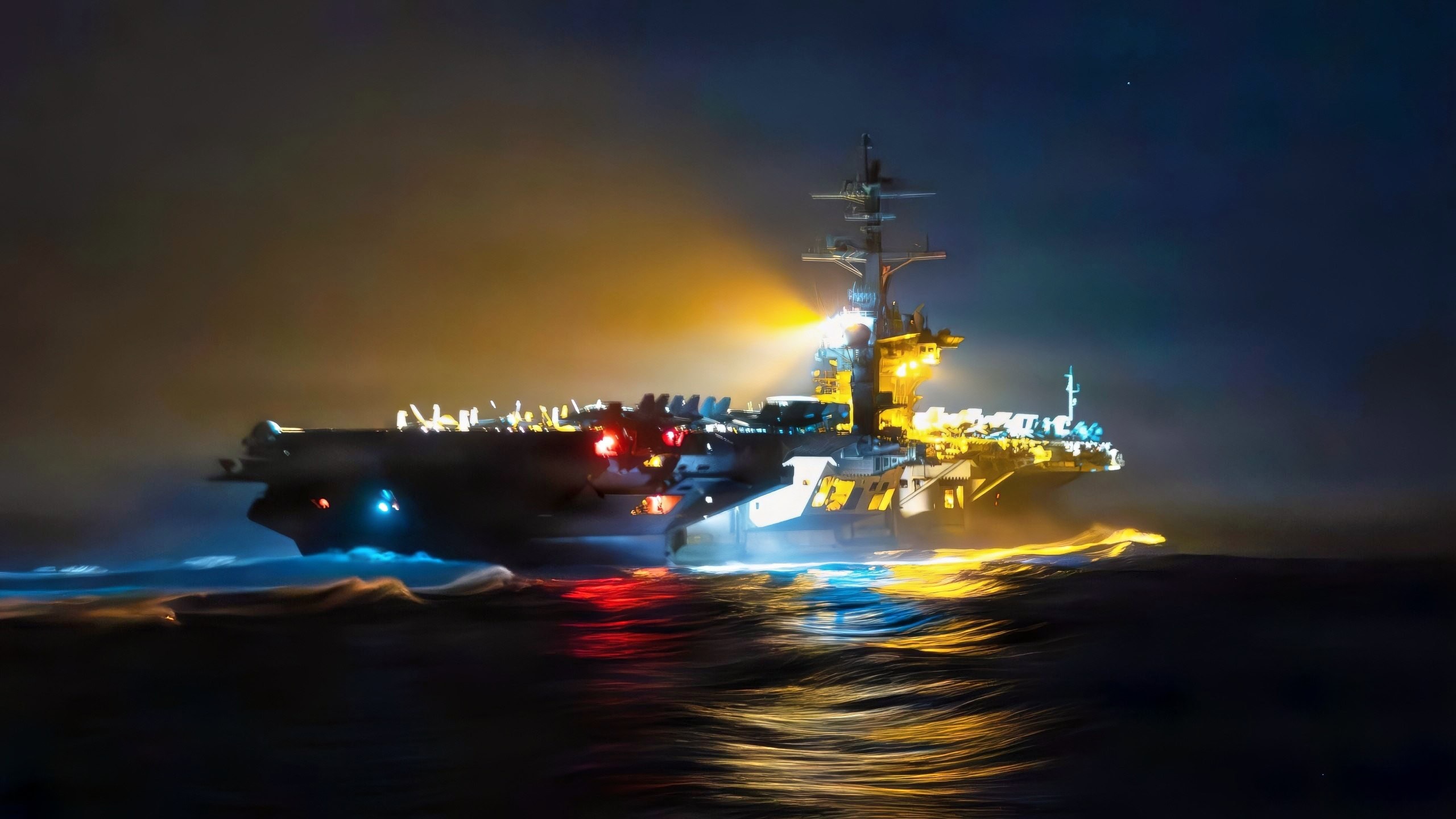
Nimitz-class aircraft carrier USS Abraham Lincoln (CVN 72) departs following a replenishment-at-sea with fleet replenishment oiler USNS Henry J. Kaiser (T-AO-187) during Operation Epic Fury, March 18, 2026. (U.S. Navy photo)
According to the American Heritage Dictionary, a nautical “fantail” is the “stern overhang of a ship.” This part of the boat also functions as a workplace where sailors can test fighter engines, launch weather balloons, handle mooring lines, and lower critical equipment into the water.
The Navy’s 2025 Naval Aviation Playbook notes that the USS Gerald R. Ford is the first commissioned Ford-class carrier, while PCU John F. Kennedy (CVN-79) will be delivered next.
On August 15, 2026, shipbuilder HII announced that Kennedy had completed acceptance sea trials and returned to Newport News Shipbuilding.
Running a Fighter Engine
One of the fantail’s most spectacular jobs is jet-engine testing.
“We’re basically the ship’s engine repair shop,” Seaman Jacob Lichty explained in a Navy account of the Aircraft Intermediate Maintenance Department aboard USS George Washington. Its job, he added, was to ensure that every engine received was “perfectly ready to go in every way possible.”
The work can involve individual sections rather than an entire engine. “These engines have six different modules,” Seaman Corbin Riley said. “We rarely ever have to fix an entire engine.”
Petty Officer 3rd Class Dustin Ligtenburg explained that an engine reaches what the maintainers call “high time” after “more than 3,000 total hours of use.” Ligtenburg said he spent two years working in the shop and that during that time he did not see “the same engine twice.”
Engines obviously need to be tested at some point, which can be loud.
When USS Abraham Lincoln restored its Jet Engine Test Instrumentation (JETI) capability after overhaul in 2017, Aviation Machinist’s Mate 3rd Class Mark Salinas recalled watching an engine reach “max afterburner.”
‘Pretty Awesome’
“It’s our job, and to see that engine going max afterburner, it was pretty awesome,” Salinas said. “My heart was racing, and it was a great rush.”
Aviation Machinist’s Mate 1st Class Kevin Mathis said the crew had “built the system from the ground up” after leaving the shipyard.
Chief Aviation Machinist’s Mate Chris Chatterton explained why it mattered: the equipment allowed maintainers to “verify repairs and ready the engine to be put back into an aircraft.”
The job continued aboard Lincoln during its 2025-2026 deployment.
A Navy report published in January 2026 said the crew tested rebuilt F414 engines on the fantail using JETI. A test run can last between three and eight hours.
“Our primary focus is to produce ready-for-use engines, modules, parts, and support equipment for flight operations,” Aviation Machinist’s Mate 2nd Class Ikaika Leialoha said.
The work comes with considerable responsibility. “You have to know your stuff,” Leialoha said, “because you’re signing your name on it.”
For Aviation Machinist’s Mate 3rd Class Darren Tang, “the most rewarding part” was troubleshooting an engine on the fantail, fixing it, and seeing it returned to a squadron.
Beyond Jet Engines
Jet engines are far from the only thing a fantail might be helpful to.
Official Navy imagery shows Aerographer’s Mates launching weather balloons directly from the fantails of USS George H.W. Bush and USS Ronald Reagan.
“We take weather observations every hour, and during flight operations it’s every half hour,” Aerographer’s Mate Airman Apprentice Dimitri Kaponis explained aboard George H.W. Bush.
“Safety is important to AGs,” Aerographer’s Mate 2nd Class James Henson added, because their forecasts and observations “keep Sailors out of harm’s way.”
The stern also provides a place to handle equipment going into the sea. Navy footage from USS Enterprise shows sailors securing a Larne towed target to the fantail for pilot weapons training.
Sailors have recovered the ship’s Nixie torpedo-decoy system and mounted it on the fantail of the Ronald Reagan.
Earlier this year, a Navy photographer recorded USS Nimitz preparing for a live-fire exercise on the fantail using a floating target known as a “killer tomato.” Over the summer, sailors were also photographed attending to mooring lines there while Nimitz moved into Naval Station Mayport.
Under Navy shipboard regulations, the Boatswain’s Mate of the Watch must announce, “The fantail is secured,” before launching or recovering.
While the equipment used has advanced significantly, these ideas are not new. Naval History and Heritage Command records show USS Forrestal received a “jet engine test facility on the fantail” during modifications carried out between September 1961 and January 1962.
About the Author: Georgia Gilholy
Georgia Gilholy is a journalist based in the United Kingdom who has been published in Newsweek, The Times of Israel, and the Spectator. Gilholy writes about international politics, culture, and education.

![Trump Election Fraud Dragnet Sweeps Up Hundreds as Officials Sweat [WATCH]](https://www.rvmnews.com/wp-content/uploads/2026/09/2026.09.22-07.32-rvmnews-6ab22f2787d61.jpg "Trump Election Fraud Dragnet Sweeps Up Hundreds as Officials Sweat [WATCH]")
![Fake News Networks Get Steamrolled as White House Unleashes Trump TV [WATCH]](https://www.rvmnews.com/wp-content/uploads/2026/09/2026.09.22-07.48-rvmnews-6ab232caae93a.jpg "Fake News Networks Get Steamrolled as White House Unleashes Trump TV [WATCH]")