

The right to keep and bear arms is a right that the Founding Fathers thought was so important that it “shall not be infringed.” Unfortunately, there’s been a lot of infringement over the years, and for a long time, we mostly just had to suck it up. If we could sway a legislature, we might get a vote to overturn it, but the courts weren’t necessarily with us, particularly if you lived somewhere with a particularly liberal circuit court.
Heller and McDonald were fairly good for us, and the latter came shortly on the heels of the former, which suggested the Supreme Court was going to start hearing a lot of Second Amendment cases, then nothing for nearly a decade.
That has changed over the last couple of years, though, and that’s fantastic news.
Especially since we had a span of less than two weeks that will likely turn out to be the most important for the Second Amendment since the Bill of Rights was ratified.
Over the course of 12 days last month, the Supreme Court upheld the gun rights of cannabis consumers, rejected Hawaii’s default rule against firearms on private property open to the public, and agreed to address the constitutionality of “assault weapon” bans. That flurry of Second Amendment activity underlines the point that supposedly sensible gun regulations are not necessarily consistent with the right to arms as it was historically understood.
We’ve talked about the rulings themselves, and we’re pretty happy with what happened, even if some are already trying to work around the decision in Wolford that staked the vampire rule.
But the fact that Hemani and Wolford came so close together, then the decision to hear an assault weapon ban challenge, is huge. What’s more, if that one goes the way most of us expect, it’ll be even bigger.
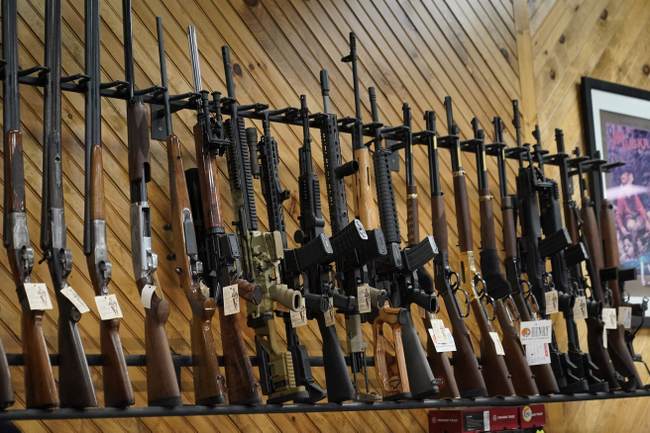
Five days after it overturned Hawaii’s law, the Court agreed to hear a pair of cases involving bans on widely owned rifles that politicians tendentiously describe as “assault weapons.” A dozen states, beginning with California in 1989, have enacted such laws, which hinge on arbitrarily prohibited features such as folding stocks, pistol grips, and barrel shrouds.
The rifles targeted by these laws are rarely used by criminals but commonly used by law-abiding Americans, who own more than 30 million of them. The latter point is constitutionally relevant because the Supreme Court has said the Second Amendment applies to “bearable arms” that are “in common use” for “lawful purposes like self-defense.”
The long-simmering question posed by these cases is whether the Second Amendment guarantees “the right to possess AR-15 platform and similar semiautomatic rifles.” If so, other restrictions on the arms Americans are allowed to buy, such as magazine limits and California’s handgun specifications, may be vulnerable to constitutional challenges.
Once the door is opened on hardware challenges, which it now is, the decision may well have ramifications on literally every other bit of hardware restriction we currently see at the state and possibly even federal levels.
While it’s undoubted that attorneys for the defendant will try to make the case that AR-15s aren’t used for self-defense–they are, of course, but that’s the case they’ll make–they will also hope the Court doesn’t recognize that the standard is that the arms are used for lawful purposes “like self-defense.” It doesn’t require that it be used for self-defense, only for a lawful purpose. The existence of three-gun competitions alone renders the bans invalid on that basis, even if you buy into the idea that they’re not used for self-defense to any degree.
But, as noted above, it may well make magazine limits and handgun specifications–to say nothing of the roster California keeps to extort money out of gun manufacturers if they want to sell handguns in the state– also vulnerable. Depending on how the ruling is worded, even the current restrictions on things like suppressors and short-barreled long guns could end up on the chopping block, especially as more and more people have them following the abolition of the tax stamp on those products.
Admittedly, that’s more of a long shot, but what isn’t is that over a span of less than two weeks, the Supreme Court issued two rulings that had a major impact on gun rights in this country, and agreed to hear a case that will probably have an even bigger impact.
That’s nothing to gripe about.
Editor’s Note: President Trump and Republicans across the country are doing everything they can to protect our Second Amendment rights and right to self-defense.
Help us continue to report on their efforts and legislative successes. Join Bearing Arms VIP and use promo code FIGHT to receive 60% off your membership.
Read the full article here


![SNL UK Savagely Roasts Prince Harry, Meghan Markle’s UK Return: ‘Daddy, I’m Home’ [WATCH]](https://www.boredtrashpanda.com/wp-content/uploads/2026/08/2026.08.21-16.42-boredtrashpanda-6a88800352be3-e1787330811159.jpg "SNL UK Savagely Roasts Prince Harry, Meghan Markle’s UK Return: ‘Daddy, I’m Home’ [WATCH]")