
When you own a company, insurance is just part of the cost of doing business. You could theoretically skip it in a lot of instances, but then you’re screwed the moment you need it and don’t have it. However, everyone also knows that insurance companies don’t make money when they pay out claims.
As a result, they try to avoid it as much as possible.
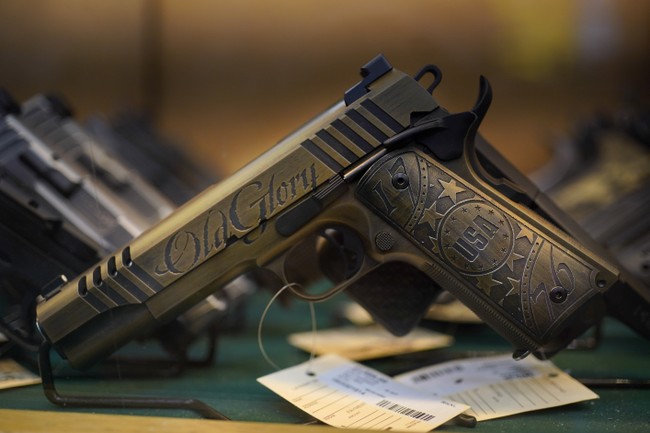
For KM Tactical, that’s causing some problems. See, they sell parts for privately manufactured firearms. They need a payout because of New York state law. They’re not getting it.
A federal judge in New York has delivered a major blow to a Missouri firearms retailer facing allegations that its sale of so-called ghost gun kits contributed to gun violence, ruling that two insurers have no obligation to defend or indemnify the company.
In a decision issued Tuesday, U.S. District Judge Andrew L. Carter Jr. determined that units of AIG and Berkshire Hathaway were not required to provide coverage to KM Tactical LLC because the underlying lawsuits did not claim injuries resulting from an accident.
The ruling centers on whether the alleged conduct qualifies as an “accident” under Missouri law or an “occurrence” under the insurers’ commercial general liability policies. Judge Carter concluded that it did not.
The decision adds another layer to the legal battle over ghost guns, turning an already contentious dispute into a fight over where insurance protection ends and intentional conduct begins.
Lawsuits Accuse Retailer of Fueling Gun Violence
The underlying litigation began in June 2022, when the state of New York sued KM Tactical and other firearms retailers. The cities of Buffalo and Rochester filed a separate lawsuit against retailers in December 2022. KM Tactical was subsequently dismissed from the cities’ litigation.
New York’s lawsuit accused KM Tactical of deliberately marketing and selling unfinished firearm receivers and frames that could be assembled into untraceable ghost guns.
And, to be fair, that’s what KM Tactical was doing.
But so what?
I fail to see the problem, because unless they’re guns, they’re not subject to the same requirements under both federal and most state laws.
And that doesn’t matter, apparently.
At the heart of the ruling was the nature of KM Tactical’s alleged conduct.
The court said both retailers were accused of intentionally selling ghost gun components without meaningful controls over who could purchase them. According to the ruling, the resulting harm alleged by New York was a foreseeable consequence of those actions rather than an unexpected accident.
KM Tactical argued that its conduct should instead be viewed as negligent.
Judge Carter rejected that position, pointing to allegations that the retailer engaged in intentional acts and made misrepresentations to customers in an effort to reach consumers who could not legally purchase firearms.
That distinction proved critical: If the alleged harm was the predictable result of intentional conduct, the insurance policies’ coverage for accidental occurrences did not apply.
The issue, again, is that what they were doing wasn’t particularly illegal at the time they were doing it. Did they fail to conduct background checks? Yeah, but they’re not required to do so. From all indications, they adhered to the law and got screwed over for it because of what third parties did with the lawfully sold parts.
That’s not even negligence, in my book.
Still, let’s also understand that the underlying claim is that the company fuels so-called gun violence. However, a study released back in January suggested there was no correlation between “ghost gun” recoveries and homicides. While correlation doesn’t equal causation, causation should lead to correlation. If privately manufactured firearms are responsible for rising violence, then where is the correlation?
There isn’t one.
Further, as presumably pro-gun people, the folks behind KM Tactical wouldn’t necessarily look at selling guns as fueling violence because, well, it doesn’t. Even without the study at hand, there’s zero real reason to assume that it’s a foreseeable consequence of lawful activity. That’s because it’s not.
So, the question is whether the insurance company should be on the hook, and that simple answer is that, yeah, they should. KM Tactical did nothing wrong, got sued, and now their insurance providers don’t want to pay. Even if KM Tactical did things to suggest their products bypassed background checks, that doesn’t even mean they were trying to sell to criminals, because I can pass them all day long, but I don’t like their being paperwork for my gun purchases.
Now, will a court eventually rule the way I’m outlining things? Damned if I know. I’m not a lawyer, nor do I fail to make fun of them at most opportunities, as nature intended. Except people like Kostas Moros, because he’s pretty based.
I do know, though, what is right, and in this case, it’s paying out what’s owed.
Editor’s Note: President Trump and Republicans across the country are doing everything they can to protect our Second Amendment rights and right to self-defense.
Help us continue to report on their efforts and legislative successes. Join Bearing Arms VIP and use promo code FIGHT to receive 60% off your membership.
Read the full article here



![Travis Kelce Swats a Fan’s Hand Away After Chiefs Glove Grab Goes Too Far [WATCH]](https://www.boredtrashpanda.com/wp-content/uploads/2026/09/2026.09.07-14.41-boredtrashpanda-6a9ecd31d8856-e1788804068815.jpg "Travis Kelce Swats a Fan’s Hand Away After Chiefs Glove Grab Goes Too Far [WATCH]")