
For most of my adult life, Saturdays in the spring and an occasional weeknight game or two have been spent at the same Little League baseball field I played on when I was a kid. I have coached, managed, been on the league’s board, but I had the most fun doing what I love – calling balls and strikes behind home plate.
One of the benefits of being a fixture behind the dish for 46 years was that you got to know a lot of families that came through this community. In a lot of cases, I got to ump games featuring kids and grandkids of people I played with. Regardless of the personalities involved, when I threw the ball to the pitcher and said, “Play ball,” all that went out the window. Whatever priors I had going into the game, I zoned in and reacted to what was taking place in front of me, pitch by pitch.
I am not a dispassionate commentator when it comes to the 47-year war the Islamic Republic of Iran has been waging with the United States and Israel. I have been a hawk as long as I can remember, and was thrilled when President Trump finally decided that enough was enough and gave the go-ahead for Operation Epic Fury. He will always be held in high esteem with me for doing what no one before him would dare tackle.
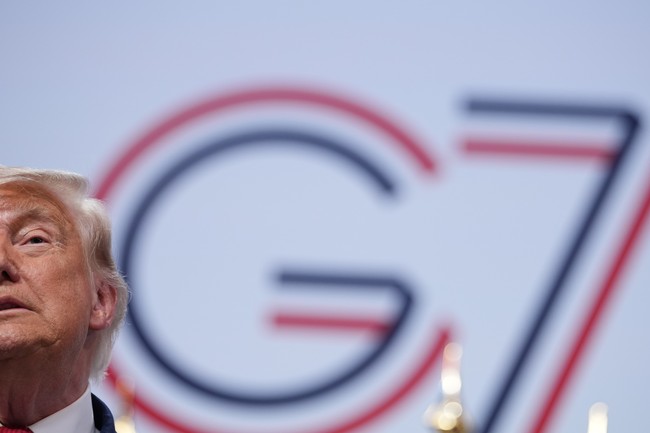
Now that the Memorandum of Understanding is in force, signed by both President Trump in Versailles yesterday (of all places) and by Iranian puppet President Masoud Pezeshkian, I’m going to set aside my opinion of the agreement and analyze what went right, what went wrong, and what remains to be seen as objectively as I can. But for the record, I think I feel about the M.O.U. the same way Secretary of State Marco Rubio looked standing behind President Trump at the G7 press conference.
Seems Rubio understands the gravity of the moment. pic.twitter.com/U68p9LBZmS
— dan linnaeus (@DanLinnaeus) June 17, 2026
The four stated objectives of Operation Epic Fury going into hostilities at the end of February, were simple enough.
1. Destroy Iran’s ballistic missile arsenal and its production capacity Trump emphasized eliminating both existing missiles and the industrial base capable of producing new ones.
2. Annihilate the Iranian Navy This included ships, submarines, coastal missile batteries, and naval command infrastructure.
3. Ensure Iran can never obtain a nuclear weapon Trump repeatedly framed this as a non‑negotiable objective of the campaign.
4. Sever Iran’s support for terrorist proxies This meant eliminating the IRGC’s ability to arm, fund, and direct regional militias.
Depending on the source, whether it’s our military intelligence, the Israelis’, or open source information, best estimates are that roughly 60-70% of Iran’s available missile stockpile was destroyed. As for what remains, the final volleys Iran launched at Israel resulted in several that disintegrated or failed before defensive weapons had to be fired. Iran was down to the shelves of stuff that was sketchy whether it would even fly or not.
Iran’s defense military complex suffered about the same percentage in damage. 60-70% of their drone production was destroyed, including one facility they had running in Venezuela before the United States came calling to pick up Nicolas Maduro in the middle of the night.
40% of their missile or fuel propellant development is gone. Roughly half of their electronic guidance systems are gone. Remember that the drone launched last week that took down our Apache did not detonate on impact as was designed. It malfunctioned, even though it brought down the helicopter.
Was Objective 1 completed? No. Was it decimated, to use the oft-misused term of art? Yes, and decimated at least five times over. Iran could certainly choose to take the sanctions relief coming with the M.O.U. and sink it into the hundreds of billions it would take to rebuild their missile and drone programs. Drones would be the cheapest and fastest weapon to reconstitute, probably coming back online to pre-war levels in a year or less. However, by the end of kinetic action, U.S. destroyers were being outfitted with directed-energy weapons, or lasers, to begin knocking them down effectively. Within a couple of years, that technology will be refined and ubiquitous throughout our military. That threat has been, or will soon be, neutralized.
Missile launchers will take a few years and tens of billions. Missile production will take half a decade or longer, costing hundreds of billions. Keep in mind that Iran, the country, has been put in a several trillion dollar hole because of the war, and that’s not going to all get made up in six months of oil sales.
The Iranian Navy, such as it was, is reef lattice at the bottom of the Persian Gulf. If you wish to call ski boats with machine guns tied to them naval vessels, go right ahead. But Houthi pirates are more organized than that. Several levels of their IRGC naval commanders were killed. That objective was accomplished.
Objective three – ensuring Iran never gets a nuke – well, that’s the whole enchilada, isn’t it? We don’t know if that’s been achieved or not. President Trump believes so, but the proof will be in the pudding over the next two months while the final deal is negotiated. But what do we know?
Whatever enriched material they have, whether it be near-weapons grade or even the 2% low-fat stuff (really 3-5%) which can be spun up to weapons grade, is, at worst for us, buried under mountains of rubble. Iran certainly can’t get at it very easily, and in fact, there are reports that the Iranians have sealed off access, collapsed the tunnels, and boobytrapped the entrances. Even if they tried to go back in and extract it, we’d see it, and it would be an instant violation of the most important paragraph of the M.O.U., Paragraph 8. And the one point Trump made no less than five times during his press conference and again on the tarmac at the airport later, that if they tried to go after the material and restart their nuclear program, he’d bomb the hell out of them again.
If Iran opts to resume their drive to become a nuclear power, it will do so without centrifuges, heavy water facilities, scientists who know what they’re doing, universities to teach future scientists about how to know what they’re doing, and the ability to hide it from us seeing it and responding. I was extremely worried about how close they were at the end of last year. I do not have that same concern now. But how Iran performs in this area while the M.O.U. is in force, and how Paragraph 8 is resolved in the final negotiated deal, remains to be seen.
And the fourth objective, severing Iran’s desire to support and grow terror proxies, was definitely not achieved by the United States. Israel was well on their way, having all but destroyed Hamas and going to work on Hezbollah methodically by crossing the Litani River and hitting them on their turf instead of just playing missile pickleball. If the M.O.U. gets violated and we go back to kinetic action, it likely will be because a Hezbollah terrorist working in Lebanon will have not gotten the memo from Tehran and launch something that kills Israelis. It’s almost inevitable. If Hezbollah suddenly abides by the terms of this M.O.U. and ceases hostilities towards Israel for any significant length of time, my opinion of the M.O.U. will go up.
As for Iran, it already doesn’t sound promising.
Iran promises to help Hezbollah once assets are unfrozen, sanctions are lifted https://t.co/OZCjd8Nmpo pic.twitter.com/IkZa5js5IC
— New York Post (@nypost) June 17, 2026
According to the M.O.U., Iran will be able to sell oil and have some frozen assets released. Other sanctions will have waivers, but the money flow will still be tracked. If Treasury Secretary Bessent gets wind of resources from Tehran flowing back into Hezbollah, that has to be a deal breaker, and all bets are off.
Regime change in Iran was always a goal for Israel, but it wasn’t for us. However, severing Iran from being the patron of proxy terror groups encircling Israel was one of our objectives, and that’s one that we cannot allow to be a failed goal. It’s yet to be determined whether Iran is just blustering for domestic purposes or if they intend to cheat immediately, believing President Trump has lost the stomach to push back.
What went right during Operation Epic Fury? A whole lot. The United States and the world are safer today than they were before the war. That’s just an objective fact, and those who tell you different are reacting emotionally, not rationally. We demonstrated a new brand of warfare and coordinated with the region’s hegemon, the Israeli Defense Forces, in a way the world has never seen. We had intelligence, the right force posture, the element of surprise, and almost flawless execution by our servicemembers. Even when things went wrong, the precision demonstrated by the extraction of our downed airmen outside of Isfahan was nothing short of awe-inspiring. There’s a lot to crow about, and if you just look at the people that were killed and the things that were broken in Iran, quite simply, they got their collective hindquarters kicked.
By deploying Operation Economic Fury, including the naval blockade against Iranian ports, we triggered a series of global maneuvers that portend very good things for the United States economy in the years to come. We are now the largest exporter of oil in the world, passing OPEC. That’s never happened before, and we’re still ramping up production. When Alaska’s development comes fully online, the ports available to feed energy to Asia will be too much for the Pacific Rim countries to pass up. It’s closer, not nearly as perilous of a journey, and a much shorter trip.
As for the Strait of Hormuz, there are seven countries, excluding Iran, that use the narrow waterway to ship out oil. The top three countries – Saudi Arabia, Iraq, and the United Arab Emirates – account for nearly 75% of the oil that goes through the Strait on a normal basis. All three have implemented plans, and two of the three are within three years of bypassing the Strait altogether and moving the same quantities of oil, and probably more, by way of pipeline. Those plans will continue regardless of whether Iran lives up to the M.O.U. or not. This means that if and when Iran violates the deal, and kinetic action once again must be taken, the floating hostages on their southern border will no longer be around to use for ransom.
What went wrong? The messaging for why the war was necessary was slow and inconsistent in the beginning. By a month into the campaign, the administration had largely gotten its messaging coordinated. But it took way too long in the early days to make a repeated case for why this had to be done now.
We did not have nearly enough defensive weapons to secure our bases in the region, and we couldn’t protect our Arab state allies nearly enough. We’ve had a military industrial complex problem of our own for quite a while, thanks largely to Democratic Congresses and administrations defunding and hampering the Pentagon’s ability to forward procure with budget certainty. And the results of that bad policy were on display during this war. Where we had the resources, we were very effective and very lethal. But my gut tells me we didn’t have enough anti-missile batteries remaining to protect Arab infrastructure by last week, and our Arab partners got very squeamish about more ongoing kinetic activity, and the President did not want to lose the cooperation he’d gotten from this part of his coalition. So he looked for an off-ramp.
The idea to arm individuals in Iran so the odds would even out if another color revolution broke out was a good one. Arming the Kurds to be the de facto ground force was a mistake. In actuality, it may be that it was just the wrong Kurds, but nevertheless, I’d like to think that if we had to do this all over again, we’d have worked with the Israelis to identify the right element within Tehran to equip and train with munitions that would give the IRGC and Basij forces something more worrisome to consider. Crumbling the regime from within might have shortened the war for us and taken care of a lot of the problems Iran posed.
I think it was a mistake to end Project Freedom after 36 hours, regardless of the blowback from the Arab states at the time. We should have, and I believe could have, opened the Strait for tankers and freighters to pass while interceding Iranian traffic. Former Senator Jim Talent and I have often said on my Duane’s World podcast that moving ships through the Strait, rubbing the regime’s nose in it, was the checkmate move. If I had an audience with administration officials, that’s one of the questions about which I would ask.
Regarding the M.O.U. itself, it is fraught with uncertainty and opaque conditions that almost guarantee Iran will immediately probe at it with small violations, and move onto larger ones in order to discover how much the Americans no longer wish to confront them. Outside of the President and Vice-President, no one seems to believe the Iranians have had a sincere change of heart. They’re like a baby shark that you bring home and feed, nurture, watch grow from aquarium to aquarium, and then one day be surprised it bites your hand off when you try to pet it. We just gave them oxygen by taking our boot off their neck. Once their vision clears from nearly blacking out, they’ll most likely go back to doing what they do best – killing Jews, Americans, and Sunnis in whichever order presents itself first.
But where problems arise for us in the compliance department is that the IRGC remains in charge of the construction of everything important in Iran. The IRGC is also listed on our terror watch list, meaning no company can legally work with them. The $300 billion fund for rebuilding Iran, if Iran does reopen the Strait and cooperates on nuclear material in future negotiations, would run afoul of U.S. law, which there is no appetite in Congress with either party to overturn. Noah Rothman has more on that nightmare scenario in today’s National Review Morning Jolt column.
The political timing for this may work out very well for the President and Republicans. Oil is already in the mid-$70’s, and there is evidence that engines on tankers have fired up and movement through the Strait is finally commencing. With those lower oil prices come lower fuel costs, and with that, lower prices on all the stuff that started to become expensive again this spring. By the time our economy recovers from the war months, along with the robust job growth and manufacturing and construction boom underway, life will become much more affordable right around the time early voting begins in the midterms. That certainly helps Republicans just as much as Democrats nominating antisemites, Nazis, and 37-year-olds that share their checking accounts with their mother. It very well could ensure they hold the Senate.
And once Trump clears the midterms, presuming he has one house, maybe both if he catches a tailwind, when Iran inevitably does impregnate the proverbial pooch, he’s got another six-month window to whack at the regime until the 2028 cycle gets underway.
I don’t like the deal all that much. I understand it, and I don’t think it’s going to amount to much more than a formality to a quasi-ceasefire until it’s violated. If it provides enough stability through the election, all the better.
As a three-time cancer survivor, I tend to look at a lot of events in life in those terms. Iran without question is a cancer. We hit it hard with chemo for a few months with Operation Epic Fury, and then followed up with another couple of months of radiation called Economic Fury. The tumor shrank two-thirds, by most objective measures. But we didn’t kill it. It will grow back. Malignant growths are almost never coerced into becoming benign. Could we have killed off the cancer? Probably not without ground troops, which I don’t think the American body would have tolerated. That would have been too toxic for the public to tolerate.
So Trump chose to do what he could do – knock the hell out of the cancer the best he could for as long as the body would stand it, and then hope it doesn’t come back with a vengeance too soon.
Could the M.O.U., and the forthcoming final deal cut off the metastatic parts of the tumor in other regions, like Hezbollah and the Houthis? Perhaps. If so, the deal becomes a great deal. If not, we have to concentrate on getting the body healthy again and ready for another round of treatments to come.
That means more money spent on Defense, more weapons, more firepower, and more resolve. This period of time isn’t retreat, and it’s not redemption. It should be time to reload, and when finished and when warranted, repeat.
Editor’s Note: For decades, former presidents have been all talk and no action. Now, Donald Trump is eliminating the threat from Iran once and for all.
Help us report the truth about the Trump administration’s decisive actions to keep Americans safe and bring peace to the world. Join HotAir VIP and use promo code FIGHT to get 60% off your VIP membership.
Read the full article here

![Trump Cooks Democrats for Rallying Behind Candidate With Nazi Tattoo After Years of Hitler Smears [WATCH]](https://www.rvmnews.com/wp-content/uploads/2026/06/2026.06.18-09.32-rvmnews-6a33bb27b7624.jpg "Trump Cooks Democrats for Rallying Behind Candidate With Nazi Tattoo After Years of Hitler Smears [WATCH]")