



The U.S. Supreme Court ruled Thursday that President Donald Trump’s administration’s move to end Temporary Protected Status (TPS) for certain illegal immigrants was not “overtly racial,” and further, that “[t]he TPS statute bars judicial review of non-constitutional claims.”
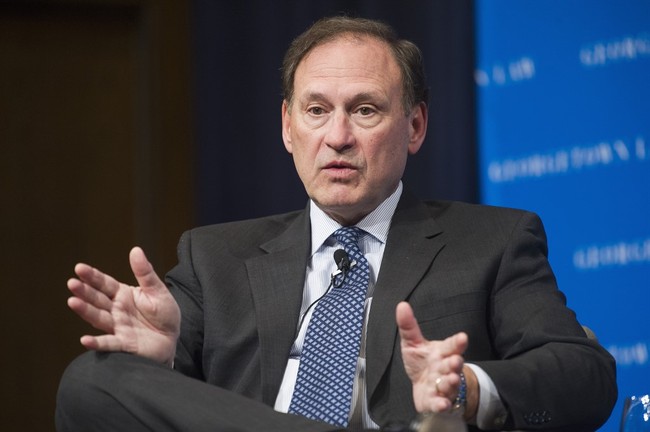
Writing for a 6-3 majority, Associate Justice Samuel Alito held that the respondents — ostensibly two groups of unnamed Syrian and Haitian illegal immigrants who enjoyed deportation protections under a Biden-era TPS order — and the lower courts who ruled in their favor “offer no sound theories to overcome the plain meaning of the judicial-review bar.” However, Justice Alito goes on to address the argument made by the Haitians that the Trump administration’s decision to end TPS protections is challengeable as a constitutional claim, as the decision was allegedly based on racial animosity. (RELATED: Biden-Appointed Judge Blocks Trump Admin From Ending Deportation Protections For Haitians)
“Ironically, respondents themselves offer a race-neutral explanation for the Government’s action: namely, that the current administration, which has terminated every TPS designation that has come up for renewal, simply opposes the TPS program as it has been implemented in the past,” Alito writes. “None of the cited statements by either the President or the Secretary was overtly racial, and in substance all expressed policy views that could rest on race-neutral justifications.”
The TPS program has existed in various forms since the passage of the Immigration Act of 1990. Over the past decades, the program — initially created to grant temporary deportation protections to illegal immigrants whose home countries have become too dangerous or unstable for them to be returned to — has faced allegations of abuse, with critics arguing deportation protections have been extended for some illegal immigrants well beyond what is considered reasonable.
Throughout 2025, the Department of Homeland Security (DHS) moved to end Biden-era extensions of TPS for several national origin groups of illegal immigrants, with groups from Haiti and Syria moving to sue the Trump administration over the revocations.
Chief Justice John Roberts — as well as Associate Justices Clarence Thomas, Brett Kavanaugh, Neil Gorsuch, and Amy Coney Barrett — joined Alito in the majority. Justices Elena Kagan, Sonia Sotomayor, and Ketanji Brown Jackson dissented.
Read the full article here