


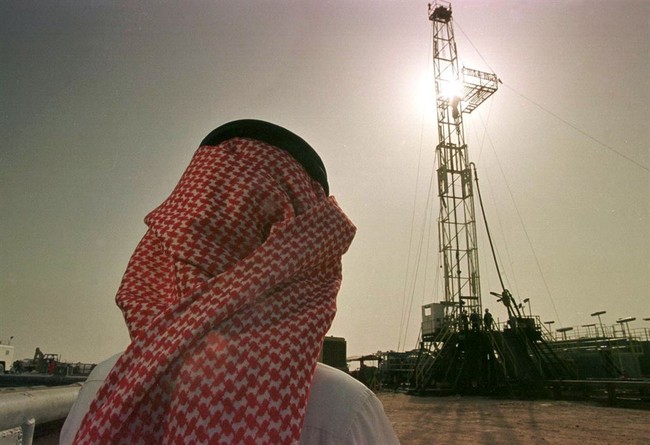

A few days ago Iranian backed militants operating in Iraq used drones to bomb a crucial Saudi oil pipeline that carries oil east and west across the country. That pipeline has been critical this summer because it allowed the Saudis to avoid the conflict taking place in the Strait of Hormuz and instead pump their oil west to the Red Sea.
Yesterday, Duane devoted a good portion of his post about the situation in Iran to that pipeline. He suggested that the damage was being framed as a lot worse than it actually is. Since then I’ve noticed quite a few different stories that offer vastly different suggestions about when the pipeline will be functional again. Given its importance, I thought it might be worth looking at those specifics. First up, here’s what the AP reported yesterday.
Repairing the damage, including at a major pumping facility, could take three to five weeks, the officials, who have been briefed on the matter, told The Associated Press. The pipeline may work partially during the repairs, one of the officials said, but they could not say how much oil might get through…
The pipeline has been moving an average of 2.6 million to 4 million barrels per day since late August — a quantity that will be lost to the market if the pipeline’s flow stops completely, according to an analysis issued Monday by Rystad Energy, a Norway-based research firm. It said the jump in prices for Brent crude, which reached $109, “is a clear signal that the market is increasingly pricing in a significant loss of supply.”
The Saudi oil company Aramco, which operates the pipeline, didn’t immediately respond to a request for comment. The government-run Center for International Communication, which oversees foreign media in the kingdom, said it was looking into an AP inquiry about how long it will take to repair the pipeline.
The Saudis probably had a buffer of a few days of oil waiting to be pumped onto ships but that could already be gone by now.
Thanks to the East-West pipeline, for half a year Saudi Arabia has managed to re-route most of its crude loadings from the western ports in the Persian Gulf to the Red Sea port of Yanbu. However, the closure of the pipeline has now introduced a major risk to about 4 million barrels per day (bpd) of Saudi crude oil shipments from Yanbu.
Saudi Arabia may be able to sustain exports for days by drawing from Yanbu’s stocks, but a longer disruption to the pipeline operations could jeopardize the Red Sea flows, which are already under intense scrutiny by the Iran-aligned Houthis in Yemen, who are targeting Saudi shipments and even hit some tankers in July.
The BBC is also reporting that repairs could take weeks:
The price of a barrel of oil has surged since Saudi Arabia said on Friday it was closing the pipeline as a precaution. Brent crude was trading as high as $108 (£80) a barrel on Tuesday, down slightly from $109.80 on Monday.
Experts from trade intelligence firm Kpler said the pipeline’s closure could reduce oil supplies by as much as 3.6 million barrels per day – or about 3.6% of global demand.
“Based on new information we’ve received, damage to the pipeline could take four to six weeks to resolve, given spare-parts availability and impaired supply chains,” said Homayoun Falakshahi, Kpler’s head of crude oil analysis.
It’s possible that the AP and the BBC are talking to the same sources so this may not really count as two separate estimates, but it’s definitely what some experts are saying. But other estimates are based directly on images of the damage to the pump station.
Satellite imagery appears to show extensive damage to one of the pipeline’s pumping stations. “Judging from the on-line pictures, it will take months to repair,” said Andy Lipow, president of Lipow Oil Associates, in a Monday note.
However, U.S. Energy Secretary Chris Wright told CNBC today that the pipeline would be up and running in a matter of days.
🇸🇦 Repairs to Saudi Arabia’s East-West oil pipeline could take 3-5 weeks, two regional officials briefed on the damage told AP. The line may operate partially during repairs, but officials could not say how much crude would get through.
➤ The pipeline had been helping move… pic.twitter.com/6OeMBabVOs
— Drop Site (@DropSiteNews) September 14, 2026
You probably noticed he hedged a bit there when pressed, saying he’d have a better idea tomorrow. Still, his estimate is at least a month shorter than the one everyone else is offering and he’s been talking to the people who would know.
Reading between the lines a bit here, the pump station is toast but the Saudis said last week they were closing the pipeline as a precaution, not because it was heavily damaged. So it’s possible the pipeline itself is still in good shape and, as Duane suggested, bringing in some temporary pumps might be all it takes to get at least some of the oil moving again.
That would be very good news for the market and should bring prices down a bit. It would of course be bad news for Iran and for Putin, both of whom are counting on this chaos to benefit them in various ways.
Stay tuned for more on this. We should have a much better ETA on this by the end of the week.
Editor’s Note: Do you enjoy HotAir’s conservative reporting that takes on the radical Left and woke media? Support our work so that we can continue to bring you the truth.
Join HotAir VIP and use promo code FIGHT to receive 60% off your membership.
Read the full article here