
George Washington University law professor Jonathan Turley said during a Sunday panel discussion that President Donald Trump would likely lose a significant case central to his strategy to combat illegal immigration.
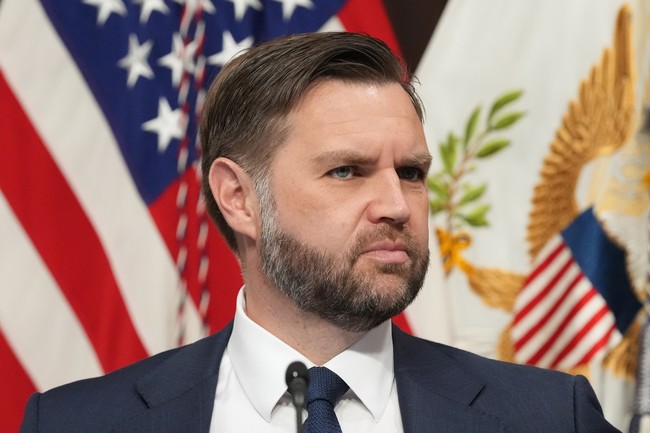
Trump attended the Supreme Court’s April 1 oral arguments for a case involving his executive order ending birthright citizenship, the first time a sitting president ever did so. Turley, describing birthright citizenship as “a uniquely bad idea,” said the lines of questioning by some of the justices during oral arguments didn’t look good for the Trump administration’s chances. (RELATED: Supreme Court Declines To Hear Appeal In Case About Man Stripped Of Gun Rights Over Missing Child Support)
“I think that’s true,” Turley said after “Fox News Sunday” host Shannon Bream, who also covers the Supreme Court, predicted the Trump administration would lose that case. “The oral argument did not give a lot of room for hope, particularly with [Chief Justice John] Roberts coming out right away and expressing skepticism. The question is whether anything happened during conference.”
WATCH:
“We’ve seen cases change after conference in the drafting,” Turley continued. “Roberts himself is often believed to have switched his vote on the individual mandate in the Obamacare case at the last minute. So it does happen, but most of us are expecting this is probably going to be a loss for the administration.”
Trump issued the executive order concerning birthright citizenship when he took office to begin his second presidential term January 20, 2025. He won a Supreme Court decision concerning nationwide injunctions against this order in June 2025.
Fellow panelist Tom Dupree, a former deputy assistant attorney general, agreed, saying it probably would ultimately take a constitutional amendment to end birthright citizenship in the United States, adding that many courts held that the 14th Amendment set that standard.
“I think the administration knew going into this that this was going to be a heavy lift for them, precisely for that reason,” Dupree said. “Judges year after year, decade after decade, have said that birthright citizenship is enshrined in our Constitution. I don’t think there’s going to be a change at the last minute.”
Turley said he expected a better outcome for the Trump administration in cases centered on men participating in women’s sports and mail-in ballots that arrived after Election Day. After predicting that those seeking to have biological sex determine who would participate in women’s sports would have “a good day,” Turley noted the Court would likely shut down counting late-arriving ballots.
WATCH:
“I think, from oral arguments, it seemed to me that they were going to say that ‘federal election day’ means election day, and having this debacle in California — extending the counting for so long — only sort of reaffirms the logic of that,” Turley said. “Now, this is for federal elections. So for dual election — state and federal — it can get a little bit wicked if you want to try to give people extra time. But if the Court rules that ‘Election Day’ means election day, those ballots have got to be in on that day.” (RELATED: Liberal Justices Join Unanimous SCOTUS Ruling Favoring Pro-Gun Groups — But They Couldn’t Leave Well Enough Alone)
Republicans expressed skepticism after socialist Los Angeles mayoral candidate Nithya Raman pulled ahead of reality star Spencer Pratt on the strength of “late ballot drops.” Dupree, who worked in the Office of Legal Counsel at the Justice Department, said the ruling could have another effect.
“It definitely would call into question the permissibility of early voting. I think for this case, this decision, it only concerns those late-arriving ballots, so I think this decision is going to be somewhat narrow in that sense,” Dupree said. “But you’re absolutely right that if the Court says ‘Election Day’ means Election Day — everything’s got to be done on this one particular day — arguably it would call into question early voting because those are coming in before Election Day.”
The end of the Supreme Court’s 2025–2026 term, which Turley likened to the “Super Bowl” due to the significance of the yet-to-be-released decisions, is expected to occur in late June or early July.
All content created by the Daily Caller News Foundation, an independent and nonpartisan newswire service, is available without charge to any legitimate news publisher that can provide a large audience. All republished articles must include our logo, our reporter’s byline and their DCNF affiliation. For any questions about our guidelines or partnering with us, please contact [email protected].
Read the full article here