




Democratic Senate nominee Graham Platner pitched himself to blue-collar Mainers as an oyster farmer who knows the struggles of the working class, but polls show his pitch has fallen flat.
Platner holds a slight edge over Republican incumbent Sen. Susan Collins, polling two points ahead of the GOP incumbent in the latest New York Times/Siena poll, but trails Collins by over 20 points among voters with bachelor’s degrees or above.
Despite Platner’s repeated pleas to the working class, 58% of voters without at least a bachelor’s degree back Collins, while just 37% favor the Democratic nominee. The inverse is true when it comes to voters with bachelor’s degrees or above, of whom 66% prefer Platner while just 32% support Collins. (RELATED: Democratic Congresswoman Says Maine Senate Candidate Graham Platner Has ‘Disqualified Himself’)
Collins outperformed her polling by huge margins in her last Senate race, winning a fifth term in 2020 by 8.6% despite trailing by five points in an NYT/Siena poll and by as much as 12 points in others. If Platner fails to unseat Collins in November, Democrats’ path to retaking the Senate becomes exceedingly narrow.
“This is merely the continuation of a trend in which education, more so than race, ethnicity, or gender, has become the primary predictor of voter behavior in the United States,” Len Foxwell, a Maryland-based Democratic strategist, told the Daily Caller. “I think there’s a general sense of disquiet and distrust that the working-class voters as a collective have about the Democratic Party. And Graham Platner happens to be the Democrat.”
“I think people would give themselves a little more license to consider personalities and idiosyncrasies in a gubernatorial election. And I think we would see a little more balance along the education spectrum,” he added. “In a Senate race, there is no room for that kind of nuance. It’s either a Democrat or Republican. They retreat to their respective partisan end zones.”
ORONO, MAINE – MAY 24: Sen. Bernie Sanders (I-VT) and Democratic U.S. Senate candidate Graham Platner stand together during a “Fighting Oligarchy” tour stop at the Collins Center for the Arts on the University of Maine campus on May 24, 2026 in Orono, Maine. Platner is the presumptive Democratic nominee and will face incumbent Sen. Susan Collins (R-ME) for Maine’s U.S. Senate seat in the general election. (Photo by Joe Raedle/Getty Images)
As Foxwell noted, non-college educated voters overwhelmingly vote Republican while college educated voters typically vote Democrat. Although Collins’ advantage with working class voters is in line with past electoral trends, Texas-based Democratic strategist Dheeraj Chand argues that Platner’s character is also contributing to the gap.
“There is no such thing as an isolated race,” Chand told the Caller. “The message is contradictory. It makes us look like hypocrites, because we are hypocrites.” (RELATED: After The Nazi Tattoo And Sexual Assault Excuse-Making, Liberals Finally Fed Up With Candidate Over New Scandal)
“Supporting Platner specifically undermines our party’s identity on domestic abuse and violence in the same way that continued support for Bill Clinton has undermined our party on sexual harassment,” he continued. “It’s tremendously difficult to say, ‘We believe this is wrong. Terms and conditions may apply.’”
Chand and Foxwell both suggested that Platner is ineffectively cosplaying as working class. Foxwell even likened Platner to failed presidential candidate Kamala Harris, noting that both candidates were unable to related to non-college voters.
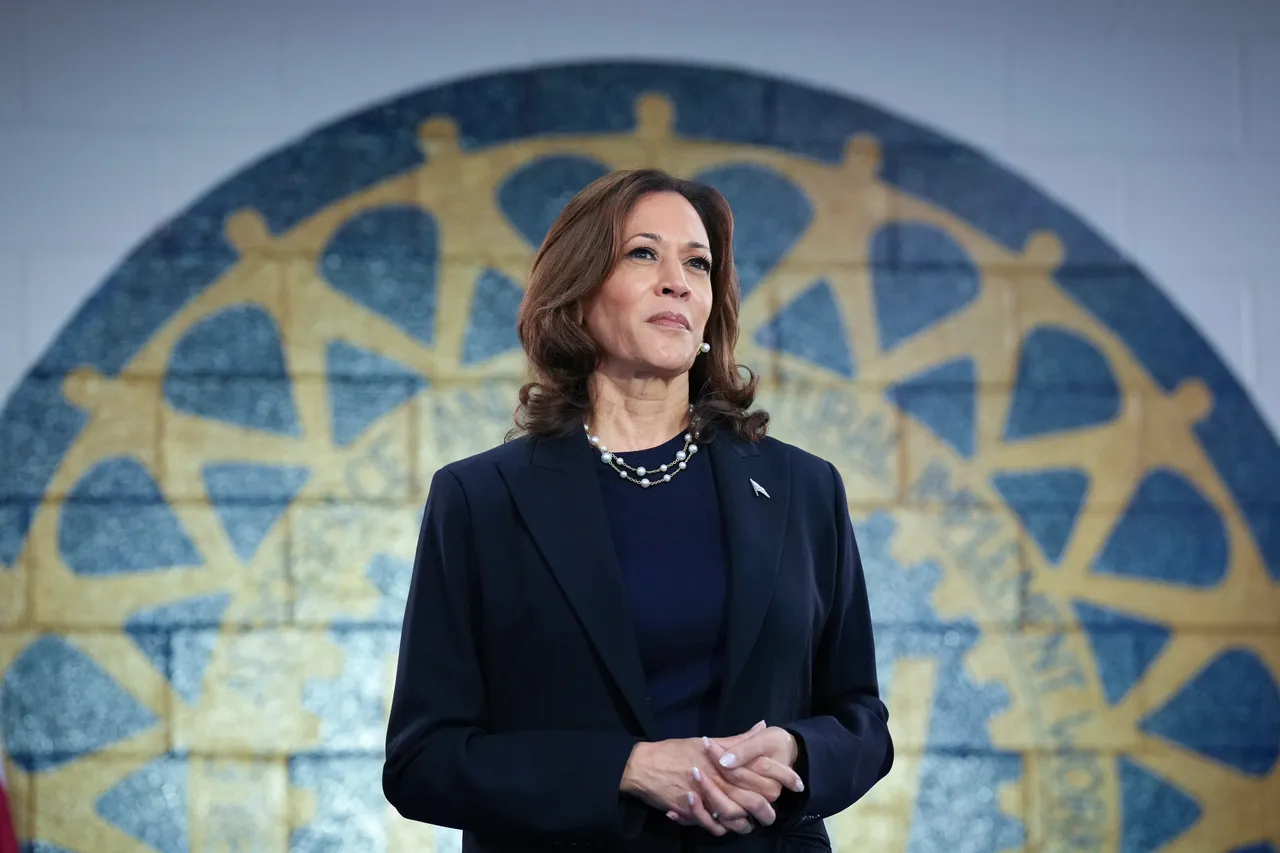
WAYNE, MICHIGAN – AUGUST 08: Democratic presidential candidate U.S. Vice President Kamala Harris waits to speak at a campaign rally at United Auto Workers Local 900 on August 8, 2024 in Wayne, Michigan. Kamala Harris and her newly selected running mate Tim Walz are campaigning across the country this week. (Photo by Andrew Harnik/Getty Images)
“I think the same thing that’s hampering Platner with working class voters in 2026 hampered Kamala Harris in 2024, which is the inability of this party to connect with working class voters who may have felt behind by a new economy based on technology, globalization, and AI where advancement is increasing, but exclusively for those with college and advanced degrees,” Foxwell told the Caller.
“Graham Platner is what every liberal arts graduate with a cultural studies degree thinks working class Mainers look like,” Chand told the Caller. “Its not authentic. Yes, he is downwardly mobile, but there’s a really big difference between being a born right person who had a tough life and wound up tending bar, and somebody who went to a high school that didn’t have air conditioning and is grateful for a job tending bar.”
“They can smell the inauthenticity the same way I can smell it from San Francisco people who moved to Texas wearing a cowboy hat and immediately start talking about barbecue and line dancing,” he added.
Read the full article here


![Insider Wore a Wire in Explosive Newsom Corruption Probe [WATCH]](https://www.rvmnews.com/wp-content/uploads/2026/07/2026.07.03-08.52-rvmnews-6a47784920da6.jpg "Insider Wore a Wire in Explosive Newsom Corruption Probe [WATCH]")




![RAF Pilots Eject Moments Before Training Jet’s Fiery Crash in Wales [WATCH]](https://www.lifezette.com/wp-content/uploads/2026/09/2026.09.25-15.52-lifezette-6ab698d31940a.jpg "RAF Pilots Eject Moments Before Training Jet’s Fiery Crash in Wales [WATCH]")