
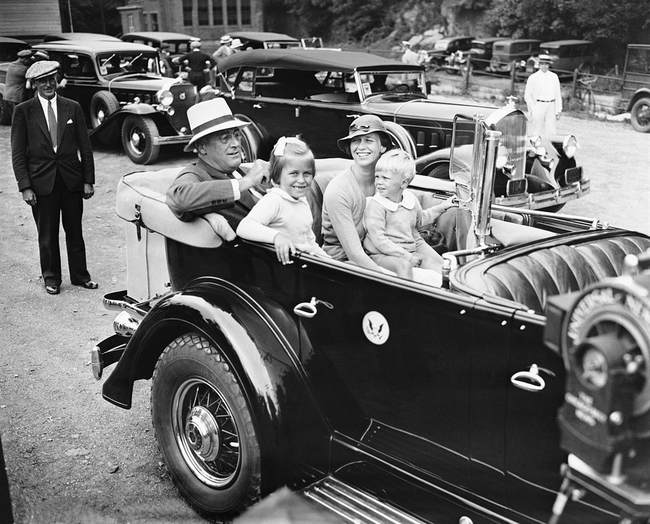

ARTHURDALE, West Virginia — The road into this quiet Preston County community gives little warning that it was once the setting for one of the New Deal’s most ambitious, and most debated, experiments.
Ninety-three years ago, Arthurdale became the first experimental community established under the federal subsistence-homesteads program, an effort to help impoverished families move from unstable industrial areas into planned rural communities. The idea was that residents could combine wage work with gardens, livestock, and small-scale home production.
First lady Eleanor Roosevelt was the project’s most prominent champion.
Her involvement began after Lorena Hickok, a former journalist and Roosevelt confidante who was then working as an investigator for the Federal Emergency Relief Administration, reported on the severe poverty she encountered in West Virginia coal country. In August 1933, Roosevelt visited the nearby Scotts Run coal camps herself.
There, she saw families whose livelihoods had collapsed with the coal economy. Many had worked in mines that powered homes and industry across the country, but unemployment and inadequate company housing had left them vulnerable during the Great Depression.
Within two months of Roosevelt’s Scotts Run visit, the federal government purchased land in Preston County for what was first known as the Reedsville Experimental Community. It was later named Arthurdale, after Richard Arthur, whose farm became the site of the new settlement.
“The federal government purchased the land and built a planned community intended to give struggling families something coal camps could not: a decent home, a small plot of land, modern conveniences, education and a measure of control over their own lives,” said Kenneth Kidd, executive director of Arthurdale Heritage.
The first residents arrived in 1934. Between 1934 and 1937, the government built 165 homes, equipped with electricity and indoor plumbing, on land intended for gardens and livestock.
For families accustomed to Depression-era coal camps, the change was substantial. Arthurdale included a school, community facilities and homes that provided the sanitation, space and stability that many residents had not previously known.
Roosevelt took a personal interest in the project and returned repeatedly over the years, attending community events, visiting residents, and advocating for modern housing and education.
“This was her baby,” Kidd said. “She was redefining what a first lady was. She was redefining the outreach and the government’s role.”
Arthurdale was controversial from the beginning.
The broader New Deal marked a dramatic expansion of federal action during the Depression. But Arthurdale went beyond temporary relief or public-works employment. The government acquired the land, selected participating families, built and furnished their homes, and promoted cooperative enterprises intended to help residents become less dependent on the unstable coal economy.
The project reflected a “back-to-the-land” impulse common in the era. Its planners hoped families could partly support themselves through gardens, livestock and household production while earning income through local jobs and cooperative businesses.
“It was like, we need to get these people working,” Kidd said. “They had the industrial arts industry. So they had fiber arts. They had a furniture factory here in this corner. There was a huge metalworking shop here.”
The planners’ goal was not simply to provide homes. They hoped to create a self-sustaining community economy outside the private coal market.
That goal proved difficult to achieve.
Arthurdale’s rural setting, limited local markets, small workforce and distance from larger commercial centers made it hard for the cooperative businesses and cottage industries to succeed. The community never developed the durable economic base that its architects envisioned.
“They attempted small industries, but it was so far remote (that) it never really took,” Kidd said.
That failure has produced two competing interpretations of Arthurdale. To critics, it was an expensive example of the limits of federal planning. The government exercised considerable influence over community life, the settlement required continued public support, and the local economy did not become self-sustaining.
“The economists will look at this and (say) it’s a horrible failure of the U.S. government and their intervention,” Kidd said.
But supporters and residents see a different legacy.
They point to the families who left inadequate coal-camp housing for homes with plumbing, electricity, land, schools and a degree of stability.
In May 1940, the first lady wrote in her “My Day” syndicated column that Arthurdale had become too dependent on outside aid. Arthurdale had not yet developed the pull-yourself-up-by-the-bootstraps spirit that she hoped it would foster. She warned that the homesteads had not yet shown the democratic lessons she expected from them.
Yet Kidd argues that Roosevelt would have measured the outcome differently.
Instead of treating the project as a ledger of federal expenditure versus industrial output, Roosevelt would have asked what happened to the 165 families — and especially to their children — once they had a home, schooling, stability and a chance to envision a different future, he said.
“She would say: Now look at the lives of those 165 families and the five to 10 kids that were reaching all those families and the trajectory of those children’s lives,” Kidd said. “That’s how Eleanor wants you to look at Arthurdale.”
By 1947, all the homes were sold, mostly to the homesteaders.
Kidd said that Roosevelt likely would not have judged the project solely by its financial ledger or the output of its industries.
Arthurdale did not solve the economic devastation of the Great Depression. It did not create the self-supporting cooperative economy that its advocates hoped would take root in rural Preston County.
But it did change daily life for many of the families who moved there.
The modest homes remain scattered among rolling fields. The historic school and community buildings still stand. Arthurdale is now both a living community and a preservation site, with a museum and interpretive programs devoted to the people who built and lived through one of the New Deal’s most unusual experiments.
Its legacy remains complicated: a costly and incomplete economic experiment but also a tangible improvement in housing, sanitation, education and opportunity for families who had been left behind by the collapse of the coal economy.
Salena Zito is a staff reporter and columnist for the Washington Examiner. She reaches the Everyman and Everywoman through shoe-leather journalism, traveling from Main Street to the beltway and all places in between. To find out more about Salena and read her past columns, please visit the Creators Syndicate webpage at www.creators.com.
Editor’s Note: We now have the room to run outside commentary by some of our favorite and most provocative thinkers on the Right. That only happens because of the support of our readers, who ensure that we have the resources to keep providing an independent platform and independent voices in a sea of Protection Racket Media domination.
Help us maintain that fight! Join HotAir VIP and use promo code FIGHT to get 60% off your membership.
Read the full article here


![Illinois Mother Who Closely Tracked Lindsay Clancy Trial Being Called a Copycat [WATCH]](https://www.lifezette.com/wp-content/uploads/2026/09/2026.09.05-11.20-lifezette-6a9bfb187c8b6.jpg "Illinois Mother Who Closely Tracked Lindsay Clancy Trial Being Called a Copycat [WATCH]")